
Recruit From a Shared Stock
Everyone recruits from one finite pool; the more you take, the harder it is for others.
- Prototype complexity
- Who plays
- Competitive play
- Design focus
- Information · Economy
 No.147Dota Underlords
01The core loop
Action → feedback → next choice- 01Roll the shop
- 02Buy units
- 03The shared pool shrinks
- 04Track rivals’ holdings
↻Feedback changes the situation — the next round starts from there.
Walk through one round
A simplified design example. Situations and numbers illustrate the mechanic, not exact rules from a reference game.
- T1
Turn 1 · The situation
A unit has 6 left in the pool; you hold 5, two rivals hold 3 each, and 3-star needs 9.
- T2
Turn 2 · The player chooses
You abandon the 3-star and pivot to an untouched unit.
- T3
Turn 3 · The feedback
Within three rounds your new unit hits 2-star while rivals keep fighting over the old one.
- T4
Turn 4 · The next decision
You sell the old units, returning them to the pool.
How it plays
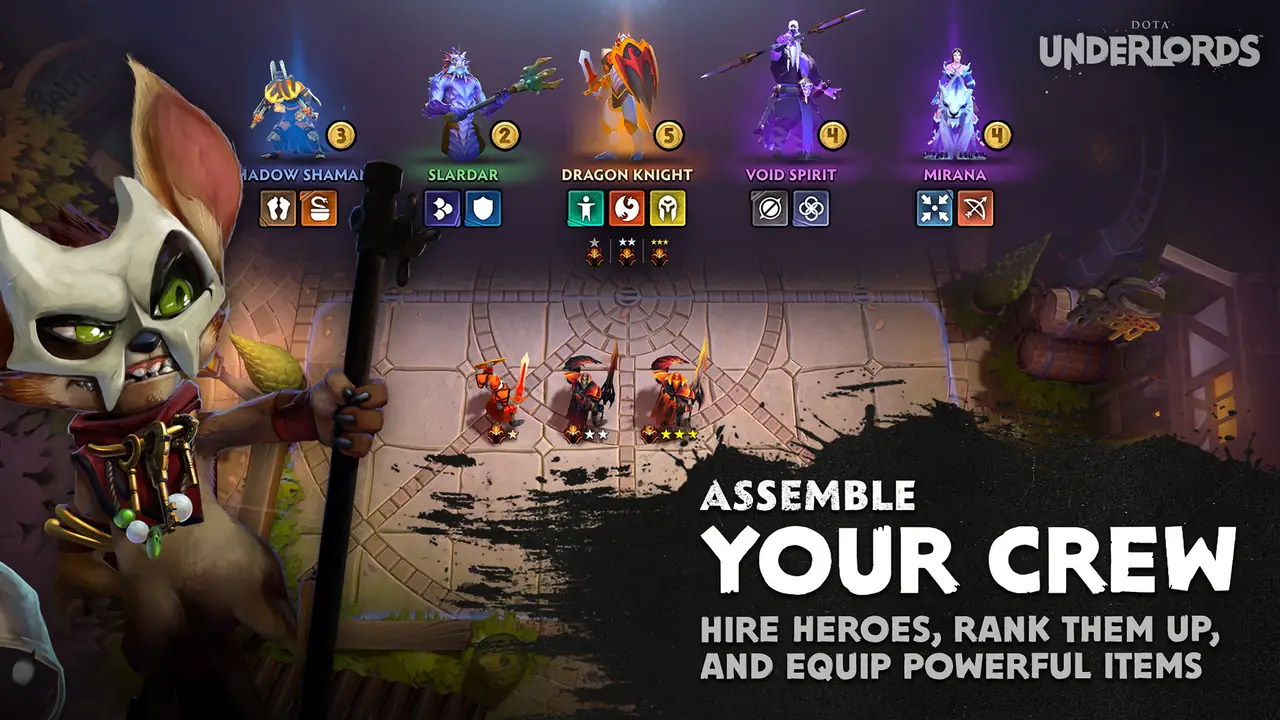
Each unit has a fixed count in a shared pool that every player’s shop draws from. If several players chase the same unit, everyone struggles to upgrade it, while uncontested units come easily. Rivals’ boards and your shop rolls are key information.
What the player weighs
- Follow the popular comp vs go uncontested
- Hoard to deny vs spend efficiently
02Start small
Scope is an editorial estimate for the minimum prototype, not the reference game or a production schedule.
03One mechanic, different implementations
Teamfight Tactics
All players share a champion pool with fixed counts per cost; sold units return to it, and contesting a comp weakens everyone in it.
Dota Underlords
It also uses a shared hero pool, so players scout opponents to see which heroes are contested.
The difference worth noticing
The mechanics are similar; they differ mainly in pool sizes, per-cost counts and how easily you can scout rivals.
Case notes are Yoroll editorial summaries; rules may change between versions.
04What could you combine?
Give benches stack limits so excess units return to the pool, making hoard-to-deny cost real bench space.
Prototype this combo in Yoroll→Follow the next idea

Pick a Phase Everyone Uses
The phase you choose runs for everyone, but only you get the bonus.
- Prototype complexity
- Who plays
- Competitive play
- 01Secretly choose a phase
- 02Reveal together
- 03Everyone runs chosen phases
- 04Choosers get a bonus
Pick From the Common Pool
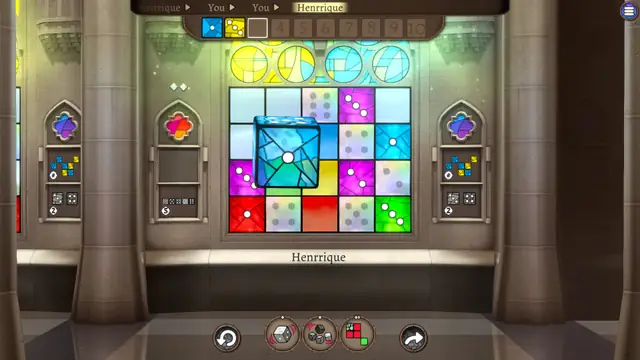
Everyone picks from the same pile in turn; what you take, others can’t.
- Prototype complexity
- Who plays
- Competitive play
- 01Reveal a shared pool
- 02Pick in turn order
- 03Read what others need
- 04Take one and build

Place a Worker, Claim a Spot
Put a worker on an action space, and it’s yours for the round.
- Prototype complexity
- Who plays
- Competitive play
- 01Scan open action spaces
- 02Place a worker
- 03Resolve and block it
- 04Recall workers at round end