
Reusable Blueprints
Save a well-designed module and stamp it again; you shift from builder to planner.
- Prototype complexity
- Who plays
- Solo decisions
- Design focus
- Creativity · Planning · Optimization
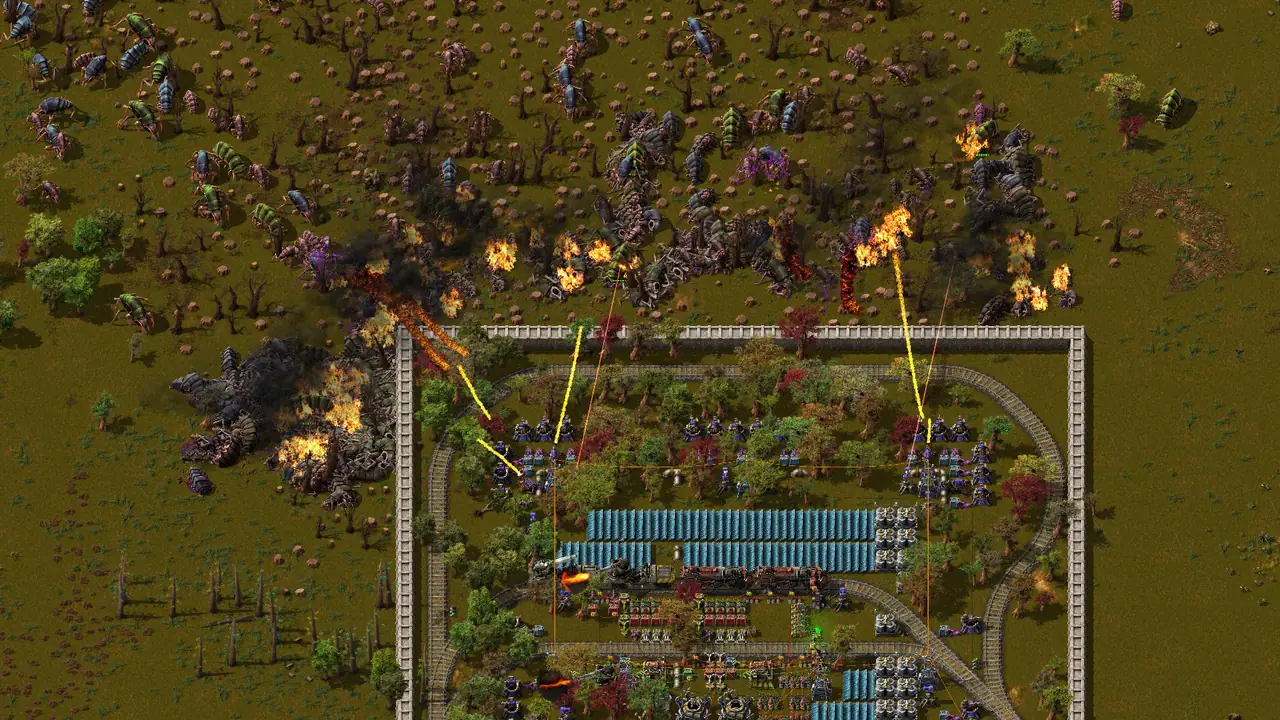 No.009Factorio
01The core loop
Action → feedback → next choice- 01Hand-build a good module
- 02Save it as a blueprint
- 03Stamp it elsewhere
- 04Iterate and revise
↻Feedback changes the situation — the next round starts from there.
Walk through one round
A simplified design example. Situations and numbers illustrate the mechanic, not exact rules from a reference game.
- T1
Turn 1 · The situation
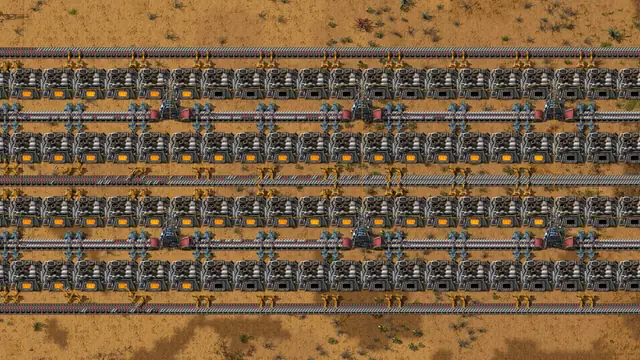
An 8-furnace smelting cell took 15 minutes to hand-build; four more are needed.
- T2
Turn 2 · The player chooses
The player saves it with clean input/output ports and stamps it four times.
- T3
Turn 3 · The feedback
Construction bots finish all four in 3 minutes and the ports snap to the main bus.
- T4
Turn 4 · The next decision
Spotting an efficiency tweak, the player updates the blueprint and swaps old cells.
How it plays
Players capture a group of buildings as a blueprint to rotate, copy and place elsewhere, with required materials listed or auto-built. Repetitive labor turns into design work and rewards standardized, scalable modules.
What the player weighs
- Generic modules vs custom fits: standard pieces copy easily but may not suit every site.
- Polish the design vs ship it now: good blueprints cost time up front and pay later.
02Start small
Scope is an editorial estimate for the minimum prototype, not the reference game or a production schedule.
03One mechanic, different implementations
Factorio
Blueprints can be saved, organized into books and shared as strings; placing one creates ghosts that construction robots build.
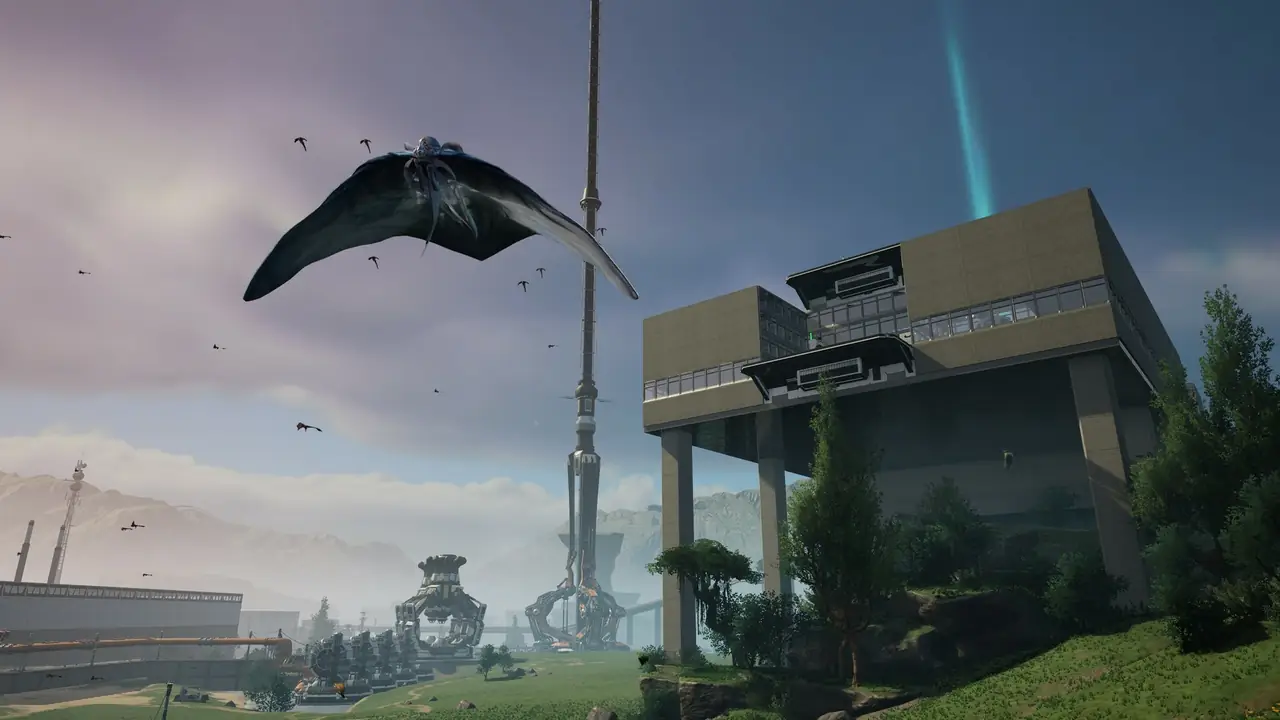
Satisfactory
Blueprints are made inside a size-limited Blueprint Designer, then placed in the world using materials from your own inventory.
The difference worth noticing
Factorio captures blueprints from anywhere and auto-builds them; Satisfactory requires building them in a dedicated designer first.
Case notes are Yoroll editorial summaries; rules may change between versions.
04What could you combine?
Blueprints need flat ground, so let players save terrain edits into the blueprint and drop modules onto hillsides in one go.
Prototype this combo in Yoroll→Follow the next idea
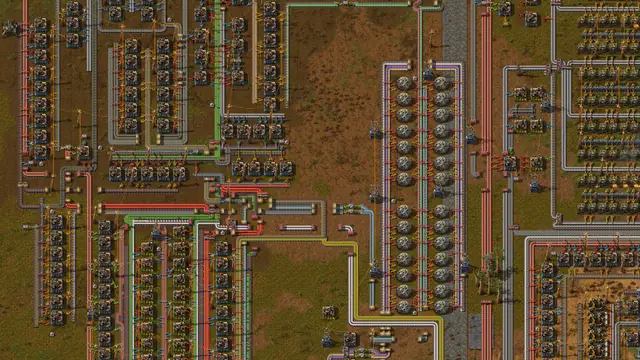
Drone Logistics Network
No belts needed: flying units deliver where needed, but you have to keep them supplied.
- Prototype complexity
- Who plays
- Solo decisions
- 01Build ports and storage
- 02Set requests and supplies
- 03Drones deliver automatically
- 04Expand or refuel the network
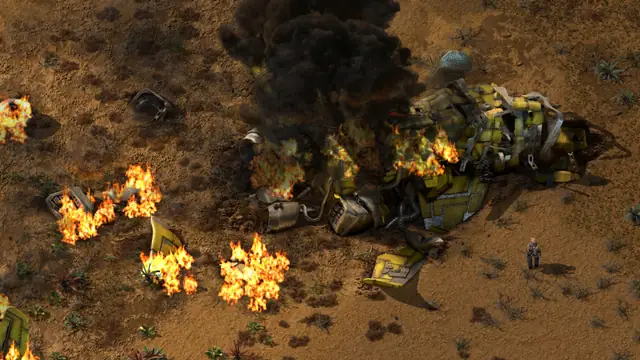
Conveyor Routing
Moving items from A to B is easy; keeping every line from tangling is the game.
- Prototype complexity
- Who plays
- Solo decisions
- 01Plan source and destination
- 02Lay belts around obstacles
- 03Watch flow and jams
- 04Reroute or add layers
Byproduct Recirculation
Leftover outputs that aren't dealt with will eventually choke the main line.
- Prototype complexity
- Who plays
- Solo decisions
- 01Make the main product
- 02Byproducts pile up
- 03Design a sink or loop
- 04Line runs stable again