
Sensor-Driven Control
When machines switch themselves by conditions, building a factory becomes programming.
- Prototype complexity
- Who plays
- Solo decisions
- Design focus
- Information · Optimization · Creativity
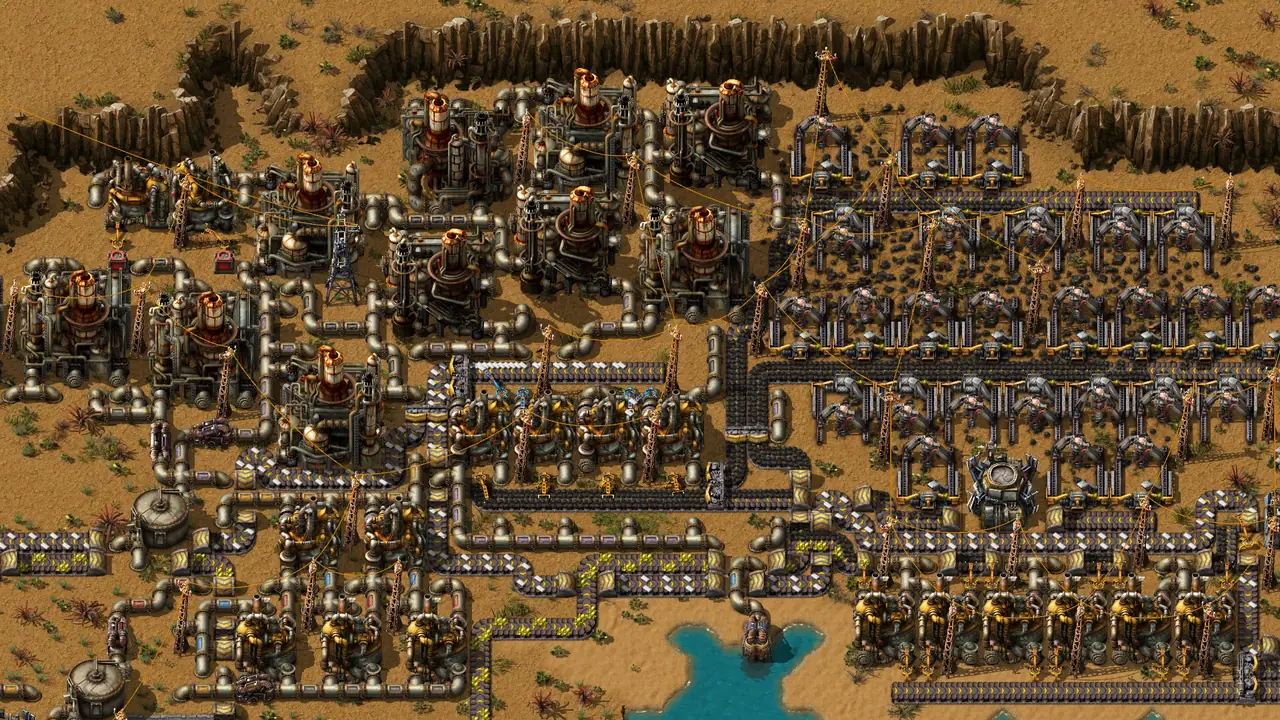 No.007Factorio
01The core loop
Action → feedback → next choice- 01Identify what needs control
- 02Wire in a sensor
- 03Set a trigger condition
- 04Test and tune thresholds
↻Feedback changes the situation — the next round starts from there.
Walk through one round
A simplified design example. Situations and numbers illustrate the mechanic, not exact rules from a reference game.
- T1
Turn 1 · The situation
The oxygen tank keeps overflowing, wasting power; the generator draws 120W.
- T2
Turn 2 · The player chooses
A pressure sensor shuts the generator off above 80% and restarts it below 50%.
- T3
Turn 3 · The feedback
The generator now runs about half the day, freeing up noticeable power.
- T4
Turn 4 · The next decision
The player applies the same idea to temperature control and pumps.
How it plays
Sensors read inventory, temperature or pressure and send signals over wires to enable or disable devices. Logic gates combine signals into richer rules, letting the factory regulate itself unattended.
What the player weighs
- Fine control vs maintainability: complex logic is hard to debug.
- Loose vs tight thresholds: too tight and devices flicker on and off.
02Start small
Scope is an editorial estimate for the minimum prototype, not the reference game or a production schedule.
03One mechanic, different implementations
Factorio
The circuit network reads chest and belt contents and uses arithmetic and decider combinators to control inserters, pumps and lamps.
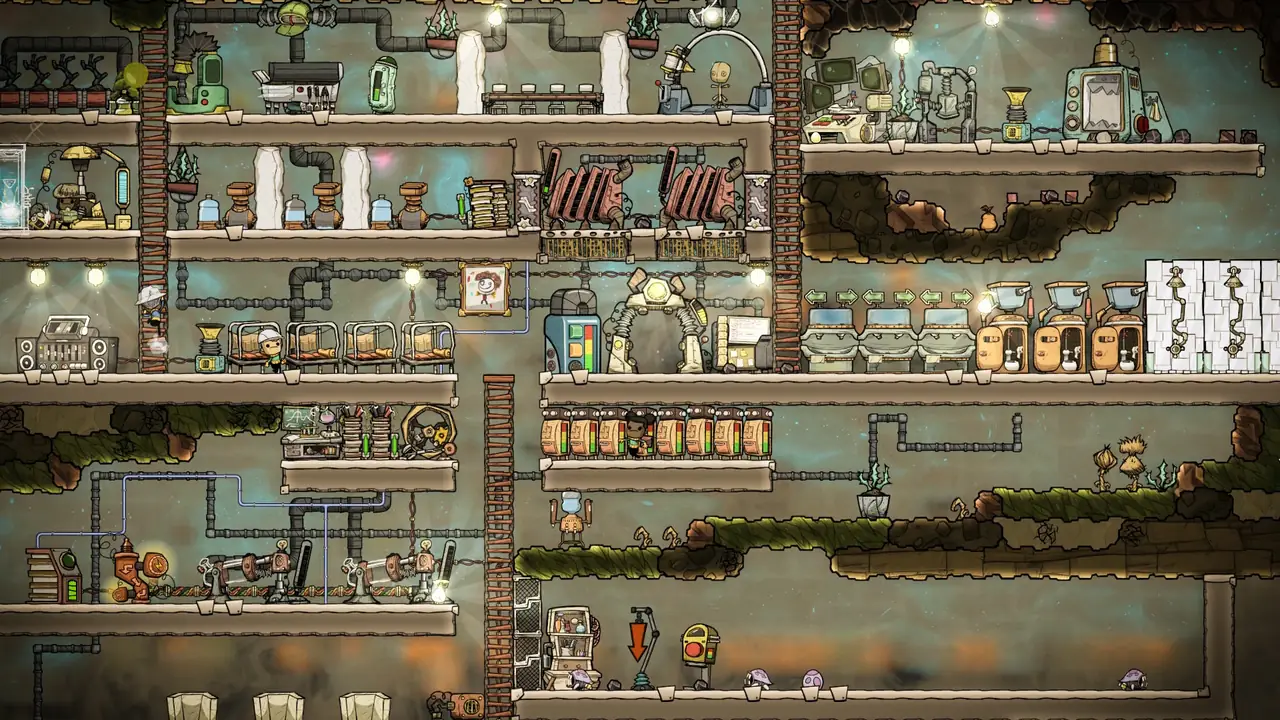
Oxygen Not Included
Automation wires connect pressure, temperature and timer sensors with logic gates to drive doors, pumps and generators that keep the colony livable.
The difference worth noticing
Factorio's control mostly optimizes throughput; Oxygen Not Included uses it to keep a survival environment stable.
Case notes are Yoroll editorial summaries; rules may change between versions.
04What could you combine?
Greenhouses split into thermal zones where sensors toggle heaters and coolers, and players tune thresholds so each crop stays in its range.
Prototype this combo in Yoroll→Follow the next idea
Reusable Blueprints
Save a well-designed module and stamp it again; you shift from builder to planner.
- Prototype complexity
- Who plays
- Solo decisions
- 01Hand-build a good module
- 02Save it as a blueprint
- 03Stamp it elsewhere
- 04Iterate and revise
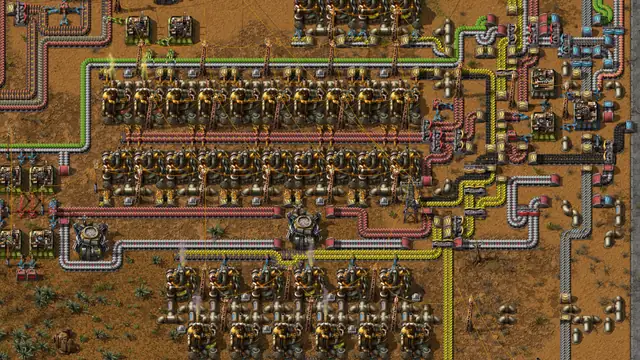
Fluid Routing
Fluids can't be counted item by item; pressure and flow are the signals you read.
- Prototype complexity
- Who plays
- Solo decisions
- 01Connect a fluid source
- 02Pipe it to machines
- 03Check flow and levels
- 04Add pumps or split networks
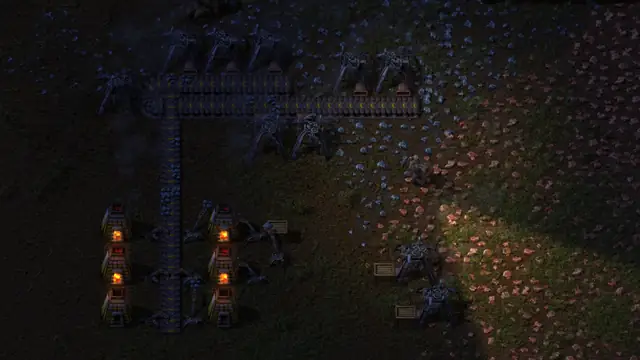
Item-Filtered Transport
A mixed item stream needs filter rules to send each thing to the right place.
- Prototype complexity
- Who plays
- Solo decisions
- 01Spot a mixed stream
- 02Set filter rules
- 03Items sort into routes
- 04Handle overflow and strays