
Telegraphed Enemy Intent
Enemies show their next move in advance, turning your turn into a puzzle.
- Prototype complexity
- Who plays
- Solo decisions
- Design focus
- Information · Planning · Risk
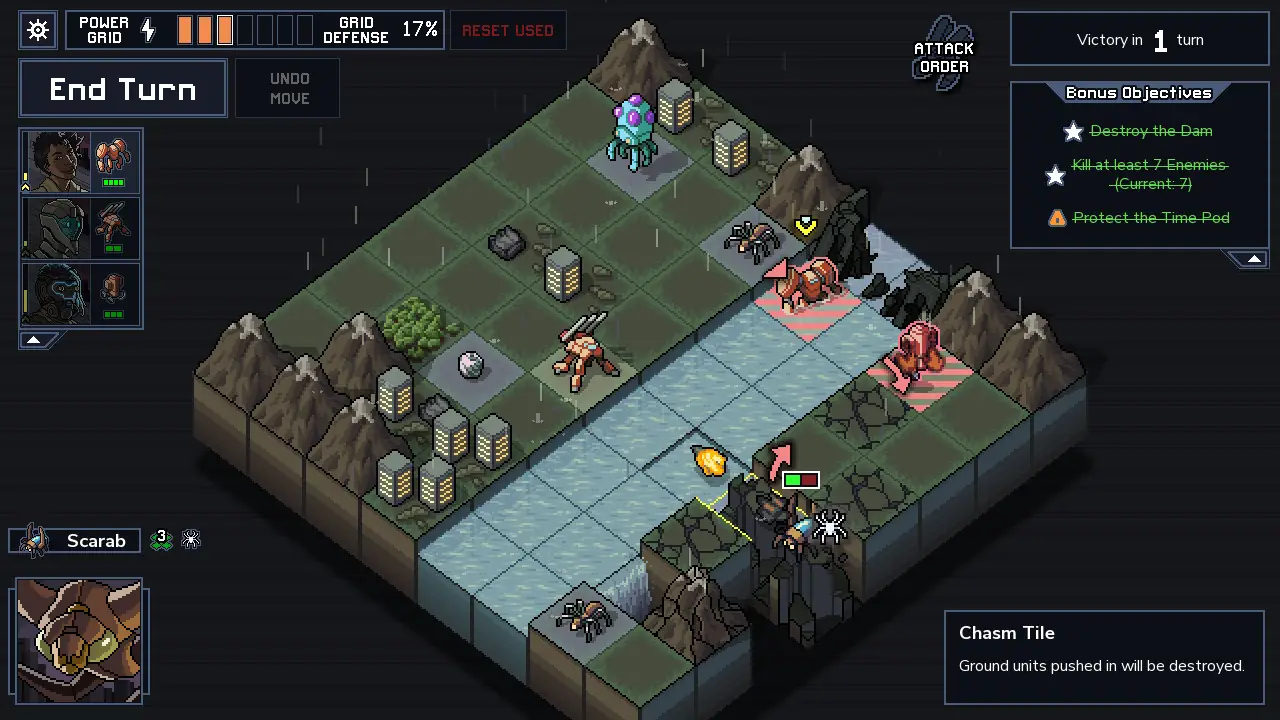 No.133Into the Breach
01The core loop
Action → feedback → next choice- 01Read the enemy's intent
- 02Weigh threats and gains
- 03Disrupt or avoid it
- 04Enemies act as shown
↻Feedback changes the situation — the next round starts from there.
Walk through one round
A simplified design example. Situations and numbers illustrate the mechanic, not exact rules from a reference game.
- T1
Turn 1 · The situation
Two bugs mark city tiles for attack; each city has 1 durability left.
- T2
Turn 2 · The player chooses
Instead of attacking, the player pushes one bug into the other's line of fire.
- T3
Turn 3 · The feedback
On the enemy turn one bug hits its ally; cities are spared and red warning tiles clear.
- T4
Turn 4 · The next decision
New bugs emerge, and the player starts blocking spawn points for next turn.
How it plays
Enemies reveal their next action before your turn: target, damage or effect type. You can block, dodge, disrupt or exploit it. The fuller the info, the more puzzle-like the fight; partial info keeps some guesswork.
What the player weighs
- Fully defend the shown attack vs. use the window to deal damage
- Stop the deadliest threat vs. handle the nearest one
02Start small
Scope is an editorial estimate for the minimum prototype, not the reference game or a production schedule.
03One mechanic, different implementations
Into the Breach
Vek mark their target tiles before you act, with fixed directions, so pushing them can make attacks miss or hit allies.
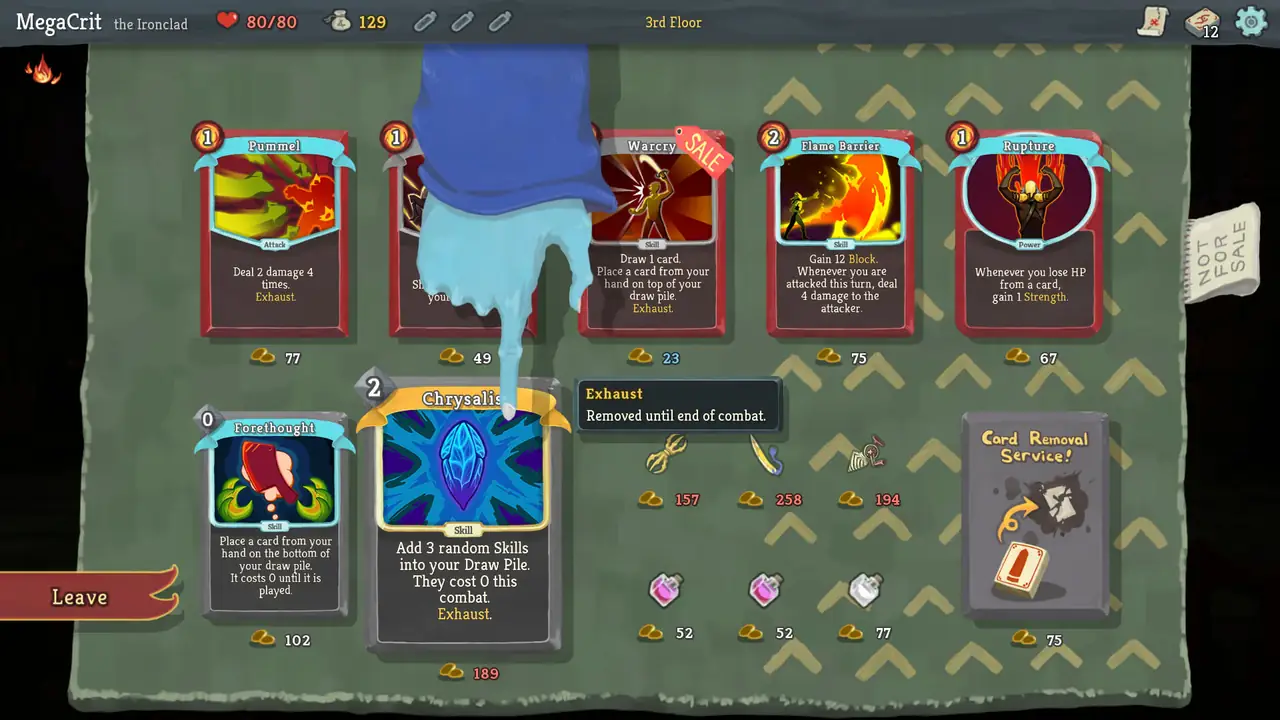
Slay the Spire
Enemies display intent icons over their heads, with numbers for attacks, so you know how much to block or whether to go all-in.
The difference worth noticing
Into the Breach lets you rewrite intent through displacement; Slay the Spire uses it mainly to balance defense and offense.
Case notes are Yoroll editorial summaries; rules may change between versions.
04What could you combine?
Put telegraphed intent in a box-pushing puzzle: enemies mark their next tile, and you shove crates to block or redirect them into traps.
Prototype this combo in Yoroll→Follow the next idea

Cover and Flanking
Cover keeps you safe until someone walks around it.
- Prototype complexity
- Who plays
- Solo decisions
- 01Check where cover faces
- 02Move to a flanking angle
- 03Gain an accuracy bonus
- 04Guard against counter-flanks
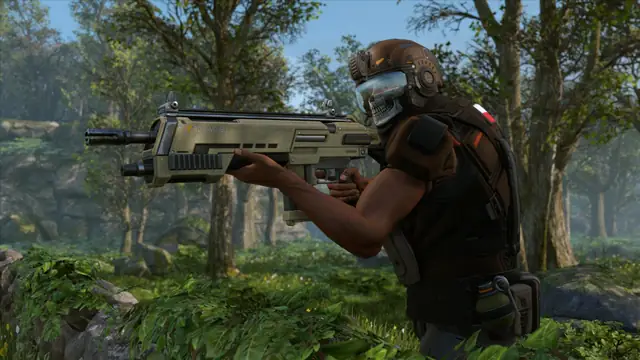
Blow Up the Cover
If the enemy is well hidden, blow up the wall; the battlefield keeps changing.
- Prototype complexity
- Who plays
- Solo decisions
- 01Find the cover they rely on
- 02Destroy it with explosives
- 03Enemy is exposed
- 04Follow up the attack
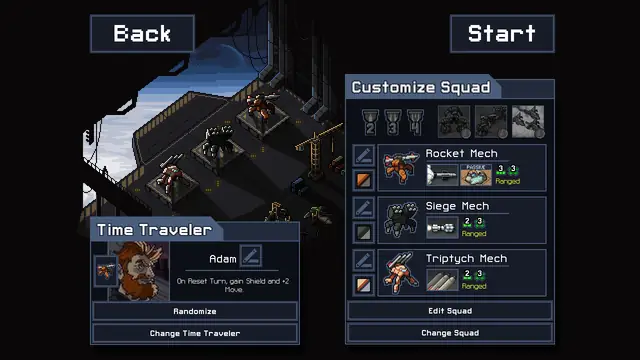
Shove, Pull, Knock Back
Push enemies off ledges or into fire; position itself becomes the weapon.
- Prototype complexity
- Who plays
- Solo decisions
- 01Find hazardous terrain
- 02Plan the push direction
- 03Shove or pull
- 04Hazard does the work