
Frame-Perfect Parry
Press guard a split second before impact and turn the threat into your opening.
- Prototype complexity
- Who plays
- Solo decisions
- Design focus
- Timing · Precision · Risk
 No.022Sekiro: Shadows Die Twice
01The core loop
Action → feedback → next choice- 01Read the wind-up
- 02Time the parry press
- 03Earn stagger or riposte
- 04Cash in the opening
↻Feedback changes the situation — the next round starts from there.
Walk through one round
A simplified design example. Situations and numbers illustrate the mechanic, not exact rules from a reference game.
- T1
Turn 1 · The situation
A swordsman starts a three-hit string; the parry window is about 0.2 s and a miss costs 30 HP.
- T2
Turn 2 · The player chooses
The player dodges the first two hits and parries the third, which has the clearest tell.
- T3
Turn 3 · The feedback
A sharp clang rings out, the swordsman reels for 1.5 s and an execute prompt appears.
- T4
Turn 4 · The next decision
The player executes, and next time tries parrying the second hit too.
How it plays
A parry is live for only a few frames; too early and it becomes a plain block or a miss, on time and you get a distinct clang, sparks and an enemy disadvantage. Window length and which attacks are parryable are the two difficulty dials.
What the player weighs
- High-reward parry vs. low-risk dodge
- Focusing one attacker vs. tracking the crowd
02Start small
Scope is an editorial estimate for the minimum prototype, not the reference game or a production schedule.
03One mechanic, different implementations
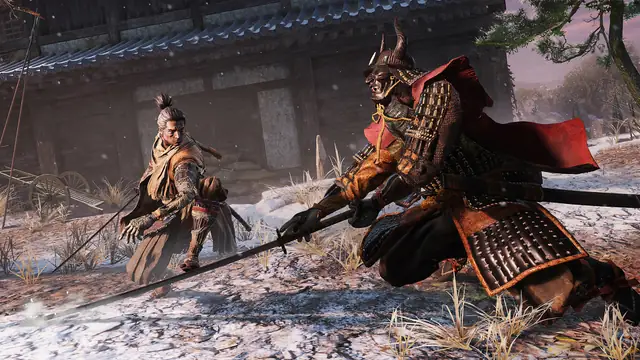
Sekiro: Shadows Die Twice
Deflection is the core: a well-timed block costs no health and builds the enemy's posture, while holding guard loads your own; attacks marked with the red kanji need other answers.
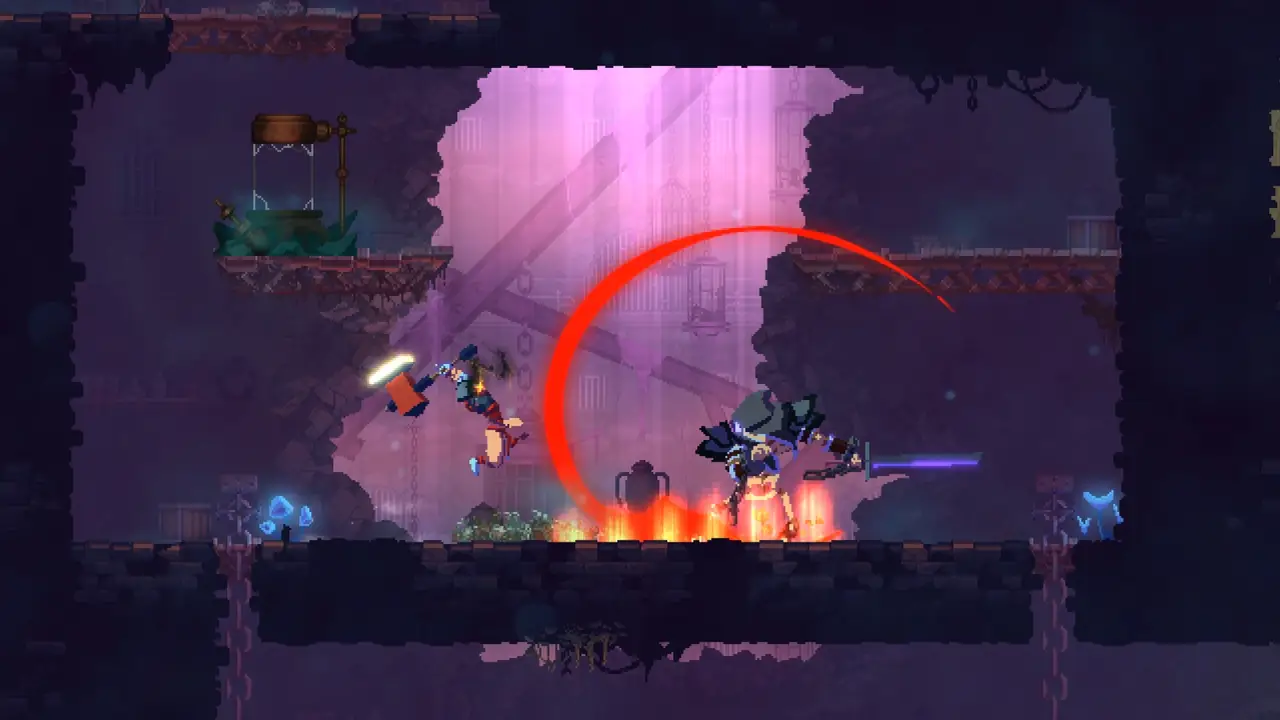
Dead Cells
Parrying lives on shields: raising one just before a hit deflects it, and many shields reflect projectiles or add bonus effects, depending on the shield.
The difference worth noticing
Sekiro makes the parry the language of every fight; Dead Cells makes it an optional build choice tied to a shield slot.
Case notes are Yoroll editorial summaries; rules may change between versions.
04What could you combine?
Bring parry timing to a kitchen: flipping and plating must land in a perfect heat window, earning a star or burning the dish.
Prototype this combo in Yoroll→Follow the next idea
Posture Break and Punish
Keep the pressure on until the enemy's balance gives out, then land a crushing blow.
- Prototype complexity
- Who plays
- Solo decisions
- 01Build imbalance via pressure
- 02Deny its recovery
- 03Break its stance
- 04Land the punish

One Stamina Bar for Everything
Swinging, blocking and rolling share one bar, so every attack borrows from your escape.
- Prototype complexity
- Who plays
- Solo decisions
- 01Read the enemy's rhythm
- 02Spend stamina to act
- 03Hold a reserve, let it refill
- 04Strike again in the gap

Weak-Point Targeting
Body parts take different damage; finding and hitting the right one is the real fight.
- Prototype complexity
- Who plays
- Solo decisions
- 01Study or scan the target
- 02Pick the weak spot
- 03Land the precise hit
- 04Adjust from feedback