
Reading Routes in Procedural Terrain
You've never seen this level, but you recognize the patterns in its pieces.
- Prototype complexity
- Who plays
- Solo decisions
- Design focus
- Randomness · Discovery · Risk
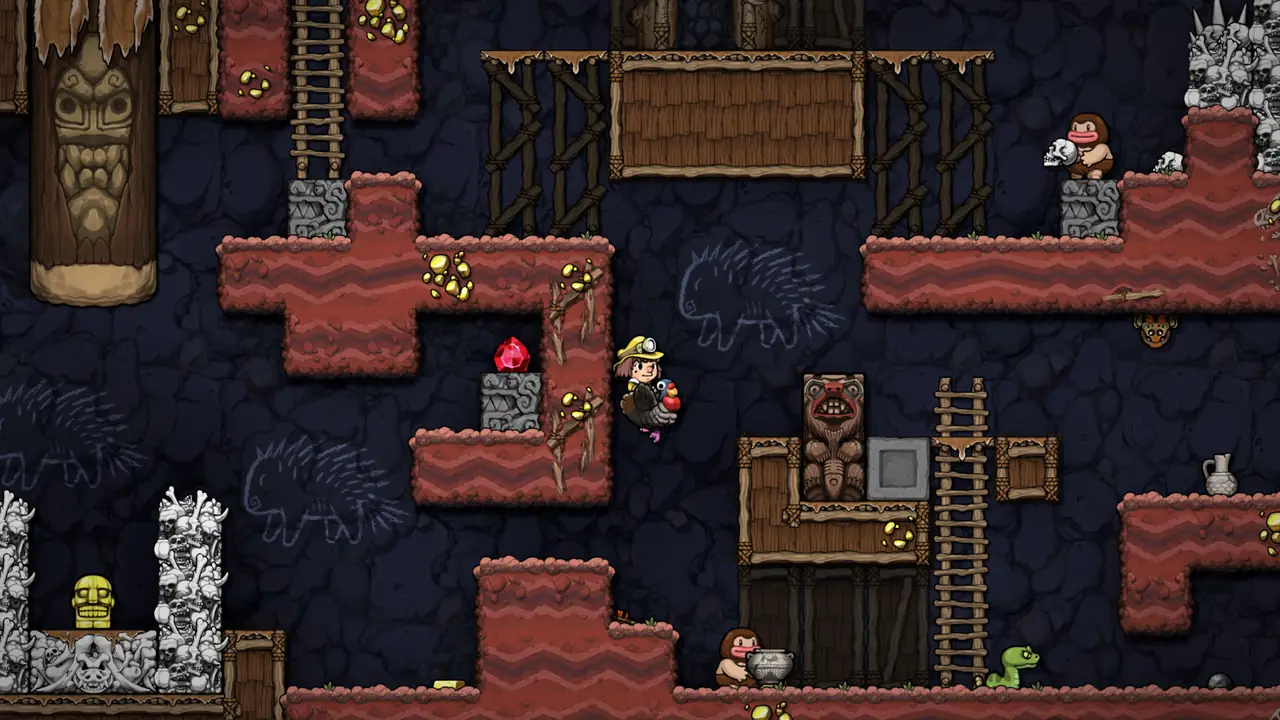 No.040Spelunky 2
01The core loop
Action → feedback → next choice- 01Scan the fresh terrain
- 02Spot safe and dangerous areas
- 03Choose a route
- 04Spend resources to recover
↻Feedback changes the situation — the next round starts from there.
Walk through one round
A simplified design example. Situations and numbers illustrate the mechanic, not exact rules from a reference game.
- T1
Turn 1 · The situation
You have 4 bombs and 4 ropes; the exit is below, a sealed side room on the left might hold treasure, and a ghost arrives in about a minute.
- T2
Turn 2 · The player chooses
You spend a bomb to open the room and grab a chest.
- T3
Turn 3 · The feedback
The chest holds an item, but the blast wakes nearby enemies.
- T4
Turn 4 · The next decision
You use a rope to bypass them and reach the exit before the ghost.
How it plays
Levels are generated but follow learnable rules, such as stitched room templates or layered biomes. Players read terrain features to anticipate traps, treasure and exits. Resources like bombs and ropes reshape terrain to fix mistakes or open shortcuts.
What the player weighs
- Detouring for treasure costs time and adds risk
- Bombing a path is easy but may leave you short later
02Start small
Scope is an editorial estimate for the minimum prototype, not the reference game or a production schedule.
03One mechanic, different implementations
Spelunky 2
Levels stitch room templates with a guaranteed entrance-to-exit path; bombs and ropes reshape terrain, and lingering summons a ghost.
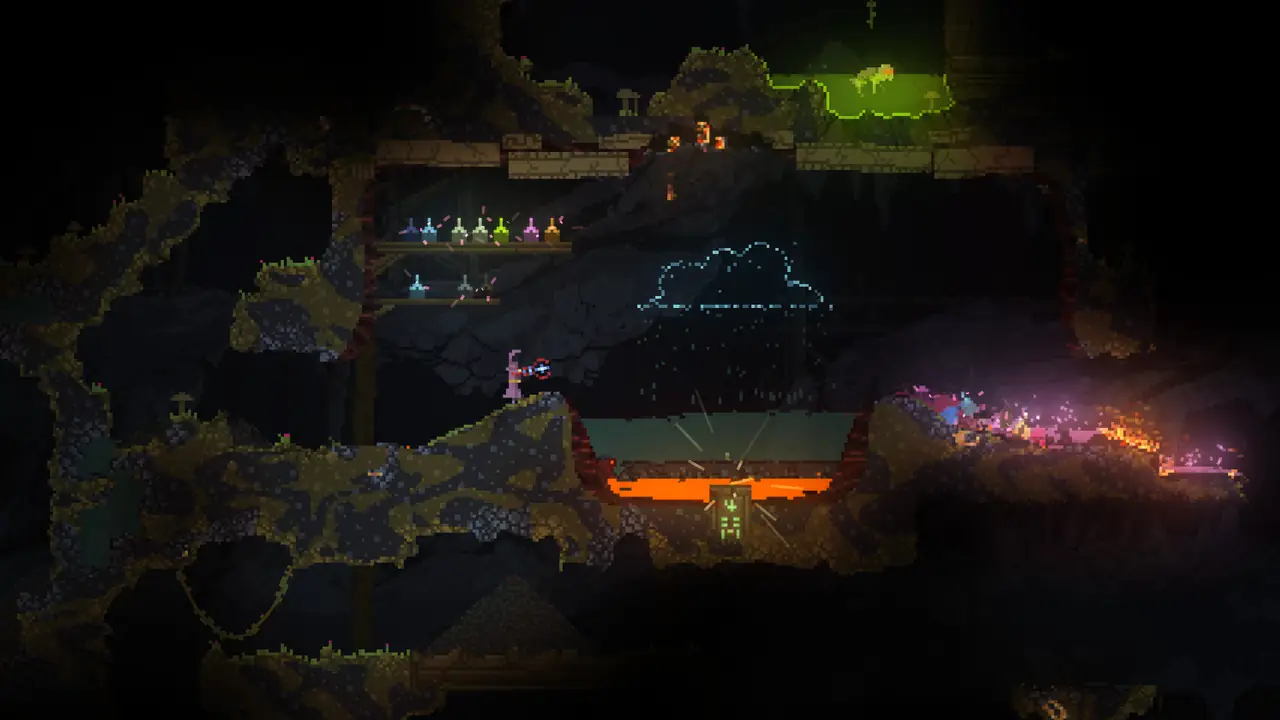
Noita
Every pixel is simulated, so terrain, liquids and gases interact; biomes are layered, with Holy Mountains as fixed safe stops.
The difference worth noticing
Spelunky 2's randomness rests on learnable templates; Noita's comes from chain reactions in its physics simulation.
Case notes are Yoroll editorial summaries; rules may change between versions.
04What could you combine?
Add load-bearing rules to generated caves: blowing out supports collapses terrain above, so players judge which walls are safe to remove.
Prototype this combo in Yoroll→Follow the next idea
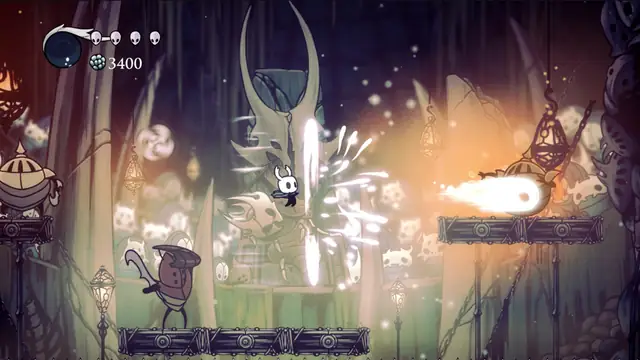
Ability Gates and Backtracking
That ledge you couldn't reach? You'll be back once you can double jump.
- Prototype complexity
- Who plays
- Solo decisions
- 01Hit an impassable obstacle
- 02Note it and move on
- 03Earn a new ability
- 04Backtrack and open it
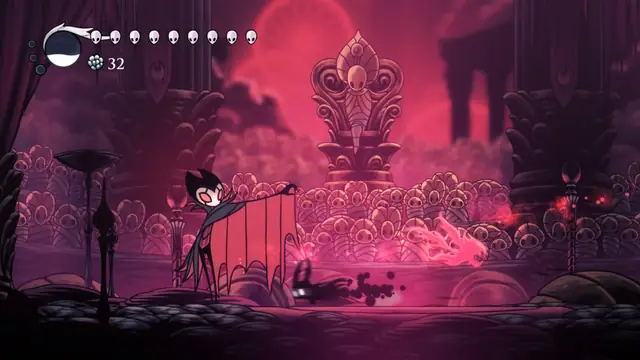
Earned Map Information
The map doesn't just appear; you buy it, find it, or draw it yourself.
- Prototype complexity
- Who plays
- Solo decisions
- 01Enter unknown ground
- 02Seek a map source
- 03The map fills in
- 04Plan routes with it
Unlockable Fast-Travel Network
Each node you unlock makes the world a little smaller.
- Prototype complexity
- Who plays
- Solo decisions
- 01Discover a node
- 02Activate or pay for it
- 03Travel between nodes
- 04Plan farther expeditions