
Crop Protection
Animals and weather can ruin crops; protective structures let you sleep easy.
- Prototype complexity
- Who plays
- Solo decisions
- Design focus
- Risk · Spatial · Planning
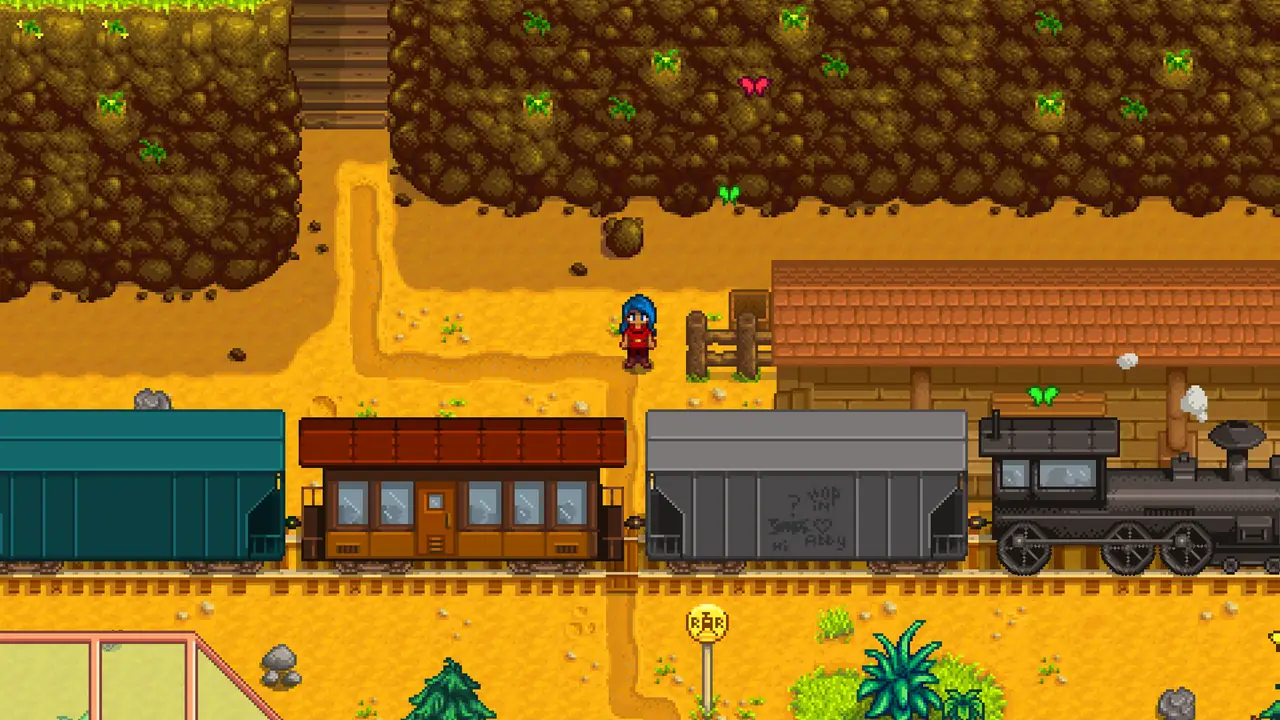 No.228Stardew Valley
01The core loop
Action → feedback → next choice- 01Identify the threat
- 02Place protection
- 03Check for damage
- 04Patch gaps in defense
↻Feedback changes the situation — the next round starts from there.
Walk through one round
A simplified design example. Situations and numbers illustrate the mechanic, not exact rules from a reference game.
- T1
Turn 1 · The situation
A 60-tile field loses about 5% of unprotected crops nightly to crows; one scarecrow covers about 50 tiles.
- T2
Turn 2 · The player chooses
They place a single scarecrow in the middle.
- T3
Turn 3 · The feedback
Ten corner tiles stay uncovered, losing 3 plants over a week.
- T4
Turn 4 · The next decision
They reshape the field to be compact enough for one scarecrow to cover it all.
How it plays
At night or at random, birds, beasts or weather damage unprotected crops. Players cover fields with scarecrows, fences or lightning rods, each with a range or a specific threat. Missing crops each morning and range previews show where the defense has holes.
What the player weighs
- More protection is safer but takes up planting space.
- Accept small losses to save money, or invest for zero loss.
02Start small
Scope is an editorial estimate for the minimum prototype, not the reference game or a production schedule.
03One mechanic, different implementations
Stardew Valley
Crops outside scarecrow range may be eaten by crows overnight; scarecrows cover a fixed circular area, with a deluxe version reaching further.
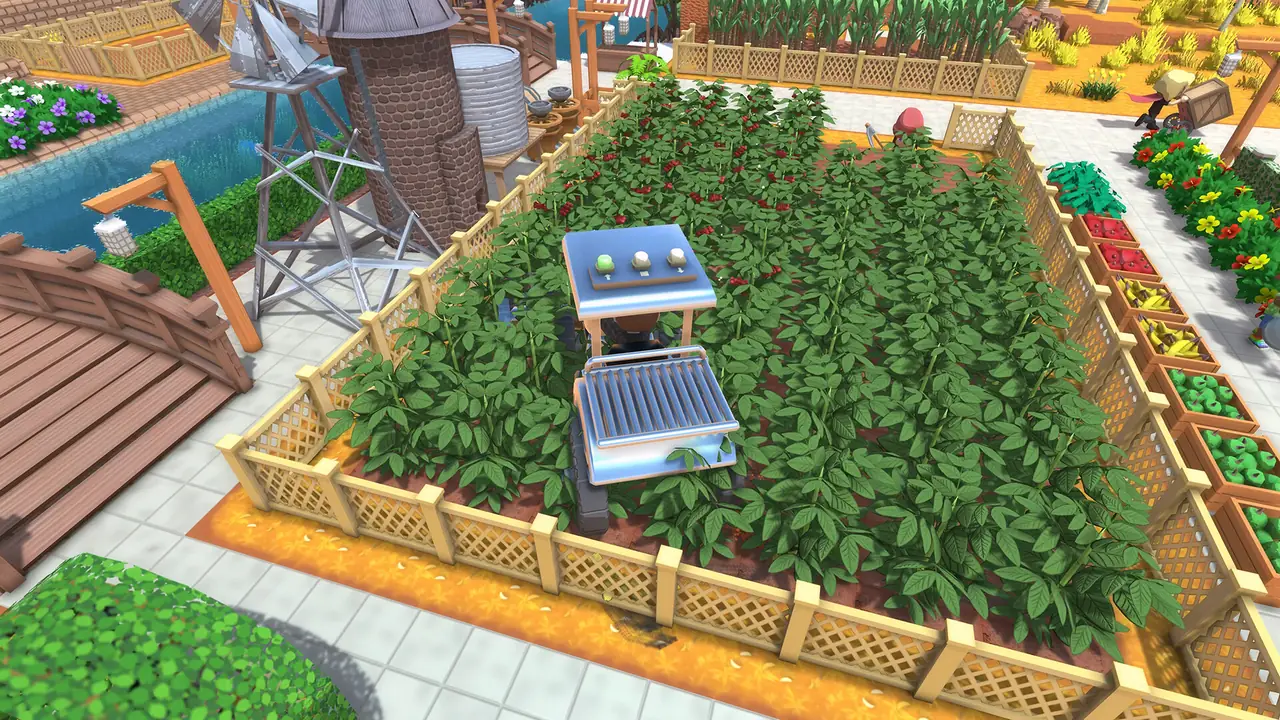
Dinkum
As I recall wild animals sometimes wander into fields and damage crops, and players can fence them off, but I'm not sure of the exact mechanics.
The difference worth noticing
Stardew Valley solves one threat with a clear ranged structure; Dinkum relies more on physical barriers.
Case notes are Yoroll editorial summaries; rules may change between versions.
04What could you combine?
Let players wire sensors to deterrents that switch on only when a threat approaches, saving limited power.
Prototype this combo in Yoroll→Follow the next idea

Load-Bearing Builds
To build taller and wider, first answer one question: will it hold?
- Prototype complexity
- Who plays
- Solo decisions
- 01Place a piece
- 02Read the support signal
- 03Add pillars or better material
- 04Expand or collapse
Holding Back the Water
Water is both lifeline and disaster; keep it where it belongs.
- Prototype complexity
- Who plays
- Solo decisions
- 01Read flow and levels
- 02Build dams or open gates
- 03Store for dry spells
- 04Prevent overflow

Cover and Flanking
Cover keeps you safe until someone walks around it.
- Prototype complexity
- Who plays
- Solo decisions
- 01Check where cover faces
- 02Move to a flanking angle
- 03Gain an accuracy bonus
- 04Guard against counter-flanks