
Run–Walk Speed Control
Choosing fast or careful movement changes how far you reach and where you land.
- Prototype complexity
- Who plays
- Solo decisions
- Design focus
- Precision · Timing · Risk
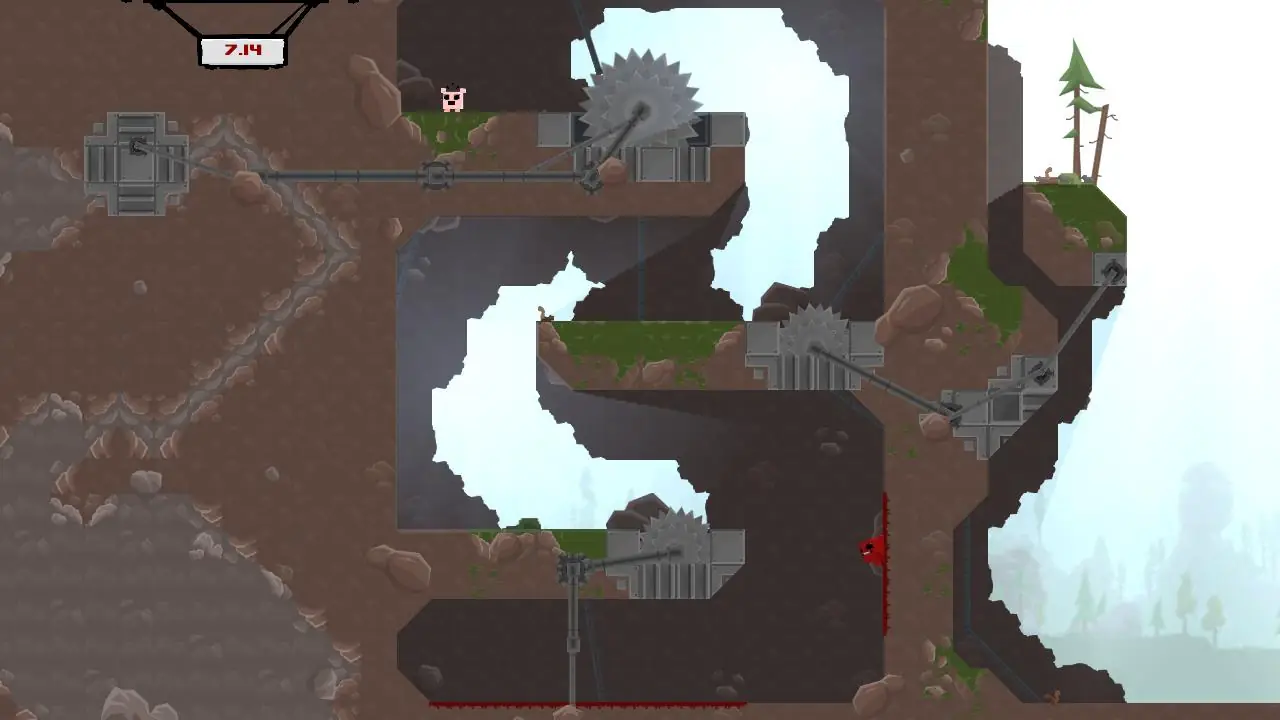 No.177Super Meat Boy
01The core loop
Action → feedback → next choice- 01Read the next obstacle
- 02Pick run or walk
- 03Jump with that momentum
- 04Land and adjust speed
↻Feedback changes the situation — the next round starts from there.
Walk through one round
A simplified design example. Situations and numbers illustrate the mechanic, not exact rules from a reference game.
- T1
Turn 1 · The situation
A 4-tile gap leads to a 2-tile ledge with spikes beyond. Running jumps travel 6 tiles, walking jumps 3.
- T2
Turn 2 · The player chooses
The player walks to the edge, then takes a single running step before jumping.
- T3
Turn 3 · The feedback
The short run-up gives about 4.5 tiles, landing mid-ledge.
- T4
Turn 4 · The next decision
A boulder rolls in behind on the next section, forcing a full sprint and flipping the priority.
How it plays
A held modifier swaps between a fast gait with long jumps and a slow gait that stops precisely at edges. Momentum carries into the air, so ground speed sets jump distance. Footstep tempo, animation and dust trails make the current gait readable.
What the player weighs
- Running covers distance but makes stopping on narrow ledges hard.
- Walking is precise but slow, which hurts when something is chasing you.
02Start small
Scope is an editorial estimate for the minimum prototype, not the reference game or a production schedule.
03One mechanic, different implementations
Super Meat Boy
Holding the run button pushes Meat Boy to a much higher top speed, essential for long jumps but punishing in tight spaces.
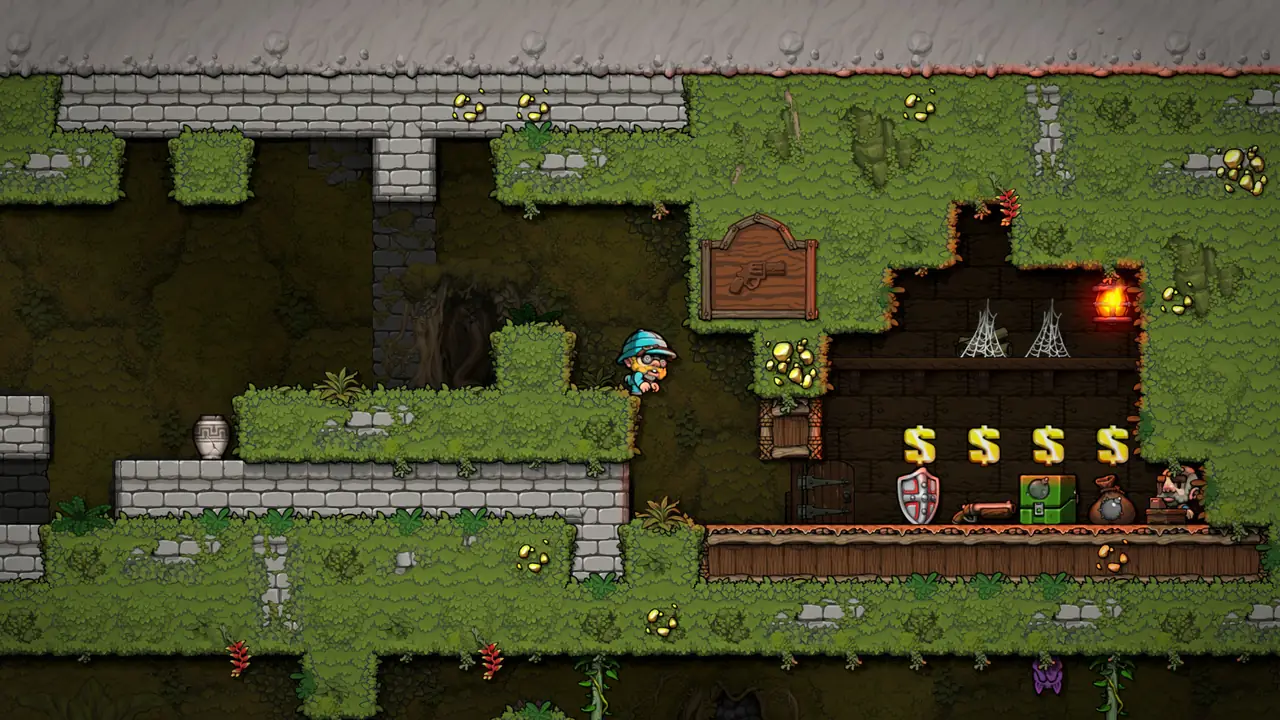
Spelunky 2
The explorer can switch between running and a careful walk (default bindings vary by settings); walking lets you approach edges safely, while wide gaps need a run.
The difference worth noticing
Super Meat Boy uses speed mainly for reach under time pressure; Spelunky 2's walk serves caution in unknown, generated levels.
Case notes are Yoroll editorial summaries; rules may change between versions.
04What could you combine?
Shrink visibility of procedural terrain while running, so players walk to scout and run to execute.
Prototype this combo in Yoroll→Follow the next idea
Act While Auto-Running
The game moves you forward; your job is pressing the right action at the right time.
- Prototype complexity
- Who plays
- Solo decisions
- 01Read the incoming obstacle
- 02Pick the matching action
- 03Time the input
- 04Survive as speed rises

Committed Ground Slam
Slam down to hurt foes or break floors on impact, with no taking it back.
- Prototype complexity
- Who plays
- Solo decisions
- 01Get above the target
- 02Trigger the slam
- 03Impact on landing
- 04Exploit the result
Ledge Catch: Climb or Drop
Fall just short, grab the edge, then decide whether to haul up or let go.
- Prototype complexity
- Who plays
- Solo decisions
- 01Leap toward an edge
- 02Catch and hang
- 03Read above and below
- 04Climb up or drop