
Block the Route
Claim a key segment first and force your rival to take the long way around.
- Prototype complexity
- Who plays
- Competitive play
- Design focus
- Spatial · Risk
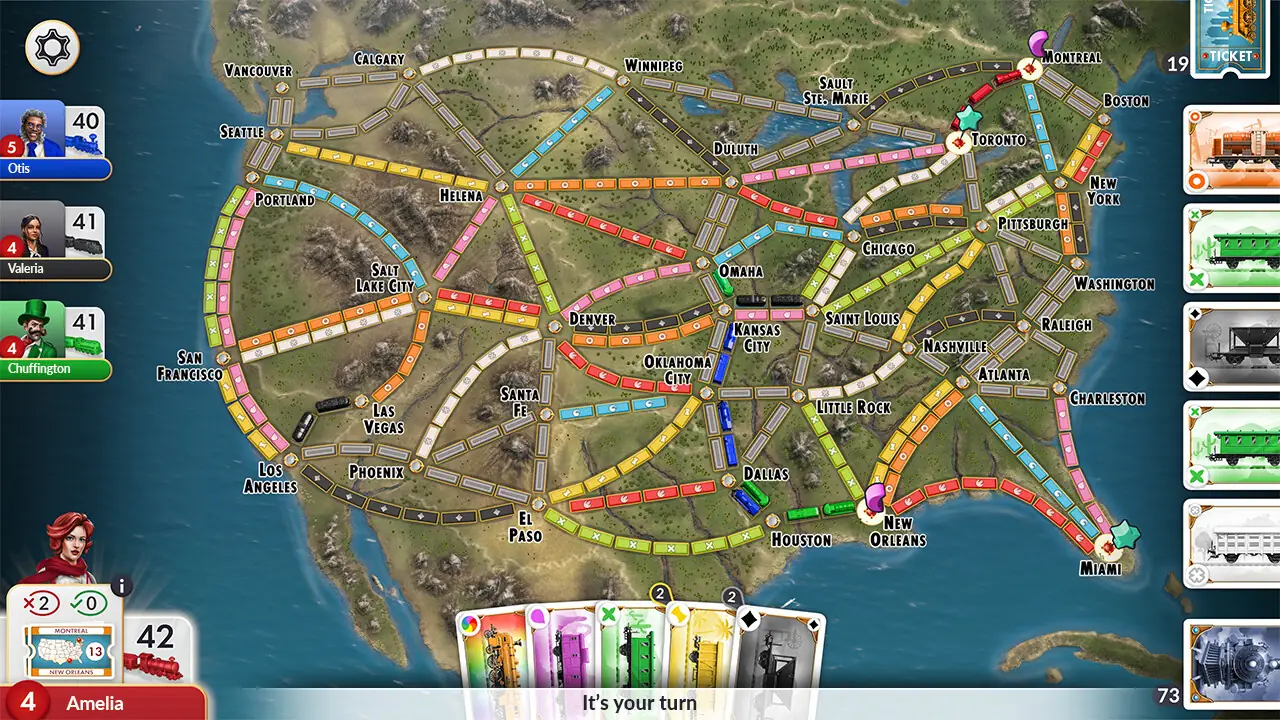 No.144Ticket to Ride: Classic Edition
01The core loop
Action → feedback → next choice- 01Plan your own route
- 02Guess the rival’s goal
- 03Claim a choke segment
- 04They must detour
↻Feedback changes the situation — the next round starts from there.
Walk through one round
A simplified design example. Situations and numbers illustrate the mechanic, not exact rules from a reference game.
- T1
Turn 1 · The situation
A single track links two cities, and the rival is collecting 4 greens for it; you hold 4 greens too.
- T2
Turn 2 · The player chooses
You claim it first.
- T3
Turn 3 · The feedback
The rival must detour through three segments, costing about 7 more cards.
- T4
Turn 4 · The next decision
But your own route is delayed a turn.
How it plays
Once a segment is claimed, no one else can use it. Players connect their own goals while deliberately grabbing chokepoints rivals need. Claimed colors and hints about rivals’ goals are the main information.
What the player weighs
- Advance yourself vs block the rival
- Claim early vs reveal your intentions
02Start small
Scope is an editorial estimate for the minimum prototype, not the reference game or a production schedule.
03One mechanic, different implementations
Ticket to Ride: Classic Edition
Players spend matching train cards to claim routes for secret destination tickets, and in smaller games only one lane of a double route opens, making blocks easier.
Catan Universe
Roads run along edges, and new settlements must connect to your roads and keep distance from others, so early roads can cut off rival expansion.
The difference worth noticing
Ticket to Ride blocks hidden objectives; Catan blocks visible expansion space.
Case notes are Yoroll editorial summaries; rules may change between versions.
04What could you combine?
Claimed segments can host automated freight, and others pay tolls to pass, creating a choice between blocking and charging.
Prototype this combo in Yoroll→Follow the next idea
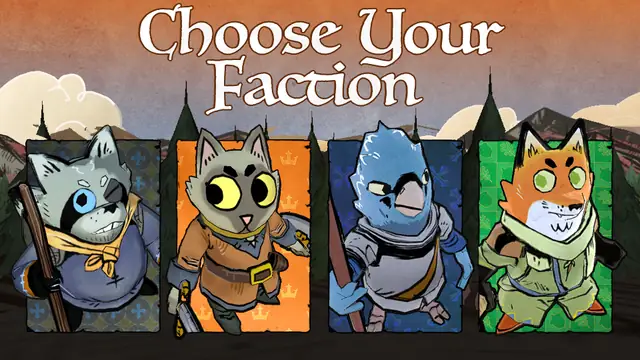
Win the Area by Numbers
Whoever has the most presence in an area controls it.
- Prototype complexity
- Who plays
- Competitive play
- 01Commit units to an area
- 02Compare presence
- 03The majority takes control
- 04Control pays out
Pick a Phase Everyone Uses
The phase you choose runs for everyone, but only you get the bonus.
- Prototype complexity
- Who plays
- Competitive play
- 01Secretly choose a phase
- 02Reveal together
- 03Everyone runs chosen phases
- 04Choosers get a bonus
Race for the Shared Goal
The goal is visible to all, but only the first to reach it gets paid.
- Prototype complexity
- Who plays
- Competitive play
- 01Reveal goals and rewards
- 02Gauge your distance
- 03Sprint or abandon
- 04First to finish claims it