
Snap-Together Building
Pieces snap into place so players think about what to build, not pixel alignment.
- Prototype complexity
- Who plays
- Solo decisions
- Design focus
- Spatial · Creativity · Precision
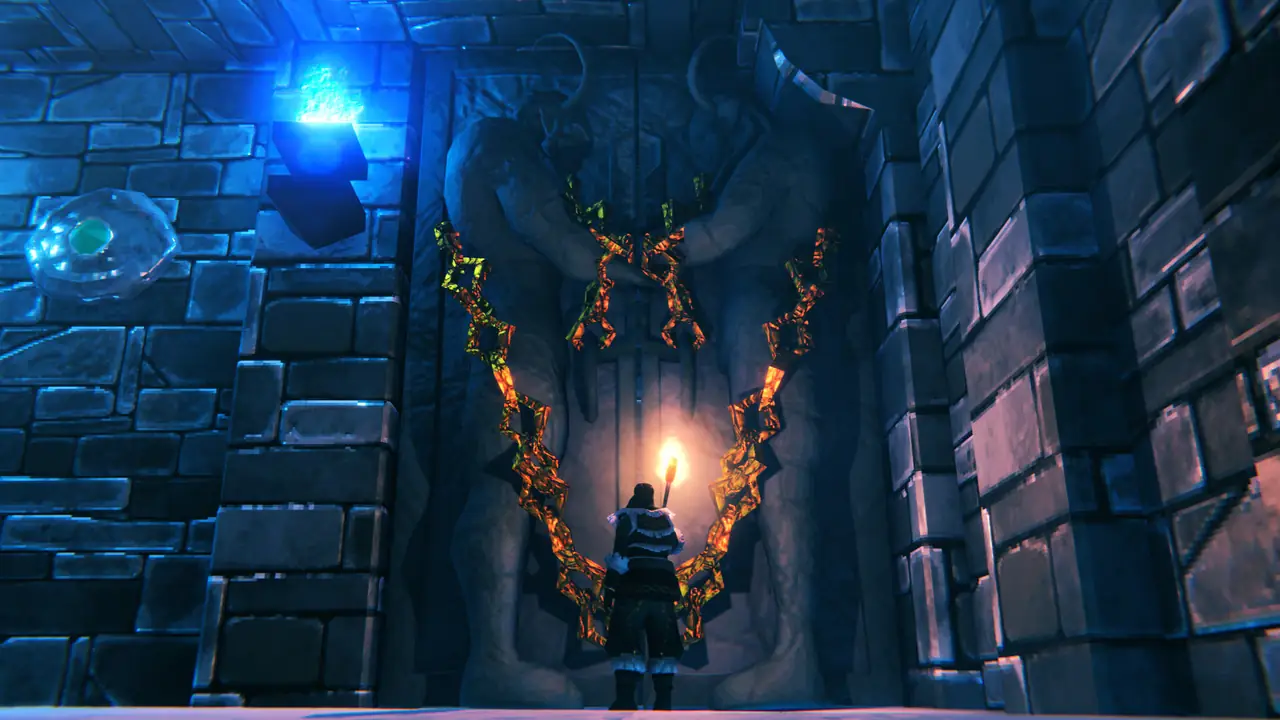 No.017Valheim
01The core loop
Action → feedback → next choice- 01Pick a piece
- 02Bring it to a snap point
- 03Confirm placement
- 04Continue from the new edge
↻Feedback changes the situation — the next round starts from there.
Walk through one round
A simplified design example. Situations and numbers illustrate the mechanic, not exact rules from a reference game.
- T1
Turn 1 · The situation
You need an 8 m bridge from a cliff edge.
- T2
Turn 2 · The player chooses
Snap four 2 m floor pieces edge to edge.
- T3
Turn 3 · The feedback
The deck lines up perfectly, but the fourth piece shows a support warning.
- T4
Turn 4 · The next decision
Snap a support post under the middle.
How it plays
Pieces carry predefined snap points and align automatically when brought close. Players toggle snap modes or rotate, and a ghost preview with color shows whether placement is valid.
What the player weighs
- Stay on grid or free-place for style
- Big pieces for speed or small ones for detail
02Start small
Scope is an editorial estimate for the minimum prototype, not the reference game or a production schedule.
03One mechanic, different implementations
Valheim
Walls, floors, beams and roofs snap to neighboring endpoints, and you can cycle snap points to choose alignment.
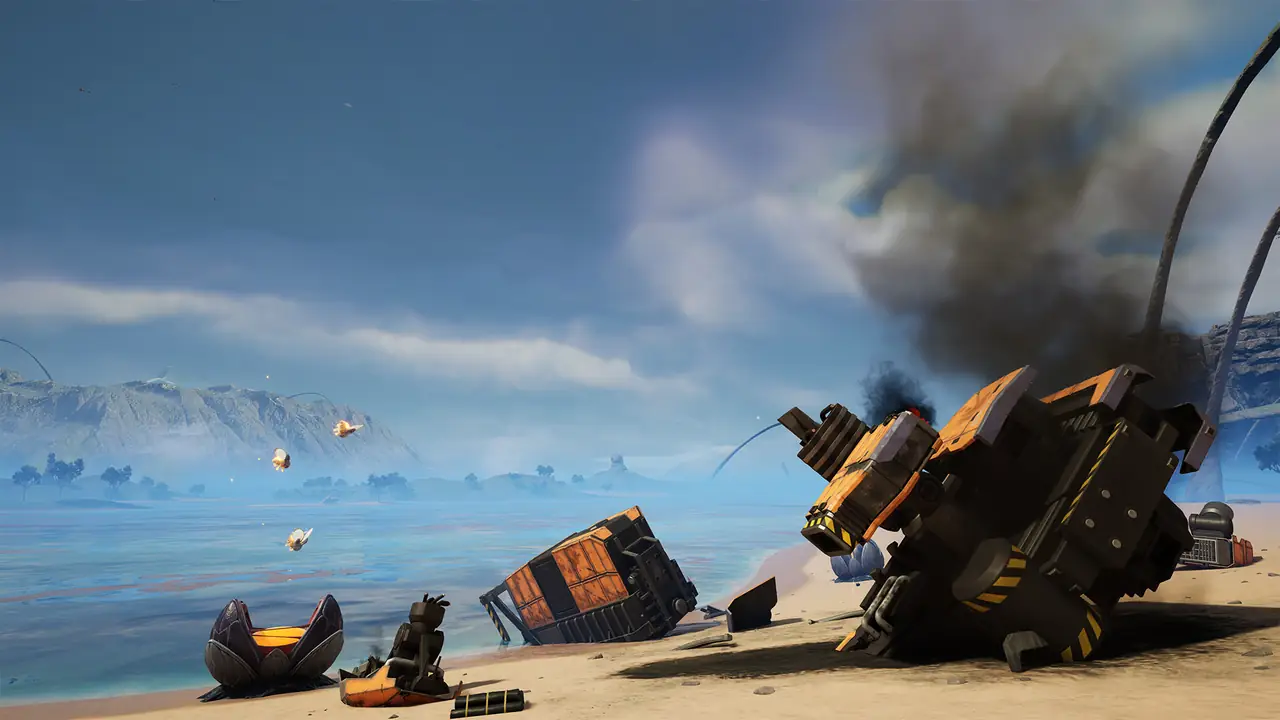
Satisfactory
Foundations, walls and machines snap to a fixed grid for tidy large factories, with some freedom for nudging and free placement.
The difference worth noticing
Valheim's snapping supports organic Viking structures; Satisfactory's supports industrial order at scale.
Case notes are Yoroll editorial summaries; rules may change between versions.
04What could you combine?
Make pieces exploration keys: finding an arch piece lets you snap a span across a gorge, opening old areas you couldn't reach.
Prototype this combo in Yoroll→Follow the next idea

Reshaping the Land
The ground is no longer a backdrop; digging, filling and leveling become part of building.
- Prototype complexity
- Who plays
- Solo decisions
- 01Read the terrain
- 02Dig down or raise up
- 03Build on the new ground
- 04Handle the side effects
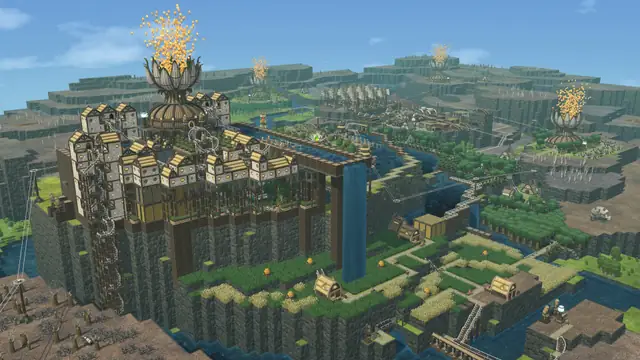
Building Upward
When the ground runs out, build up; height becomes a new dimension to plan.
- Prototype complexity
- Who plays
- Solo decisions
- 01Run out of floor space
- 02Raise a platform or floor
- 03Solve vertical access
- 04Expand on the new level
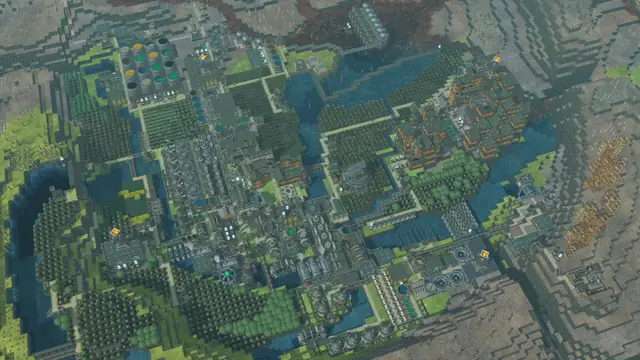
Roads and Entrances
A building isn't open until a road reaches its door.
- Prototype complexity
- Who plays
- Solo decisions
- 01Plan a building spot
- 02Connect a road
- 03Check flow and jams
- 04Reroute or widen