
Know Your Max Bid
Holding your limit while others raise the bid is the hardest auction lesson.
- Prototype complexity
- Who plays
- Solo decisions
- Design focus
- Economy · Information · Risk
 No.279Offworld Trading Company
01The core loop
Action → feedback → next choice- 01Appraise the lot
- 02Set a personal cap
- 03Raise or drop out
- 04Win it or let it go
↻Feedback changes the situation — the next round starts from there.
Walk through one round
A simplified design example. Situations and numbers illustrate the mechanic, not exact rules from a reference game.
- T1
Turn 1 · The situation
An old vase you value at 300–500; you hold 600, and a rival bids 280.
- T2
Turn 2 · The player chooses
Cap at 400 and raise step by step to 380.
- T3
Turn 3 · The feedback
The rival goes 420, so you drop as planned.
- T4
Turn 4 · The next decision
A better lot follows, and you still have all 600.
How it plays
Several bidders raise in turn and the highest wins. Your value info is incomplete, and rivals’ bids hint at their own estimates. Current price, increment and remaining funds are the main feedback.
What the player weighs
- Winning vs the winner’s curse
- Spend now vs save for later lots
02Start small
Scope is an editorial estimate for the minimum prototype, not the reference game or a production schedule.
03One mechanic, different implementations
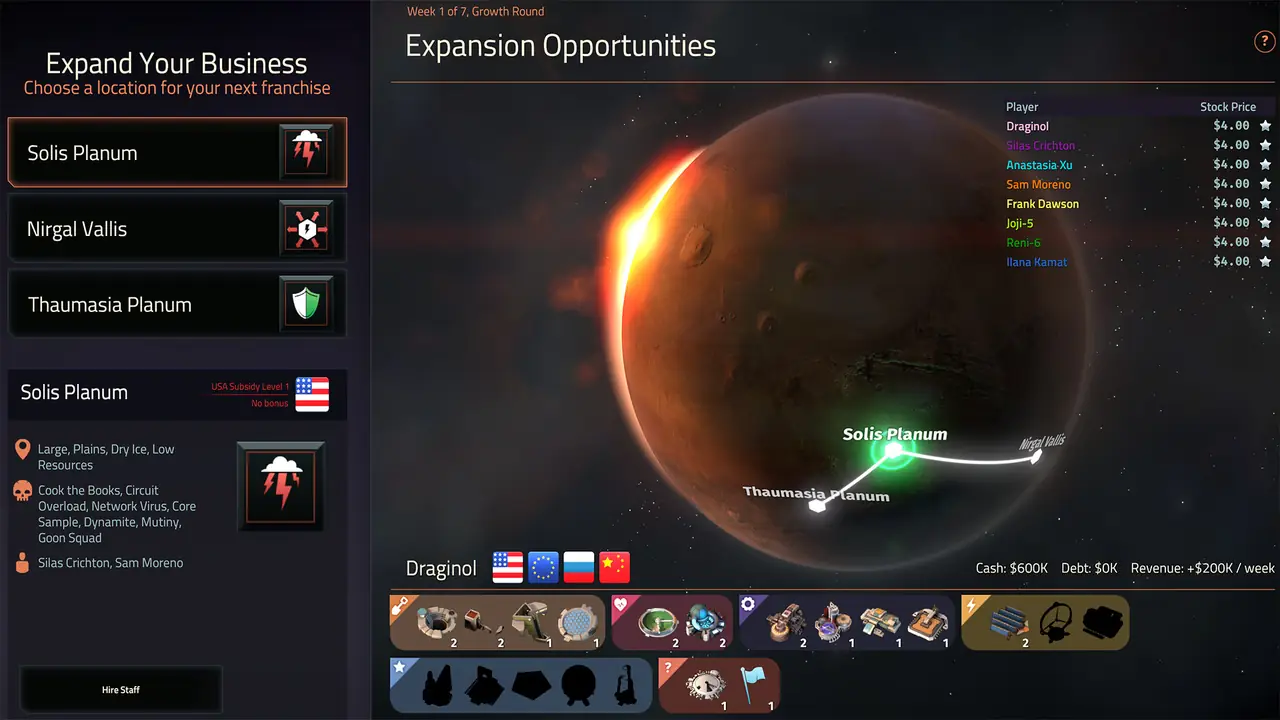
Offworld Trading Company
Matches can feature auctions where players bid cash on claims or special items, drawing from the same money used for expansion (triggers vary by mode).
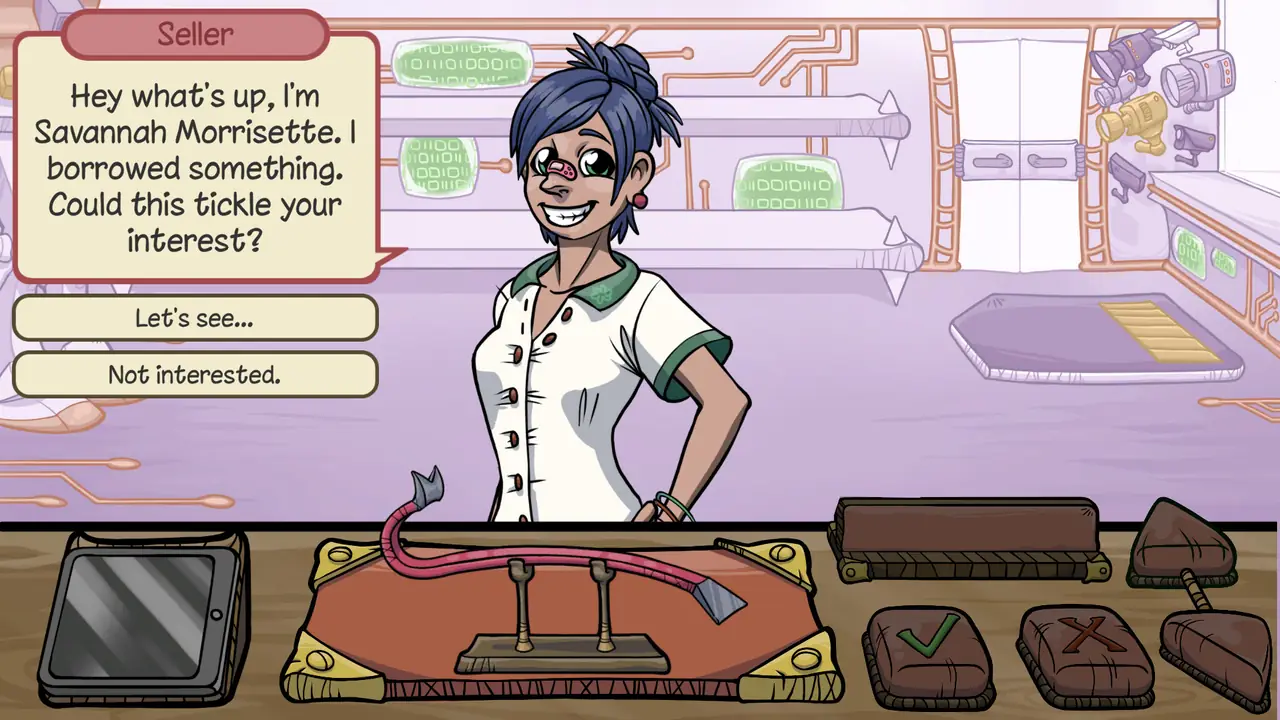
Dealer’s Life 2
Beyond shop deals, the game includes auctions against other bidders, where you estimate resale profit before bidding (details may vary by version).
The difference worth noticing
Offworld’s bidding happens amid real-time rivalry; Dealer’s Life 2 centers on personal appraisal and resale.
Case notes are Yoroll editorial summaries; rules may change between versions.
04What could you combine?
Key-like lots open sealed areas on earlier maps, so players set bid caps by estimating what backtracking will yield.
Prototype this combo in Yoroll→Follow the next idea

Find the Right Price
Not sure what it’s worth? Set a price and read the customer’s face.
- Prototype complexity
- Who plays
- Solo decisions
- 01Tag a price
- 02Watch the reaction
- 03Note the range
- 04Adjust next time

Debt on the Clock
A big debt and recurring due dates make every purchase feel tense.
- Prototype complexity
- Who plays
- Solo decisions
- 01Earn income
- 02Pay fixed costs
- 03Save for the due date
- 04Repay or reinvest

Supply-Driven Prices
Flood the market and prices fall; every sale moves the market.
- Prototype complexity
- Who plays
- Solo decisions
- 01Produce or stockpile
- 02Watch the price curve
- 03Sell at the right moment
- 04Your sale moves the price