
Supply-Driven Prices
Flood the market and prices fall; every sale moves the market.
- Prototype complexity
- Who plays
- Solo decisions
- Design focus
- Economy · Optimization · Risk
 No.273Offworld Trading Company
01The core loop
Action → feedback → next choice- 01Produce or stockpile
- 02Watch the price curve
- 03Sell at the right moment
- 04Your sale moves the price
↻Feedback changes the situation — the next round starts from there.
Walk through one round
A simplified design example. Situations and numbers illustrate the mechanic, not exact rules from a reference game.
- T1
Turn 1 · The situation
You hold 50 iron at 20 each, and every 10 sold drops the price by 2.
- T2
Turn 2 · The player chooses
Sell 20 and hold the rest.
- T3
Turn 3 · The feedback
You earn 380 and the price falls to 16; two rounds later it recovers to 19.
- T4
Turn 4 · The next decision
The player sells another 20 and builds a water plant to diversify.
How it plays
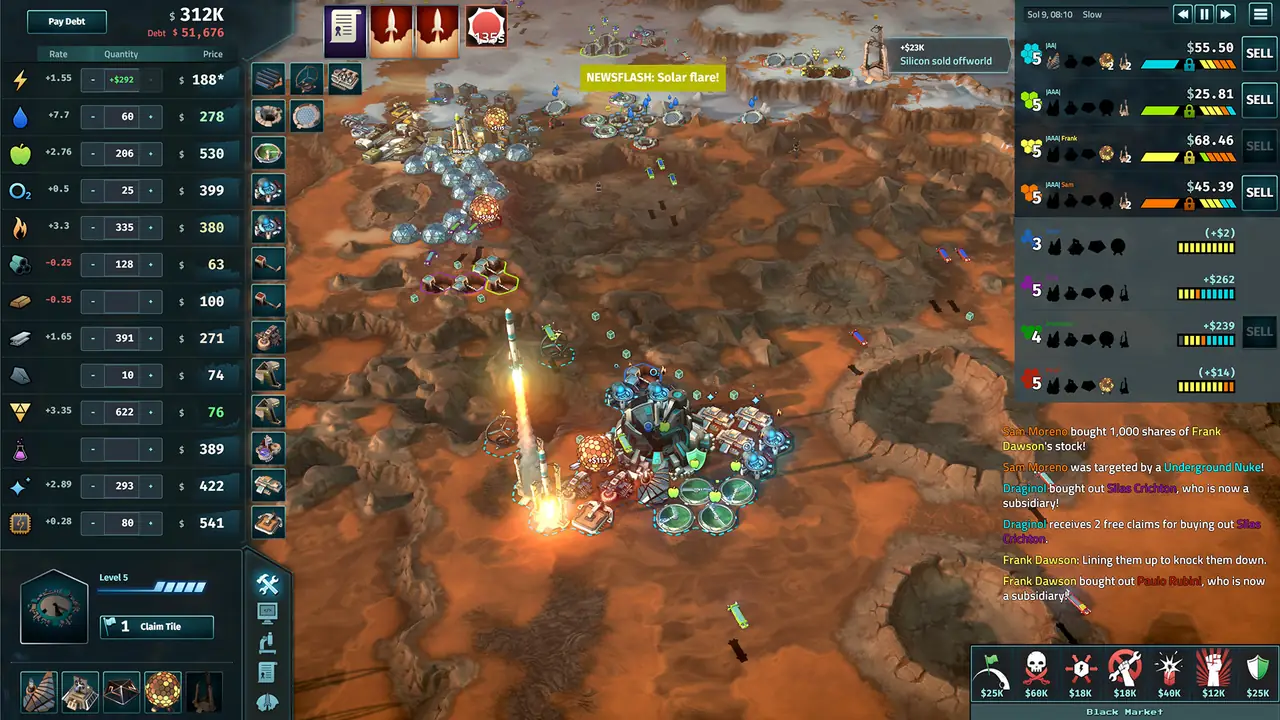
Each good’s price follows supply and demand; every unit you sell lowers it, every unit you buy raises it. Overproducing one good brings diminishing returns, pushing you to diversify or stockpile. Price charts and sale values are the key feedback.
What the player weighs
- Cash out now vs hold for a rebound
- Specialize vs diversify
02Start small
Scope is an editorial estimate for the minimum prototype, not the reference game or a production schedule.
03One mechanic, different implementations
Offworld Trading Company
All resources share a real-time market moved by every player’s trades, so rivals can crash the price of your main product.
Patrician IV
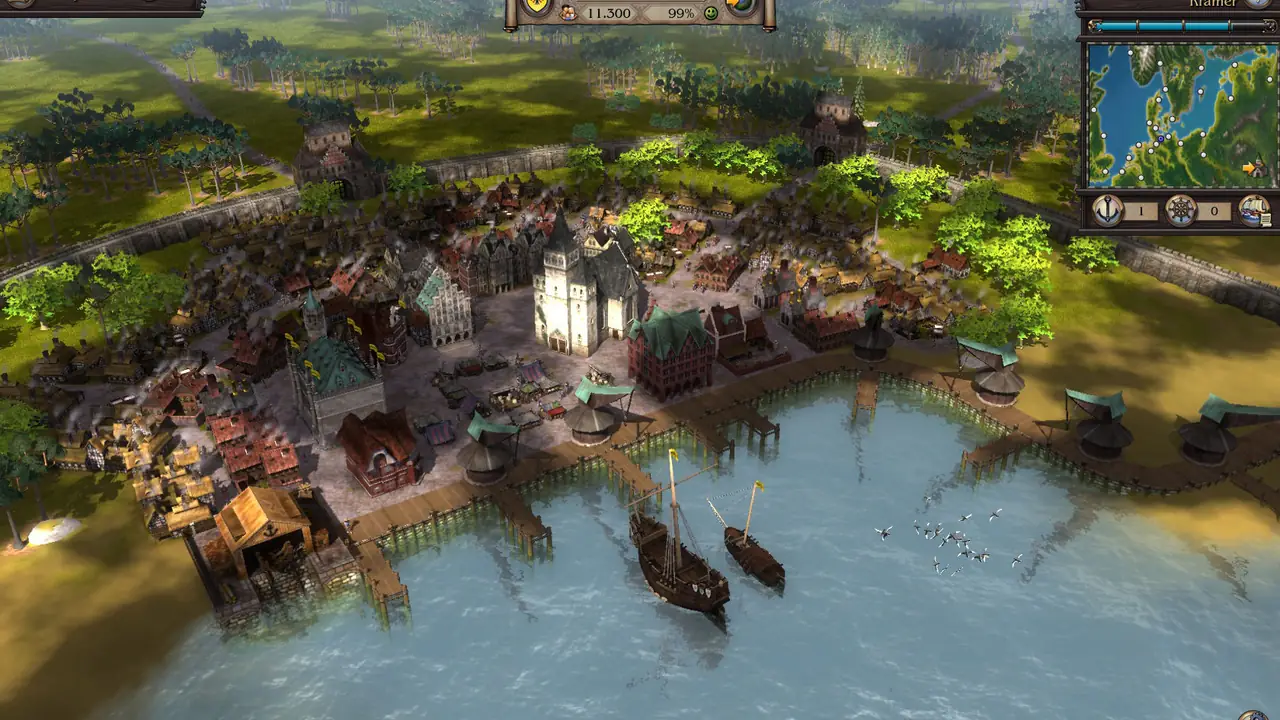
Each Hanseatic town prices goods by local stock and consumption, so dumping cargo quickly lowers what that town pays.
The difference worth noticing
Offworld has one shared market for all players; Patrician IV splits it into independent town markets.
Case notes are Yoroll editorial summaries; rules may change between versions.
04What could you combine?
Deeper ores are rarer, but flooding the market with deep ore crashes its price, so players balance how deep and how much to dig.
Prototype this combo in Yoroll→Follow the next idea

Know Your Max Bid
Holding your limit while others raise the bid is the hardest auction lesson.
- Prototype complexity
- Who plays
- Solo decisions
- 01Appraise the lot
- 02Set a personal cap
- 03Raise or drop out
- 04Win it or let it go

Debt on the Clock
A big debt and recurring due dates make every purchase feel tense.
- Prototype complexity
- Who plays
- Solo decisions
- 01Earn income
- 02Pay fixed costs
- 03Save for the due date
- 04Repay or reinvest

Haggling
A back-and-forth tug over price where a little greed pays and too much kills the deal.
- Prototype complexity
- Who plays
- Solo decisions
- 01They make an offer
- 02You counter
- 03Their patience shifts
- 04Deal or walk away