
Haggling
A back-and-forth tug over price where a little greed pays and too much kills the deal.
- Prototype complexity
- Who plays
- Solo decisions
- Design focus
- Economy · Timing · Risk
 No.272Potion Craft: Alchemist Simulator
01The core loop
Action → feedback → next choice- 01They make an offer
- 02You counter
- 03Their patience shifts
- 04Deal or walk away
↻Feedback changes the situation — the next round starts from there.
Walk through one round
A simplified design example. Situations and numbers illustrate the mechanic, not exact rules from a reference game.
- T1
Turn 1 · The situation
A buyer offers 80 for a potion; you guess their limit is near 110, and patience shows 3 pips.
- T2
Turn 2 · The player chooses
Counter at 120.
- T3
Turn 3 · The feedback
They frown and come up to 95, losing 2 pips of patience.
- T4
Turn 4 · The next decision
With one pip left, the player takes 95.
How it plays
Both sides take turns offering, and the other party has a hidden limit and limited patience. Each counter spends patience, extreme ones more, and empty patience ends the deal. Dialogue, expressions or a patience bar show how close you are.
What the player weighs
- Push one more round vs risk losing the deal
- Margin per sale vs pace and repeat customers
02Start small
Scope is an editorial estimate for the minimum prototype, not the reference game or a production schedule.
03One mechanic, different implementations
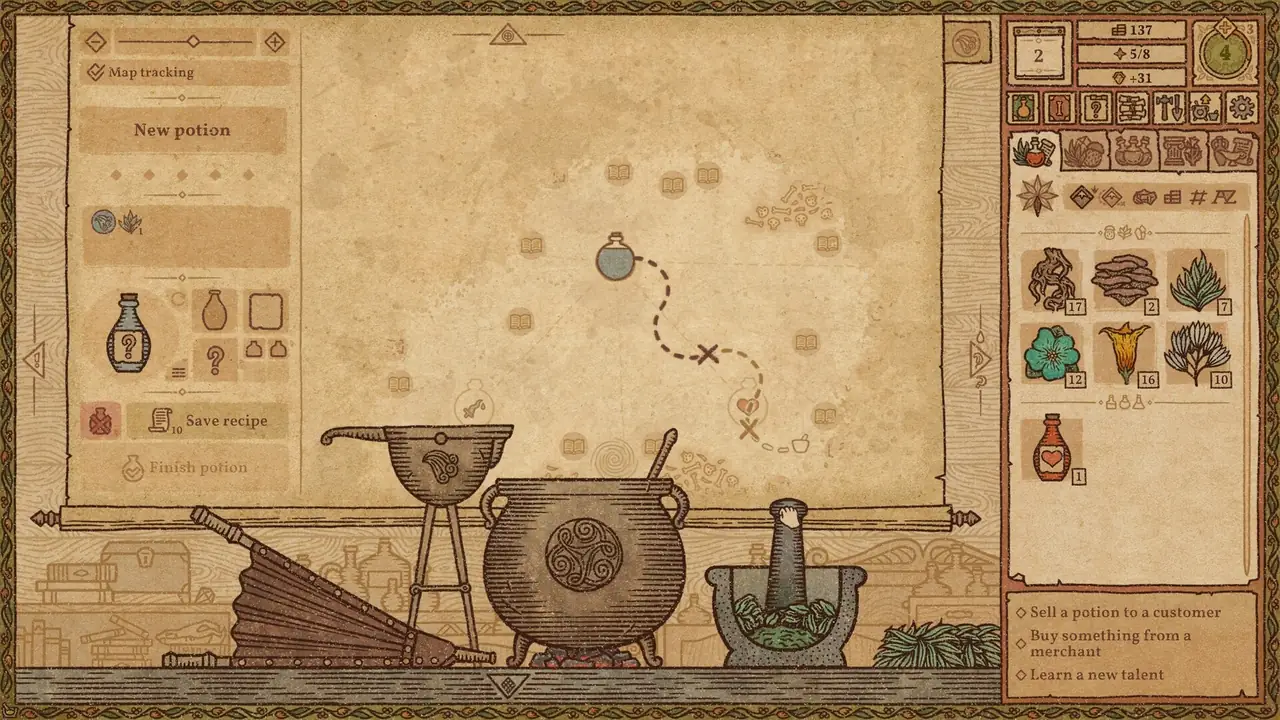
Potion Craft: Alchemist Simulator
Selling potions can trigger a haggling minigame where you stop a moving marker on favorable zones; misses sour the customer.
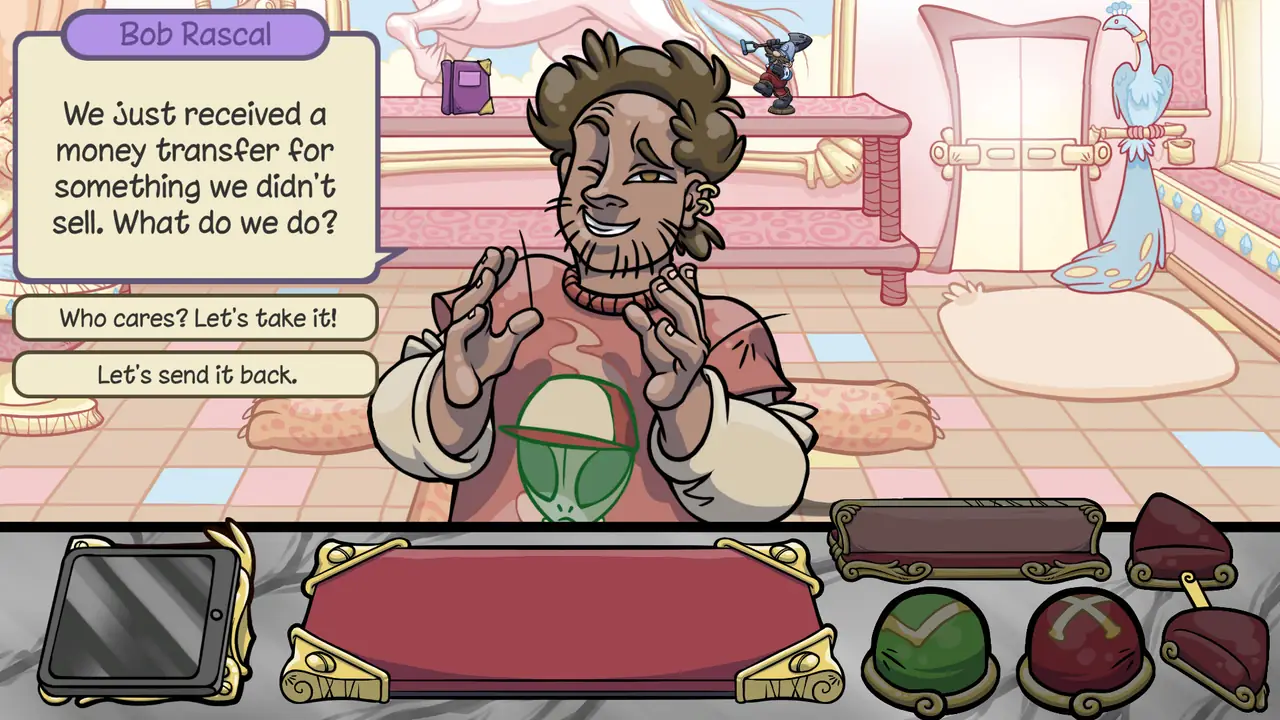
Dealer’s Life 2
As a pawnshop owner you trade offers with varied customers, each with patience and personality, and pushing too hard sends them away.
The difference worth noticing
Potion Craft turns haggling into a dexterity minigame; Dealer’s Life 2 is about reading people and numbers.
Case notes are Yoroll editorial summaries; rules may change between versions.
04What could you combine?
Let players offer substitute ingredients as part of a counter; accepted swaps lower the price but affect the client’s future goodwill.
Prototype this combo in Yoroll→Follow the next idea

Know Your Max Bid
Holding your limit while others raise the bid is the hardest auction lesson.
- Prototype complexity
- Who plays
- Solo decisions
- 01Appraise the lot
- 02Set a personal cap
- 03Raise or drop out
- 04Win it or let it go
Debt on the Clock
A big debt and recurring due dates make every purchase feel tense.
- Prototype complexity
- Who plays
- Solo decisions
- 01Earn income
- 02Pay fixed costs
- 03Save for the due date
- 04Repay or reinvest

Supply-Driven Prices
Flood the market and prices fall; every sale moves the market.
- Prototype complexity
- Who plays
- Solo decisions
- 01Produce or stockpile
- 02Watch the price curve
- 03Sell at the right moment
- 04Your sale moves the price