
Measured Dosing
A gram too much or too little changes the result, so pouring becomes a craft.
- Prototype complexity
- Who plays
- Solo decisions
- Design focus
- Precision · Dexterity · Information
 No.049Cooking Simulator
01The core loop
Action → feedback → next choice- 01Read the target amount
- 02Pour or weigh by hand
- 03Check the reading
- 04Score by deviation
↻Feedback changes the situation — the next round starts from there.
Walk through one round
A simplified design example. Situations and numbers illustrate the mechanic, not exact rules from a reference game.
- T1
Turn 1 · The situation
The recipe calls for 200 g flour and 65 °C water, with full marks within 5%.
- T2
Turn 2 · The player chooses
The player pours quickly, stopping at 190 g, then heats water to 70 °C.
- T3
Turn 3 · The feedback
Flour sits exactly at 5% for full marks, but water is 7.7% hot, costing a star.
- T4
Turn 4 · The next decision
Next time they cut the heat early, learning to manage overshoot from residual heat.
How it plays
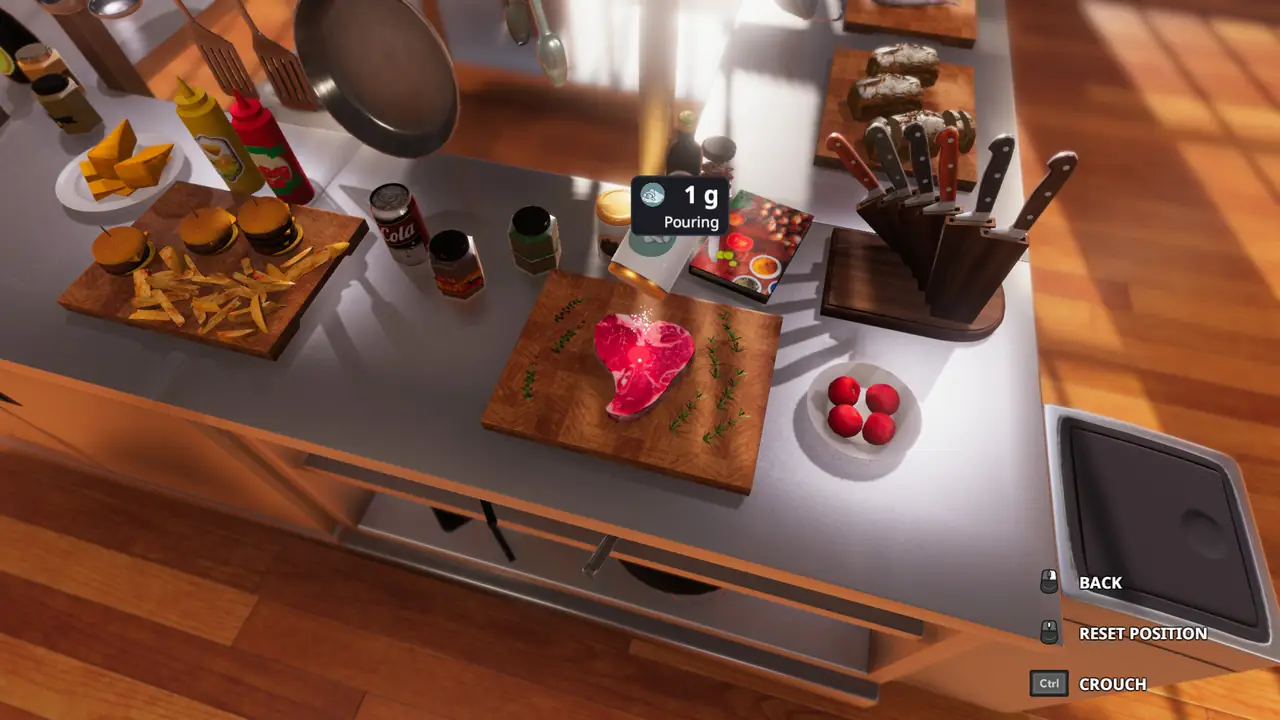
Recipes give exact weights, temperatures or times, and players pour, weigh and control heat by hand to hit them. The system scores by deviation, or lets flavor and quality shift with it. Scales, readouts and gauge needles show whether you're on target.
What the player weighs
- Pour slowly for accuracy, or work fast to save time.
- Follow the recipe exactly, or deviate on purpose to explore new flavors.
02Start small
Scope is an editorial estimate for the minimum prototype, not the reference game or a production schedule.
03One mechanic, different implementations
Cooking Simulator
Players handle ingredients, season and manage heat by hand in a physics-driven kitchen, and dishes are rated by how closely they match the recipe.
Brewmaster: Beer Brewing Simulator
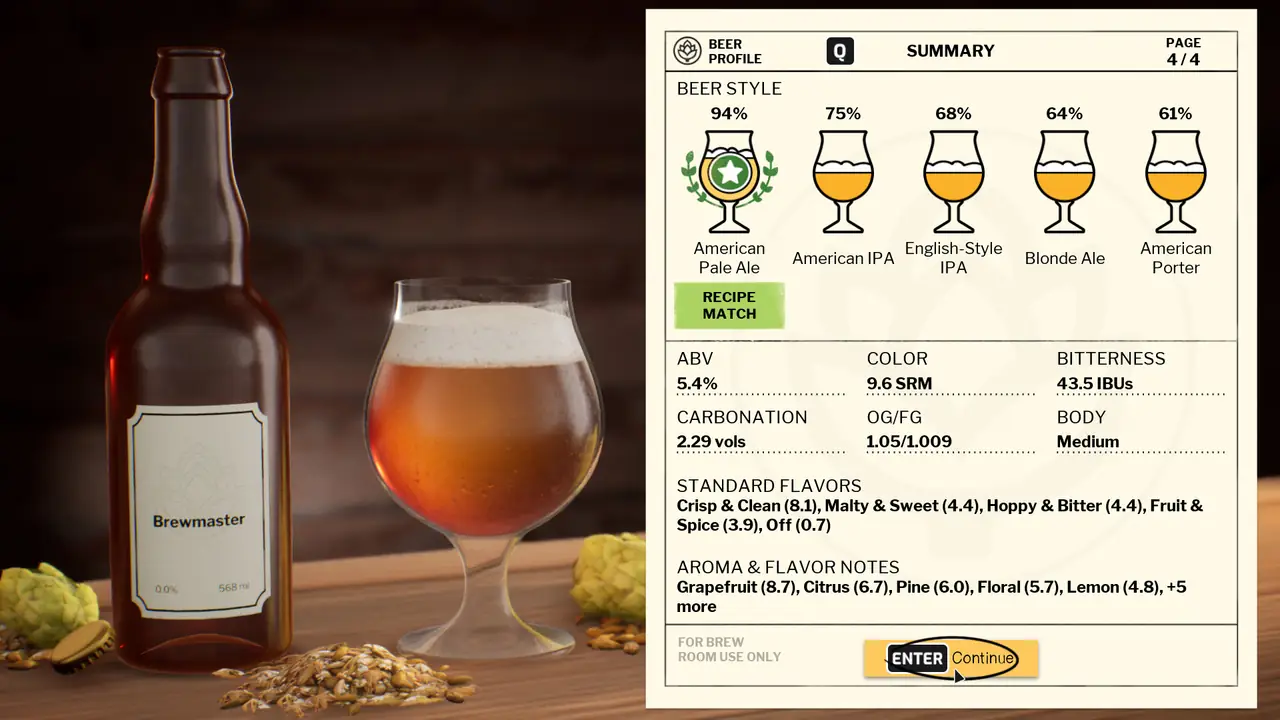
As I recall, brewing involves weighing malt, holding mash temperatures and measuring gravity, with beers judged against style guidelines.
The difference worth noticing
Cooking Simulator's precision lives in hands-on handling; Brewmaster leans on readings and process control.
Case notes are Yoroll editorial summaries; rules may change between versions.
04What could you combine?
Players borrow to buy costly ingredients, so each measuring error burns principal, and as the due date nears they grow wary of experiments.
Prototype this combo in Yoroll→Follow the next idea

Cooking to the Judge
Judges have tastes, and your dish must hit them as closely as possible within the time.
- Prototype complexity
- Who plays
- Solo decisions
- 01Learn the judge's tastes
- 02Pick and combine ingredients
- 03Tune the flavor balance
- 04Serve and get scored

Learning Recipes
You hold the ingredients but lack know-how; each recipe gives old items a new use.
- Prototype complexity
- Who plays
- Solo decisions
- 01Obtain a recipe somewhere
- 02Check needed ingredients
- 03Gather and cook
- 04Use the dish's effects

Know Your Max Bid
Holding your limit while others raise the bid is the hardest auction lesson.
- Prototype complexity
- Who plays
- Solo decisions
- 01Appraise the lot
- 02Set a personal cap
- 03Raise or drop out
- 04Win it or let it go