
Assign the Roll
Roll first, then slot each result into the ability that wants it most.
- Prototype complexity
- Who plays
- Solo decisions
- Design focus
- Randomness · Planning · Optimization
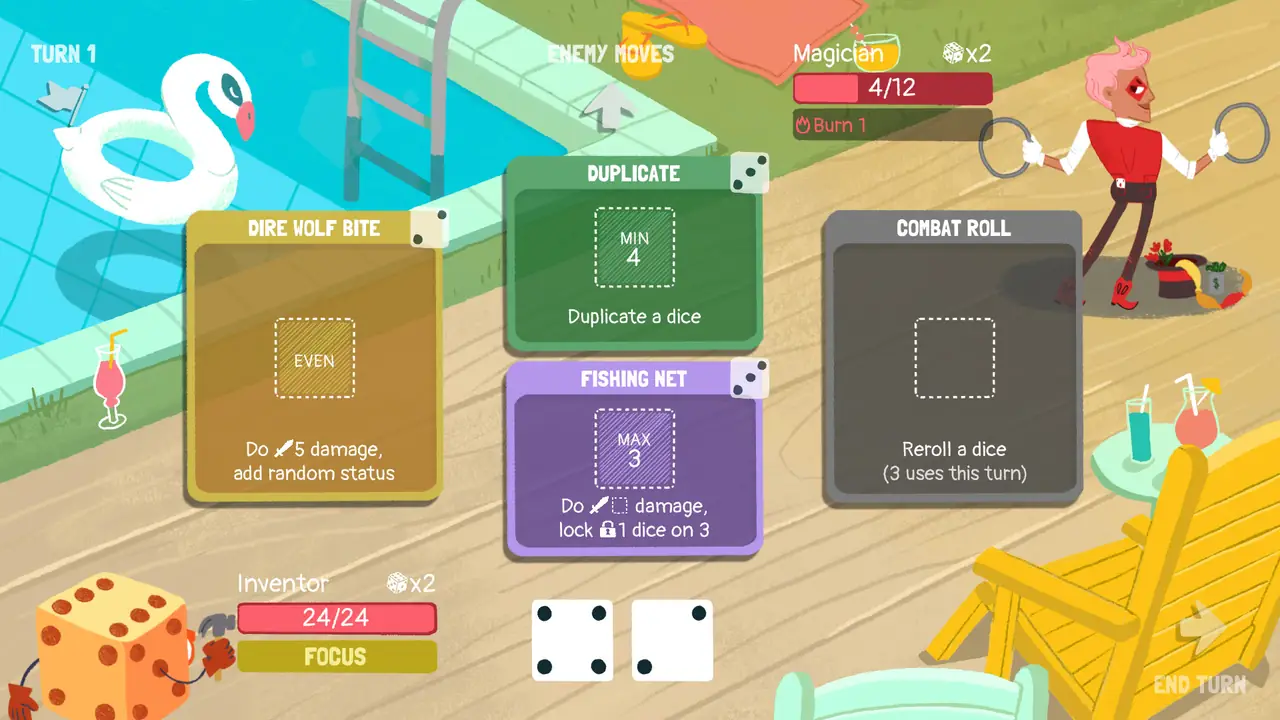 No.070Dicey Dungeons
01The core loop
Action → feedback → next choice- 01Roll the dice pool
- 02Check slot requirements
- 03Place dice into slots
- 04Effects resolve
↻Feedback changes the situation — the next round starts from there.
Walk through one round
A simplified design example. Situations and numbers illustrate the mechanic, not exact rules from a reference game.
- T1
Turn 1 · The situation
You roll 6, 2, 1; a sword deals pip damage, a shield needs 3 or less, and a splitter halves a die into two.
- T2
Turn 2 · The player chooses
6 to sword, 2 to shield, 1 is left unused.
- T3
Turn 3 · The feedback
6 damage and 2 block; the 1 is wasted.
- T4
Turn 4 · The next decision
Next time, the player considers splitting 6 into 3+3 to feed both.
How it plays
Each turn you roll several dice; abilities have conditional slots like ‘even’, ‘3 or less’ or ‘damage equals pip’. Randomness lives in the roll and strategy in the placement, with some slots splitting or altering dice. Lit slots and damage numbers give instant feedback.
What the player weighs
- High pips for damage vs for defense slots
- Spend a modifier slot vs use dice as rolled
02Start small
Scope is an editorial estimate for the minimum prototype, not the reference game or a production schedule.
03One mechanic, different implementations
Dicey Dungeons
Each equipment card is a dice slot with conditions, and each character adds a twist, like flipping dice or charging up gear.
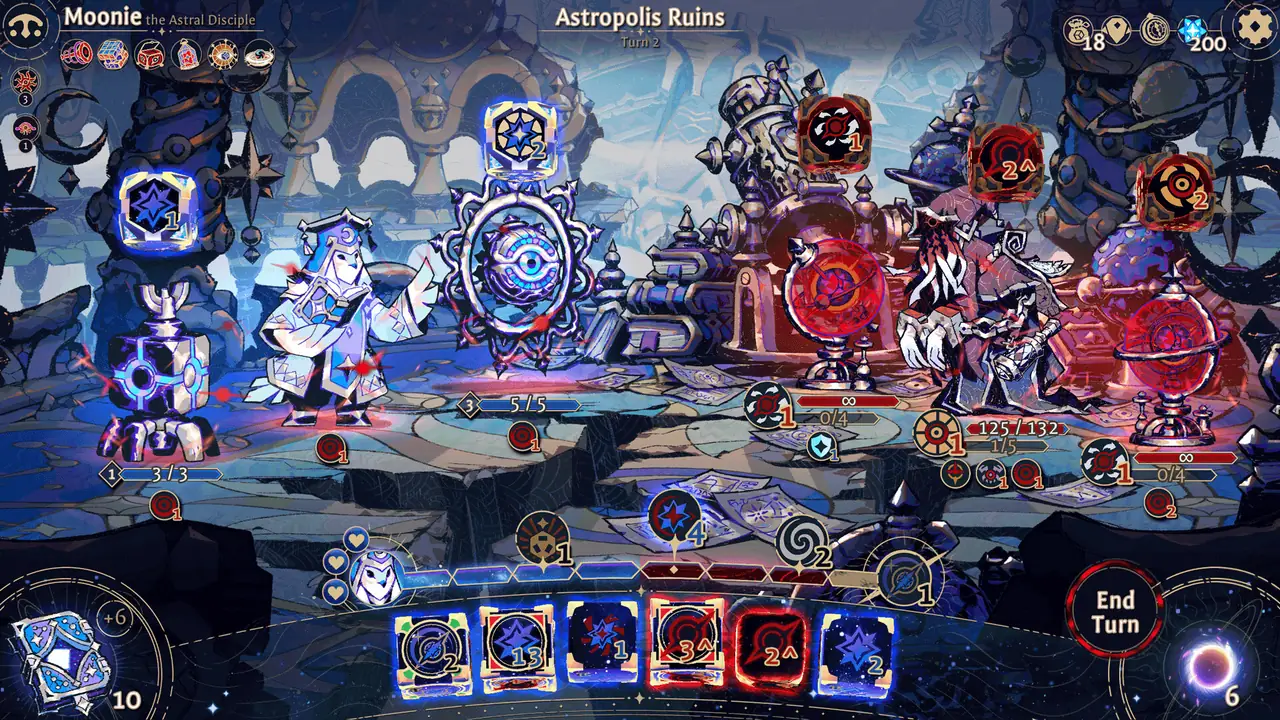
Astrea: Six-Sided Oracles
Dice faces are purify or corrupt; you spend dice to hit enemies or power sentinel abilities, and corrupt faces hurt you (details may vary by version).
The difference worth noticing
In Dicey Dungeons the risk is a bad fit; Astrea makes the dice themselves a double-edged resource.
Case notes are Yoroll editorial summaries; rules may change between versions.
04What could you combine?
Use dice to assemble a device in stages: each part accepts specific pips, and finishing within three turns activates a powerful machine.
Prototype this combo in Yoroll→Follow the next idea
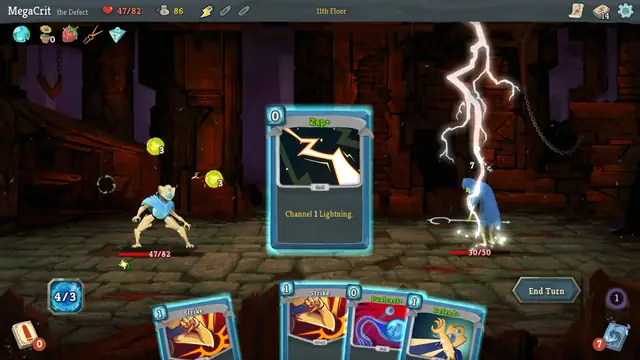
Pick One or Pass
Every win offers new cards, yet the sharpest pick is sometimes taking none.
- Prototype complexity
- Who plays
- Solo decisions
- 01Win a fight
- 02Review a few offered cards
- 03Take one or skip
- 04Next fight tests the deck
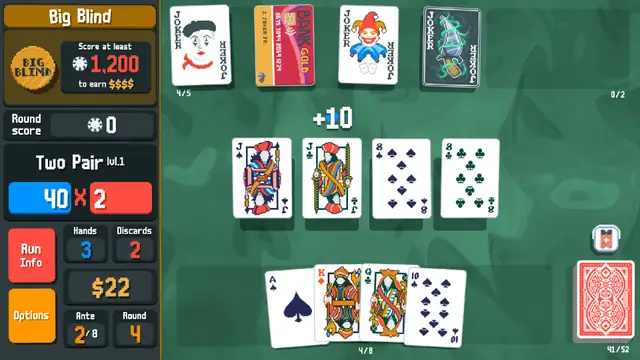
Toss and Redraw
Throw away dead cards for fresh ones, spending limited tries to chase the one you need.
- Prototype complexity
- Who plays
- Solo decisions
- 01Read your hand
- 02Pick cards to toss
- 03Draw replacements
- 04Commit or gamble again
Clone Your Best Card
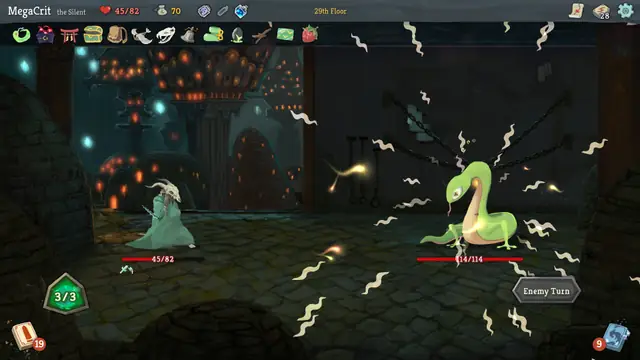
Copy the card you’ve already invested in and double the return on that investment.
- Prototype complexity
- Who plays
- Solo decisions
- 01Grow a core card
- 02Find a copy effect
- 03Clone it with upgrades
- 04It shows up twice as often