
Pick One or Pass
Every win offers new cards, yet the sharpest pick is sometimes taking none.
- Prototype complexity
- Who plays
- Solo decisions
- Design focus
- Planning · Randomness · Optimization
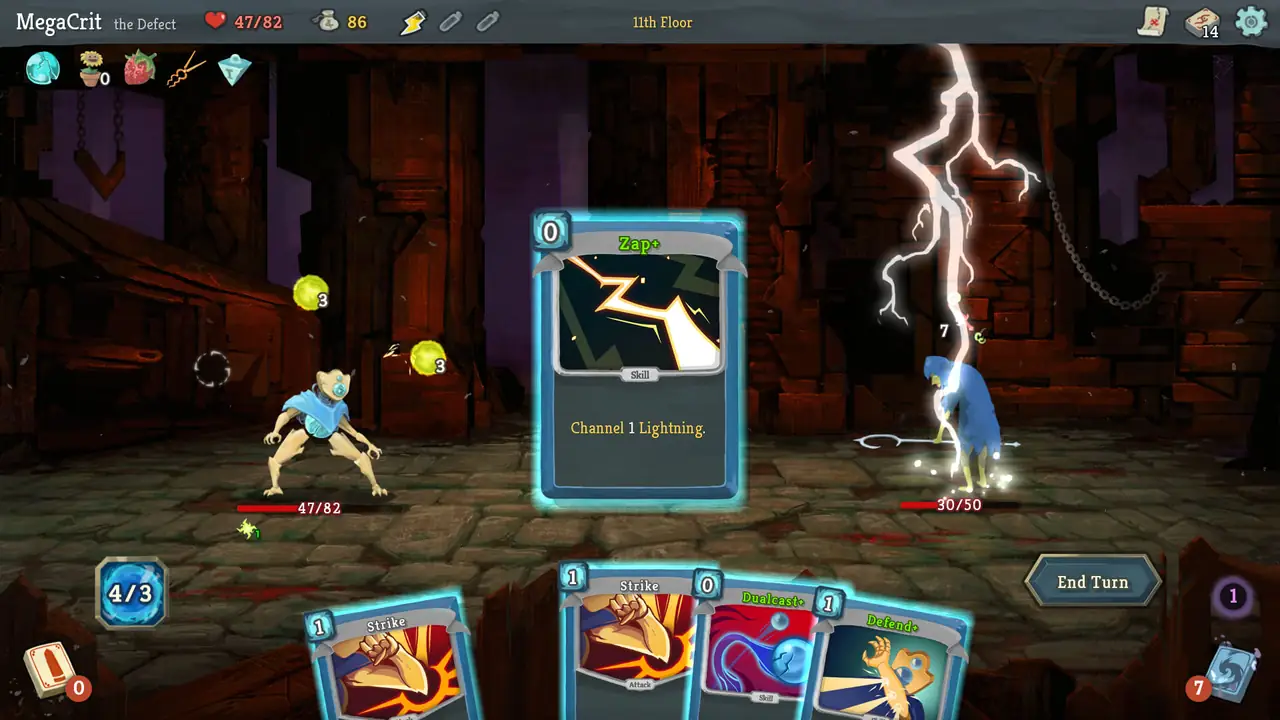 No.061Slay the Spire
01The core loop
Action → feedback → next choice- 01Win a fight
- 02Review a few offered cards
- 03Take one or skip
- 04Next fight tests the deck
↻Feedback changes the situation — the next round starts from there.
Walk through one round
A simplified design example. Situations and numbers illustrate the mechanic, not exact rules from a reference game.
- T1
Turn 1 · The situation
A 15-card deck with 3 key draw cards; rewards are a basic attack, a block card and a pricey 2-cost spell.
- T2
Turn 2 · The player chooses
None fits the plan, so the player skips.
- T3
Turn 3 · The feedback
Key-card density stays at 20%, and the engine comes online by turn 2.
- T4
Turn 4 · The next decision
At the elite reward, the player loosens standards for a strong rare.
How it plays
After a fight the game rolls a small set of cards; you may take one or refuse them all. Every addition dilutes the deck and lowers the odds of drawing your key cards. The next fight is the verdict: hands either flow better or clog.
What the player weighs
- Immediate power vs deck consistency
- Commit to an archetype vs stay flexible
02Start small
Scope is an editorial estimate for the minimum prototype, not the reference game or a production schedule.
03One mechanic, different implementations
Slay the Spire
Normal fights offer three cards or a skip, elites and bosses raise rarity, and some relics reward skipping or widen the offer.
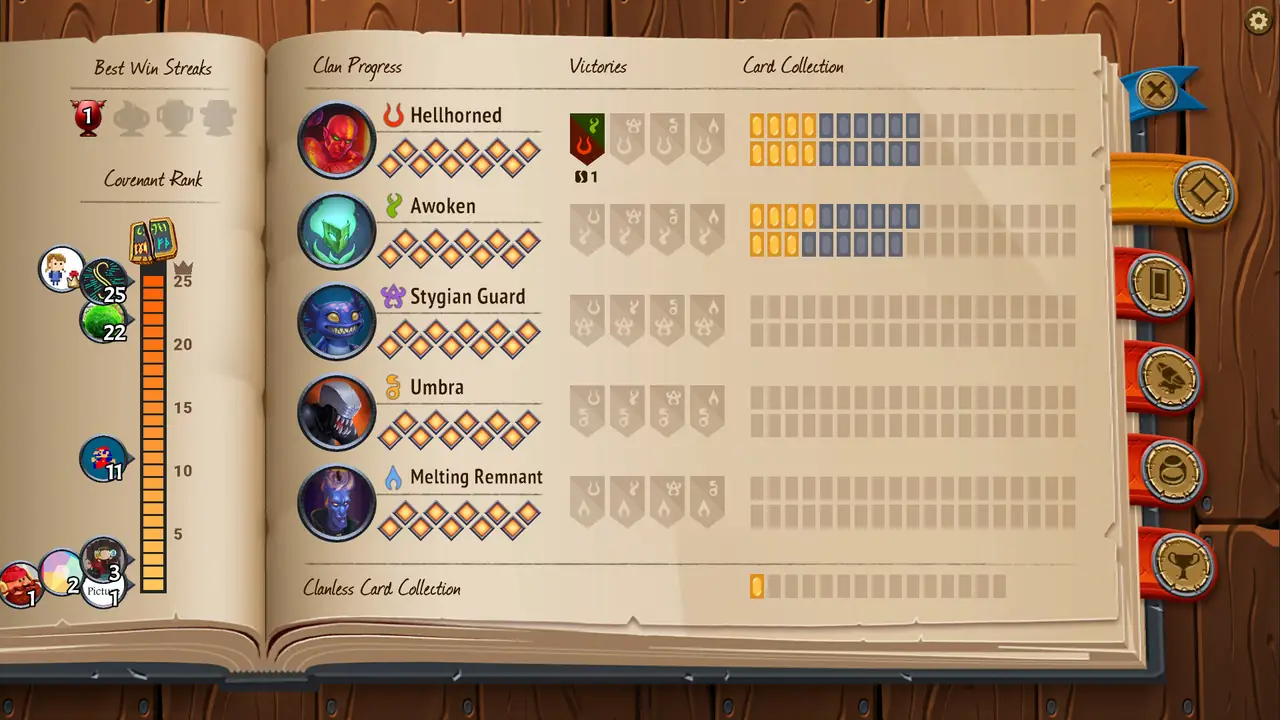
Monster Train
After each battle you draft from both clans’ pools, choosing between units and spells that reshape how you defend each floor.
The difference worth noticing
Slay the Spire’s pick is mostly about deck density; Monster Train adds the spatial cost of units taking floor capacity.
Case notes are Yoroll editorial summaries; rules may change between versions.
04What could you combine?
Skipped rewards enter the discard pile as ‘ghost cards’ that vanish after three reshuffles, so passing carries a brief cost in the draw cycle.
Prototype this combo in Yoroll→Follow the next idea
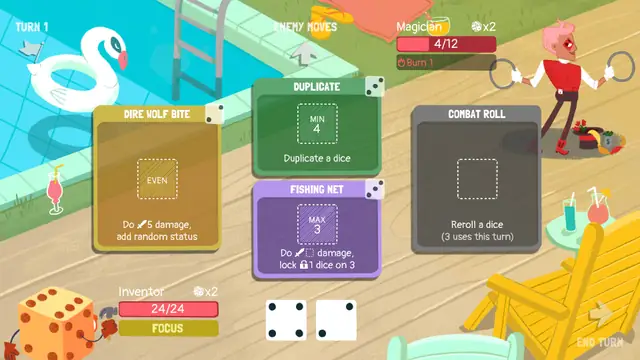
Assign the Roll
Roll first, then slot each result into the ability that wants it most.
- Prototype complexity
- Who plays
- Solo decisions
- 01Roll the dice pool
- 02Check slot requirements
- 03Place dice into slots
- 04Effects resolve
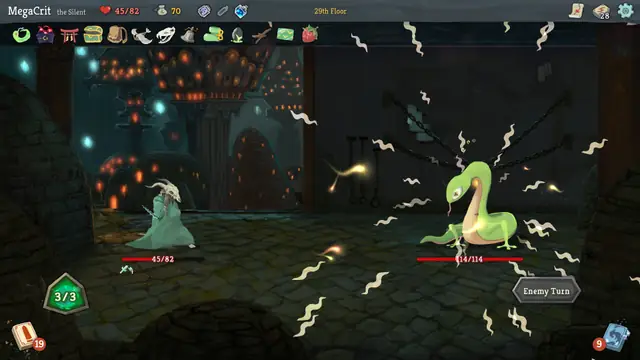
Draw–Discard Combat Cycle
Draw a hand, play it, discard it; the deck's cycle is the fight's heartbeat.
- Prototype complexity
- Who plays
- Solo decisions
- 01Draw a hand
- 02Spend energy to play
- 03Discard at turn end
- 04Reshuffle and repeat
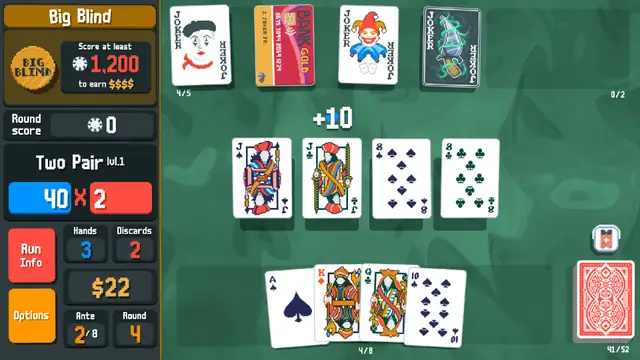
Toss and Redraw
Throw away dead cards for fresh ones, spending limited tries to chase the one you need.
- Prototype complexity
- Who plays
- Solo decisions
- 01Read your hand
- 02Pick cards to toss
- 03Draw replacements
- 04Commit or gamble again