
Burn It for the Fight
Strong cards that vanish for the rest of the fight trade longevity for a decisive spike.
- Prototype complexity
- Who plays
- Solo decisions
- Design focus
- Risk · Timing · Planning
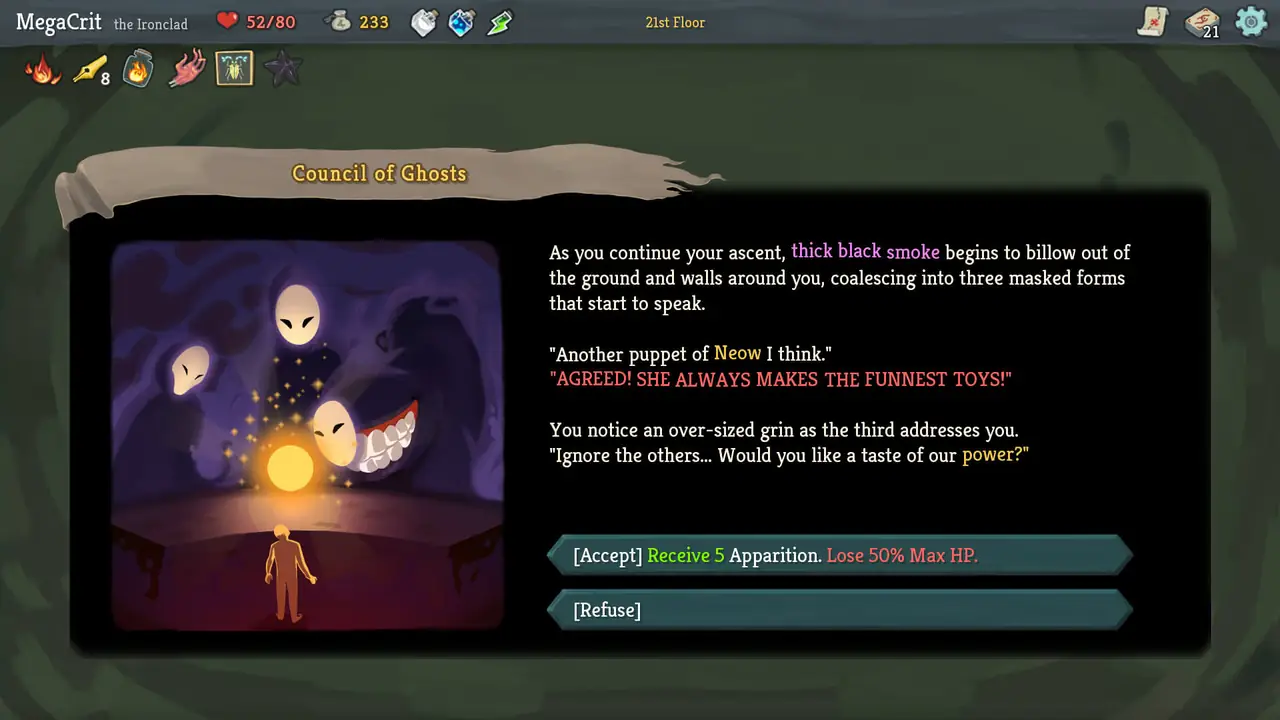 No.063Slay the Spire
01The core loop
Action → feedback → next choice- 01Draw a one-use card
- 02Judge the burst moment
- 03Play it; it leaves combat
- 04Thinner deck draws cleaner
↻Feedback changes the situation — the next round starts from there.
Walk through one round
A simplified design example. Situations and numbers illustrate the mechanic, not exact rules from a reference game.
- T1
Turn 1 · The situation
The boss has 45 HP and will hit for 28 next turn; you hold a 12-damage exhaust card and an exhaust card granting permanent strength.
- T2
Turn 2 · The player chooses
The player plays the strength card first and uses normal attacks, keeping the 12-damage card.
- T3
Turn 3 · The feedback
The boss drops to 8 HP; the player eats 28 damage but survives.
- T4
Turn 4 · The next decision
Next turn, the saved exhaust attack finishes it.
How it plays
Cards with an exhaust keyword far outclass normal cards but leave the fight once played, returning only after combat. They provide burst and also slim the remaining draw pile. A visible exhaust pile and cleaner later hands give feedback.
What the player weighs
- Use it now vs save it for a worse turn
- Single-fight spike vs value in long fights
02Start small
Scope is an editorial estimate for the minimum prototype, not the reference game or a production schedule.
03One mechanic, different implementations
Slay the Spire
Exhaust is a core keyword; the Ironclad has many cards and powers that pay off on exhaust, such as gaining block per exhausted card.
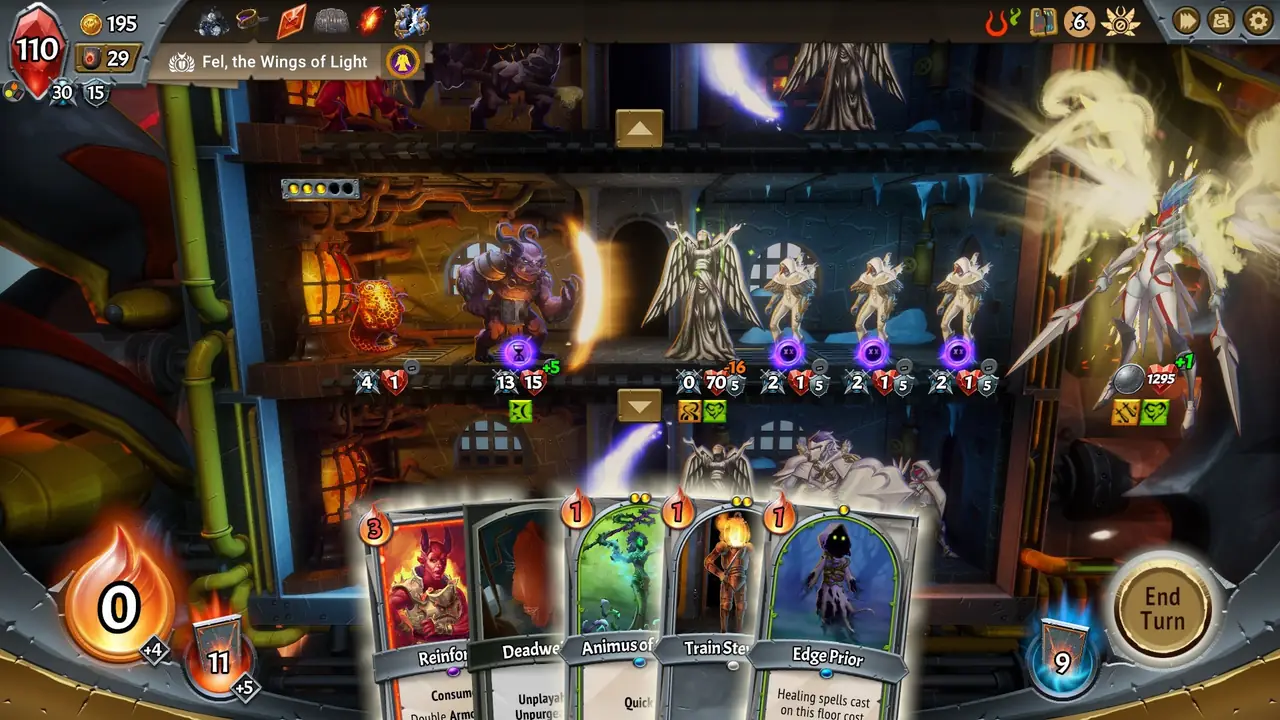
Monster Train
Spells with Consume can be cast once per battle, often reserved for big board effects or key buffs.
The difference worth noticing
Slay the Spire turns exhausting into an archetype resource; Monster Train mostly uses it as a limiter on strong spells.
Case notes are Yoroll editorial summaries; rules may change between versions.
04What could you combine?
Exhaust cards deal double to staggered enemies, so players build stagger with normal cards, then spend their one-shot in the punish window.
Prototype this combo in Yoroll→Follow the next idea
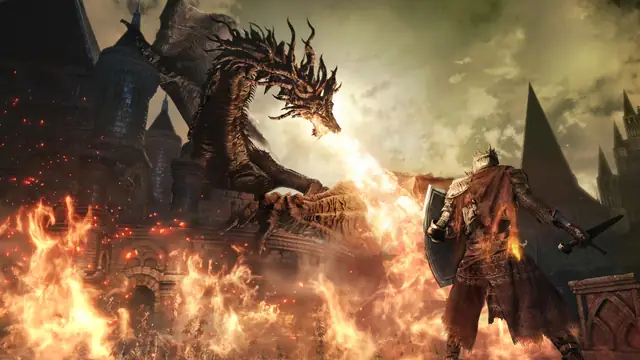
One Stamina Bar for Everything
Swinging, blocking and rolling share one bar, so every attack borrows from your escape.
- Prototype complexity
- Who plays
- Solo decisions
- 01Read the enemy's rhythm
- 02Spend stamina to act
- 03Hold a reserve, let it refill
- 04Strike again in the gap
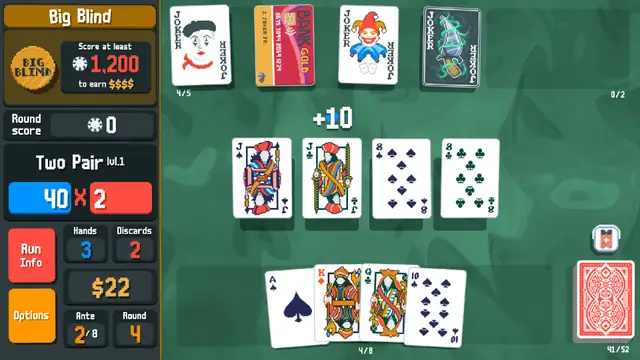
Toss and Redraw
Throw away dead cards for fresh ones, spending limited tries to chase the one you need.
- Prototype complexity
- Who plays
- Solo decisions
- 01Read your hand
- 02Pick cards to toss
- 03Draw replacements
- 04Commit or gamble again
One Card, Two Uses
Each card holds two uses, and choosing one forfeits the other.
- Prototype complexity
- Who plays
- Solo decisions
- 01Hold a two-sided card
- 02Compare both uses
- 03Commit to one
- 04The other is gone