
Hands as Actions
Form pairs, straights or flushes to unlock the actions and power they map to.
- Prototype complexity
- Who plays
- Solo decisions
- Design focus
- Planning · Randomness
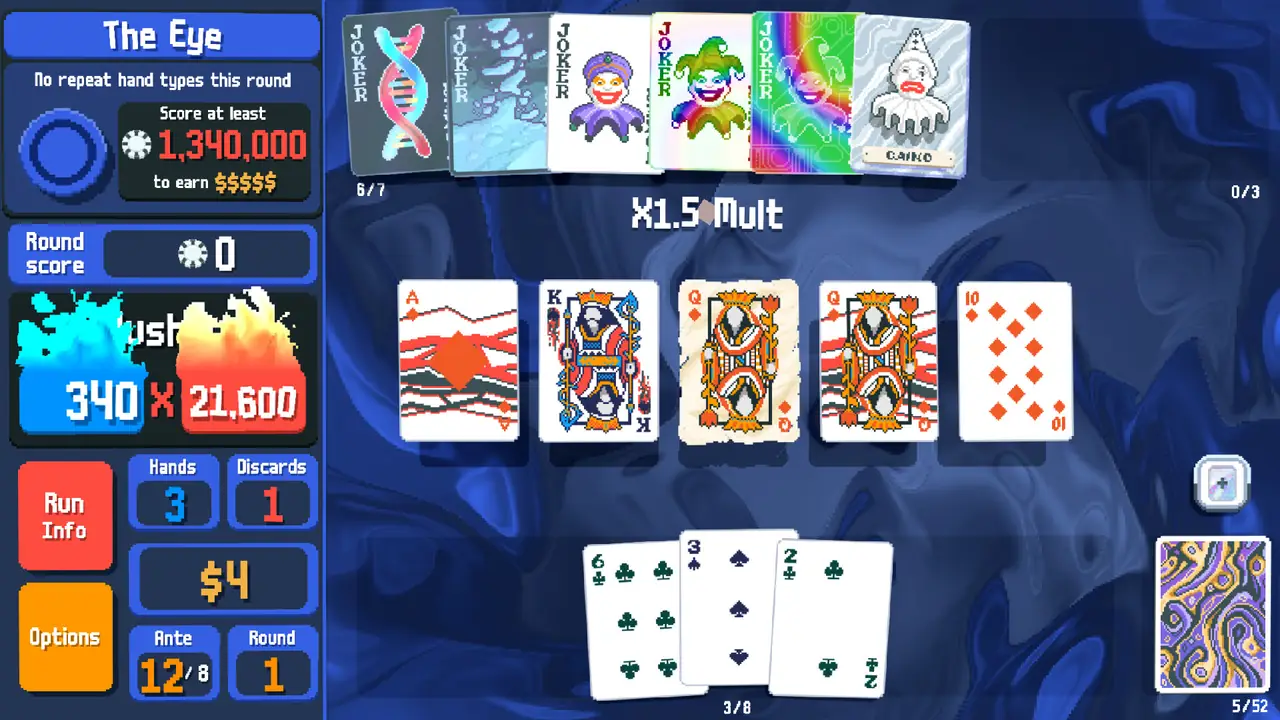 No.071Balatro
01The core loop
Action → feedback → next choice- 01Draw a hand
- 02Spot possible patterns
- 03Play a pattern to act
- 04Payoff scales with rarity
↻Feedback changes the situation — the next round starts from there.
Walk through one round
A simplified design example. Situations and numbers illustrate the mechanic, not exact rules from a reference game.
- T1
Turn 1 · The situation
You hold a pair of 7s and a four-card run; a pair deals 8, a straight 20.
- T2
Turn 2 · The player chooses
The player plays the pair for safe damage and keeps the run.
- T3
Turn 3 · The feedback
The enemy loses 8; next turn the missing card arrives for a 20-damage straight.
- T4
Turn 4 · The next decision
The player considers leveling straights further.
How it plays
Cards are just suits and ranks; effects come from the pattern you play. Harder patterns pay more, so players weigh safe small hands against chasing big ones. Pattern names light up with a preview before you commit.
What the player weighs
- Bank a small hand vs chase a big one
- Level a common hand vs invest in a high-ceiling one
02Start small
Scope is an editorial estimate for the minimum prototype, not the reference game or a production schedule.
03One mechanic, different implementations
Balatro
The poker hand played sets base chips and mult, and Planet cards level specific hands, so builds orbit a chosen pattern.
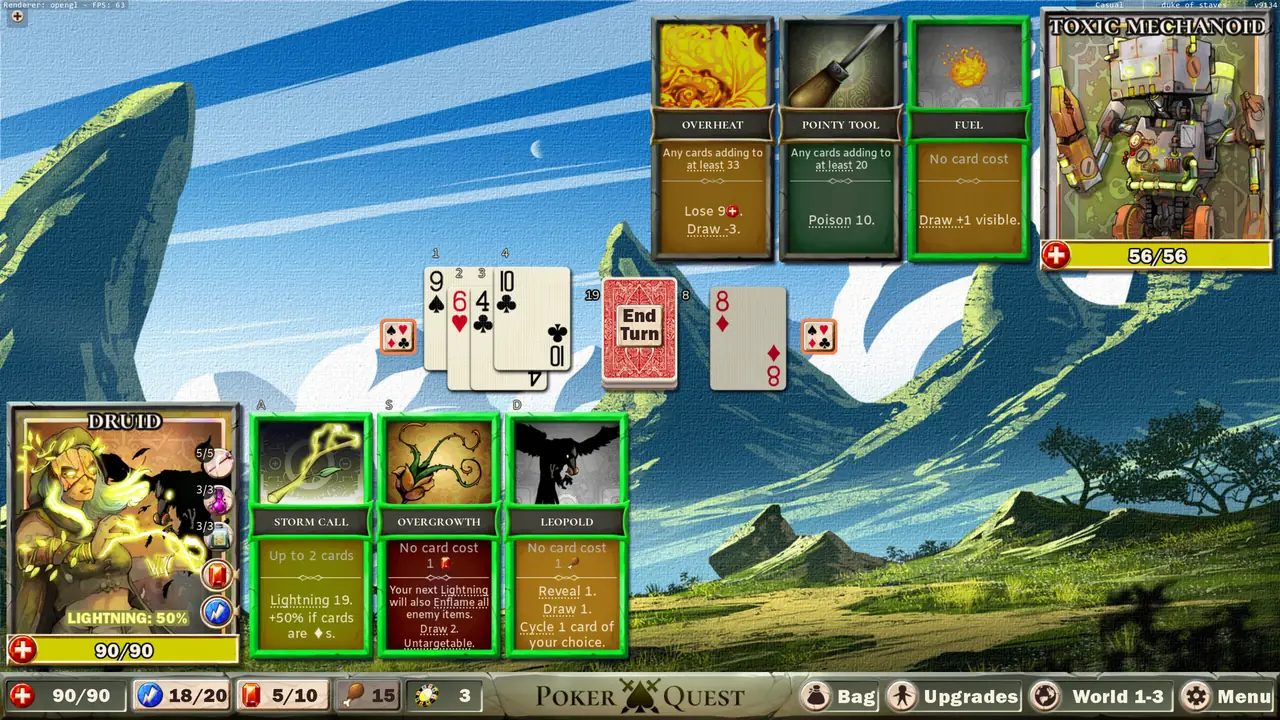
Poker Quest
In turn-based fights you form poker hands to attack and defend, with stronger hands hitting harder (exact rules may differ).
The difference worth noticing
Balatro uses patterns purely for scoring; Poker Quest grafts them onto attack and defense actions.
Case notes are Yoroll editorial summaries; rules may change between versions.
04What could you combine?
Treat patterns as orders: clients request ‘a flush’ or ‘two pairs’ by a deadline, paying on time and walking away if late.
Prototype this combo in Yoroll→Follow the next idea
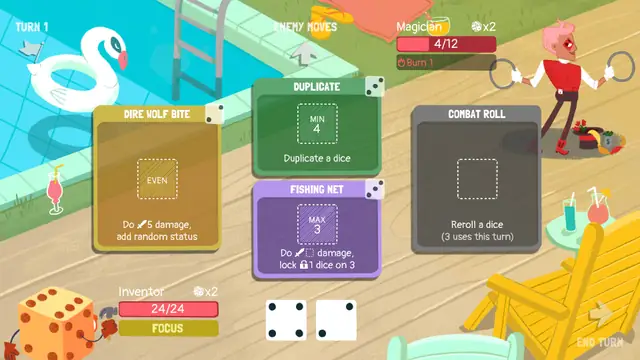
Assign the Roll
Roll first, then slot each result into the ability that wants it most.
- Prototype complexity
- Who plays
- Solo decisions
- 01Roll the dice pool
- 02Check slot requirements
- 03Place dice into slots
- 04Effects resolve
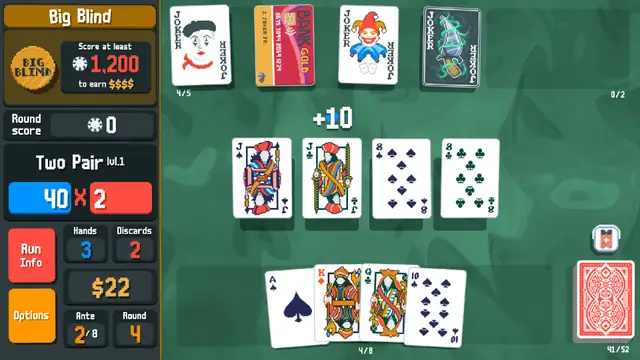
Toss and Redraw
Throw away dead cards for fresh ones, spending limited tries to chase the one you need.
- Prototype complexity
- Who plays
- Solo decisions
- 01Read your hand
- 02Pick cards to toss
- 03Draw replacements
- 04Commit or gamble again
Pick One or Pass
Every win offers new cards, yet the sharpest pick is sometimes taking none.
- Prototype complexity
- Who plays
- Solo decisions
- 01Win a fight
- 02Review a few offered cards
- 03Take one or skip
- 04Next fight tests the deck