
Passives That Bend Rules
One passive can rewrite a base rule and force you to rethink your whole build.
- Prototype complexity
- Who plays
- Solo decisions
- Design focus
- Discovery · Planning · Creativity
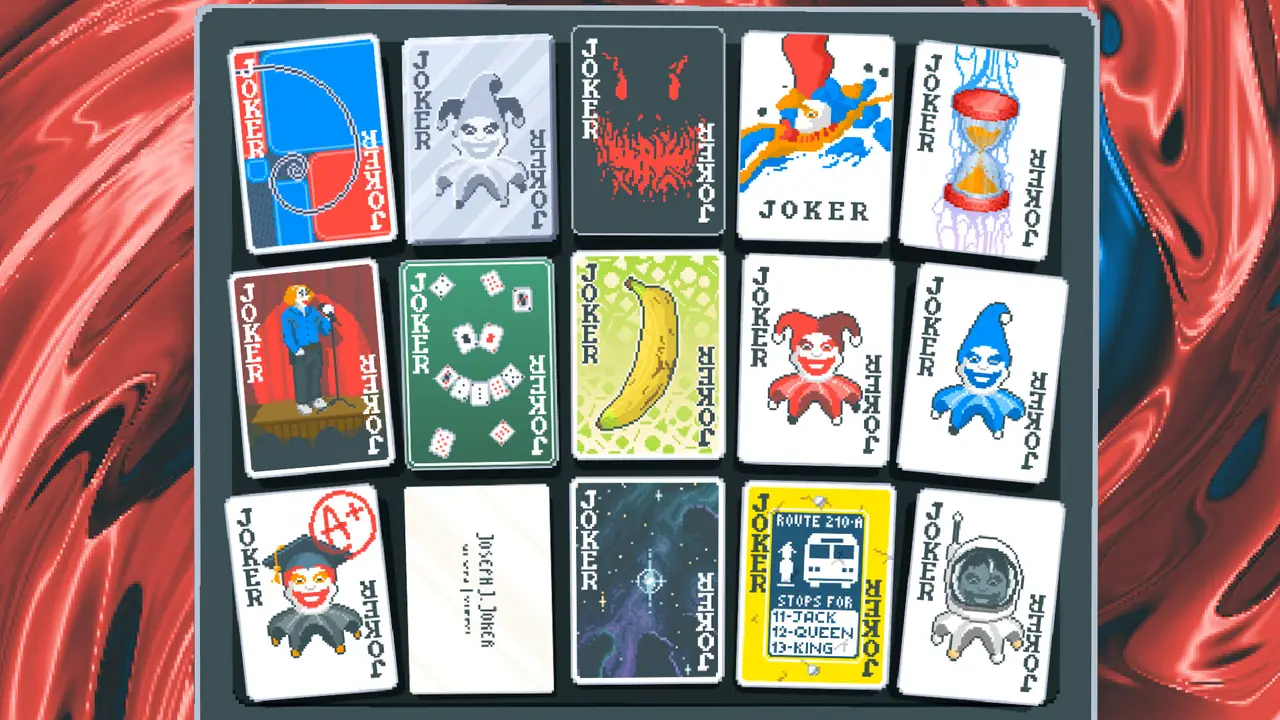 No.072Balatro
01The core loop
Action → feedback → next choice- 01Gain a rule-bending passive
- 02Grasp the new rule
- 03Rebuild around it
- 04Discover new combos
↻Feedback changes the situation — the next round starts from there.
Walk through one round
A simplified design example. Situations and numbers illustrate the mechanic, not exact rules from a reference game.
- T1
Turn 1 · The situation
Your build plays pairs; the shop offers ‘face cards count as every suit’ for 6 gold, and you have 8.
- T2
Turn 2 · The player chooses
Buy it and start gathering face cards for flushes.
- T3
Turn 3 · The feedback
Next round, three face cards plus two hearts make a flush and double the score.
- T4
Turn 4 · The next decision
The old pair bonus looks redundant, so the player considers selling it.
How it plays
Most passives add numbers, but a few change rules, like ‘straights need only four cards’ or ‘skills cost 0 but exhaust’. They make dead cards suddenly strong and push players to re-evaluate the deck. Text must be short and precise, with a clear cue when it fires.
What the player weighs
- Pivot now vs keep a working build
- Rule bonus vs its built-in drawback
02Start small
Scope is an editorial estimate for the minimum prototype, not the reference game or a production schedule.
03One mechanic, different implementations
Balatro
Some jokers alter hand rules, like four-card flushes and straights, straights with gaps, or treating every card as a face card.
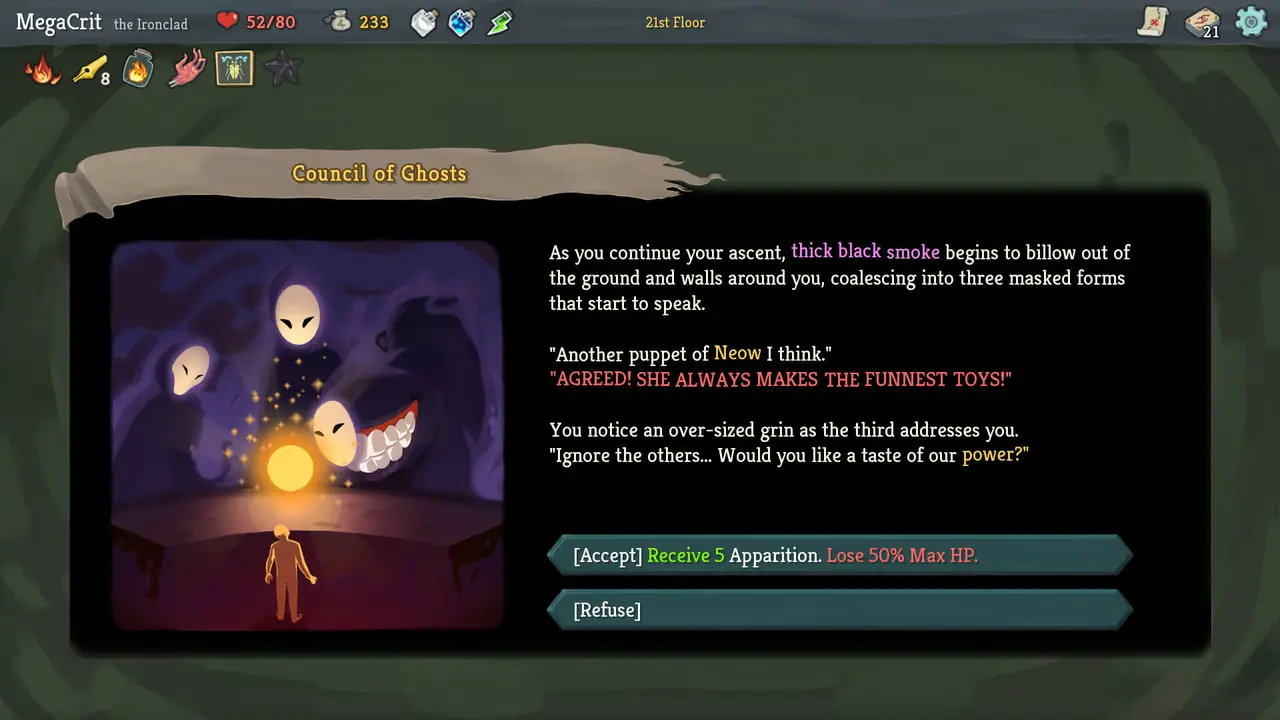
Slay the Spire
Certain relics and powers rewrite basics, such as keeping your hand at end of turn or making skills cost 0 but exhaust.
The difference worth noticing
Balatro’s rule changes target scoring checks; Slay the Spire’s reshape resources and draw rhythm.
Case notes are Yoroll editorial summaries; rules may change between versions.
04What could you combine?
Place rule passives in a grid where they only affect adjacent card types, so layout decides each rule’s reach.
Prototype this combo in Yoroll→Follow the next idea
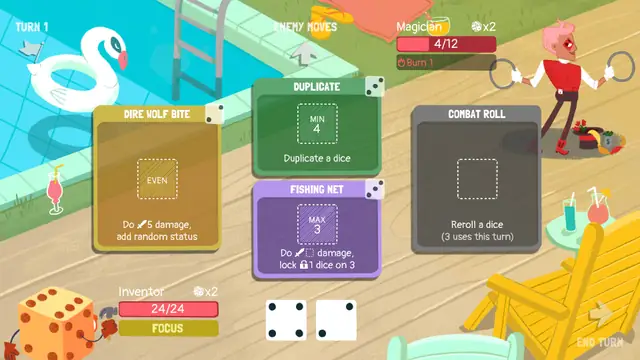
Assign the Roll
Roll first, then slot each result into the ability that wants it most.
- Prototype complexity
- Who plays
- Solo decisions
- 01Roll the dice pool
- 02Check slot requirements
- 03Place dice into slots
- 04Effects resolve
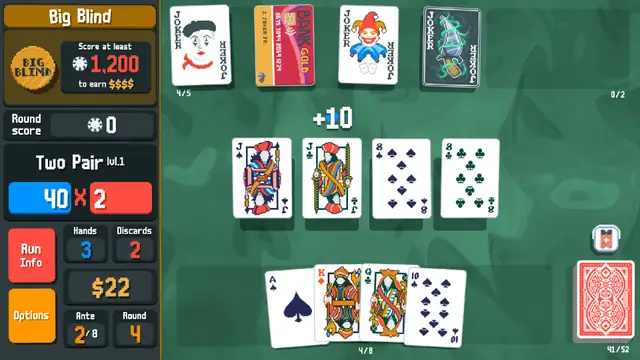
Toss and Redraw
Throw away dead cards for fresh ones, spending limited tries to chase the one you need.
- Prototype complexity
- Who plays
- Solo decisions
- 01Read your hand
- 02Pick cards to toss
- 03Draw replacements
- 04Commit or gamble again
One Card, Two Uses
Each card holds two uses, and choosing one forfeits the other.
- Prototype complexity
- Who plays
- Solo decisions
- 01Hold a two-sided card
- 02Compare both uses
- 03Commit to one
- 04The other is gone