
Setting the Stage to Breed
Animals won't breed on a whim; environment, timing and partner all have to line up.
- Prototype complexity
- Who plays
- Solo decisions
- Design focus
- Information · Discovery · Planning
 No.132APICO
01The core loop
Action → feedback → next choice- 01Learn breeding needs
- 02Adjust conditions
- 03Wait for breeding
- 04Record what worked
↻Feedback changes the situation — the next round starts from there.
Walk through one round
A simplified design example. Situations and numbers illustrate the mechanic, not exact rules from a reference game.
- T1
Turn 1 · The situation
Crossing two bee types has a 20% chance of a new variety; a hint says 'in rain' near a certain flower.
- T2
Turn 2 · The player chooses
The player moves the hive beside that flower and adds the queens on a rainy day.
- T3
Turn 3 · The feedback
A new variety appears on the second cycle, and the logbook records the conditions.
- T4
Turn 4 · The next decision
The player tries crossing the new variety with others.
How it plays
Breeding requires a set of conditions such as temperature, time of day, nearby plants or facilities, plus the right pairing. Conditions are often hidden or only hinted, so players experiment. Success yields new individuals or even new varieties, rewarding discovery.
What the player weighs
- Invest in an ideal setup vs. wait for a natural chance
- Experiment to find the rule vs. follow hints directly
02Start small
Scope is an editorial estimate for the minimum prototype, not the reference game or a production schedule.
03One mechanic, different implementations
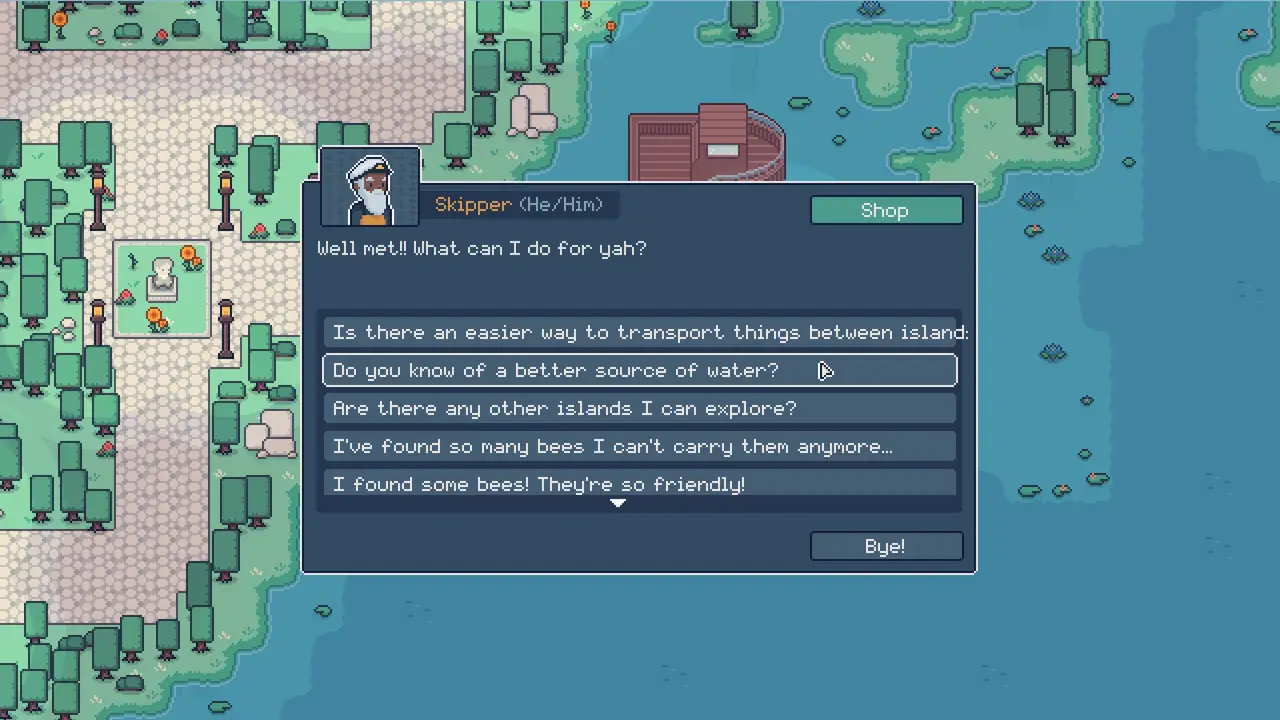
APICO
Crossing bee species yields new ones, some mutations require conditions like weather, time or nearby flowers, and the logbook records discovered combos.
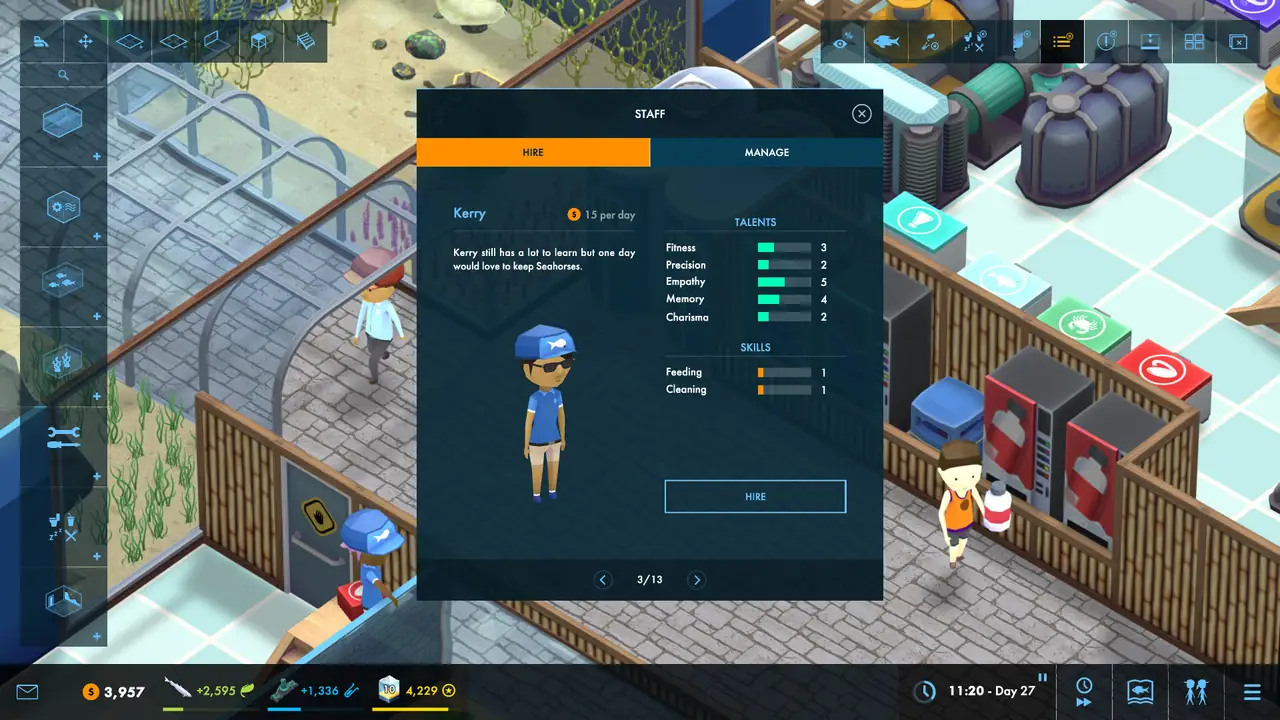
Megaquarium
As far as I know some fish may breed when conditions and group size are satisfied, but breeding isn't central to this game and I'm unsure of the specifics.
The difference worth noticing
APICO makes breeding conditions a core discovery puzzle; in Megaquarium they're more a side effect of good care.
Case notes are Yoroll editorial summaries; rules may change between versions.
04What could you combine?
Combine with crop care: some animals breed only when nearby crops bloom, so players time planting to overlap flowering with breeding season.
Prototype this combo in Yoroll→Follow the next idea
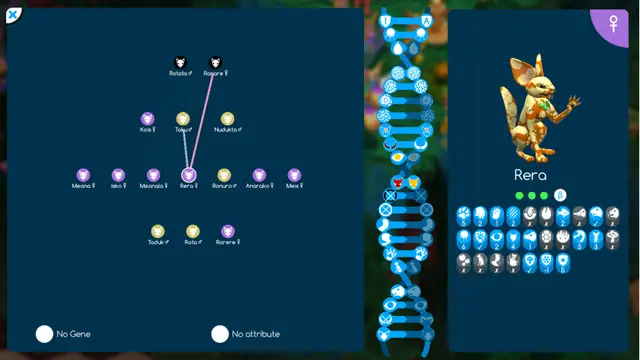
Keep the Gene Pool Wide
Inbreeding pays off fast but leaves the whole population fragile.
- Prototype complexity
- Who plays
- Solo decisions
- 01Assess the bloodlines
- 02Bring in new stock
- 03Avoid close pairings
- 04Sustain a healthy population

Neighbor Crossbreeding
Plant different strains side by side and they influence each other's offspring.
- Prototype complexity
- Who plays
- Solo decisions
- 01Collect different strains
- 02Plan the neighbor layout
- 03Wait for crossbreeding
- 04Select the best offspring
Taming Over Time
Wild animals don't become companions instantly; it takes feeding, closeness and patience.
- Prototype complexity
- Who plays
- Solo decisions
- 01Approach a wild animal
- 02Feed or interact
- 03Taming progress builds
- 04Becomes a companion or livestock