
Habitat Capacity Check
Before adding an animal, check whether the space can take one more.
- Prototype complexity
- Who plays
- Solo decisions
- Design focus
- Planning · Economy · Spatial
 No.130Planet Zoo
01The core loop
Action → feedback → next choice- 01Check habitat needs
- 02Plan space and features
- 03Add an animal
- 04Monitor welfare
↻Feedback changes the situation — the next round starts from there.
Walk through one round
A simplified design example. Situations and numbers illustrate the mechanic, not exact rules from a reference game.
- T1
Turn 1 · The situation
The lion habitat supports 4 and holds 3; a lioness is about to have 2 cubs.
- T2
Turn 2 · The player chooses
The player spends 500 gold expanding the habitat beforehand.
- T3
Turn 3 · The feedback
After the cubs arrive, the space indicator stays green and welfare holds.
- T4
Turn 4 · The next decision
The player considers exchanging the cubs once they mature.
How it plays
Each species has minimum needs for space, terrain, water and features, scaling with headcount. Under capacity, welfare drops and animals may sicken or fight. Players expand before adding, creating a build-then-grow rhythm.
What the player weighs
- Expand a habitat vs. spend on a new species
- Pack in animals for guests vs. keep welfare stable
02Start small
Scope is an editorial estimate for the minimum prototype, not the reference game or a production schedule.
03One mechanic, different implementations
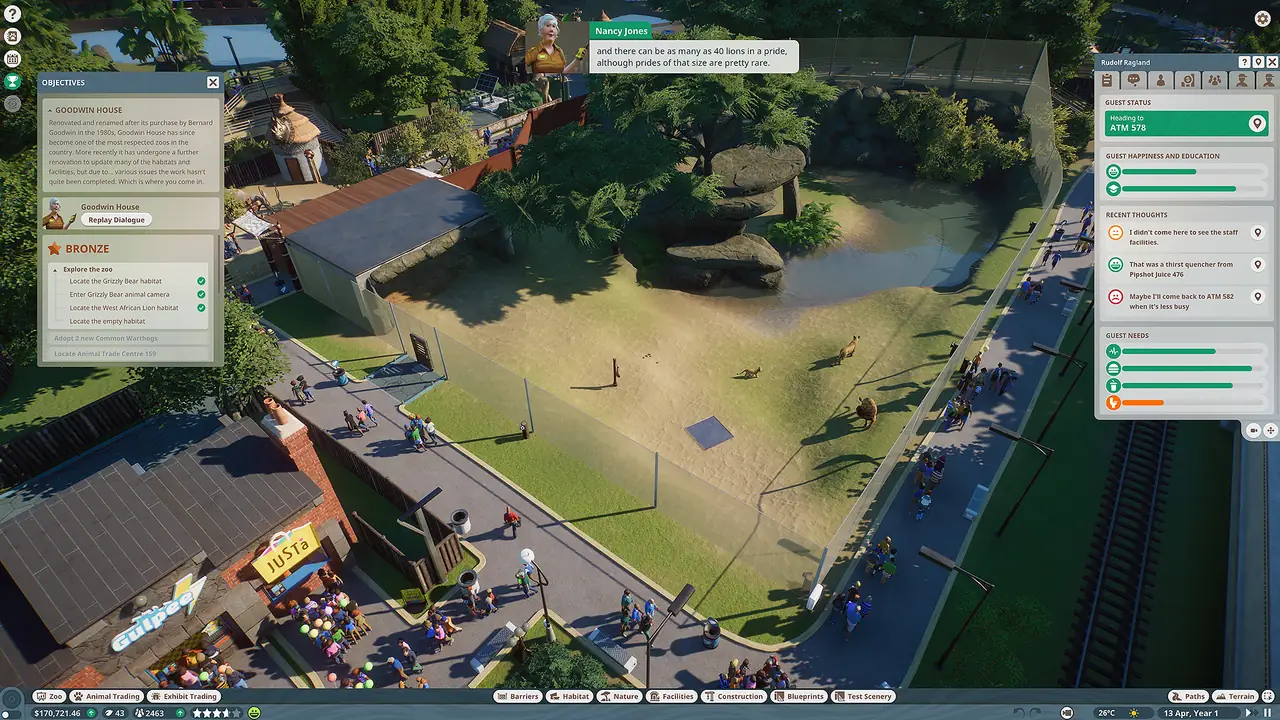
Planet Zoo
Each species has land, water, climbable area and group-size requirements that scale with headcount, shown in the habitat panel.
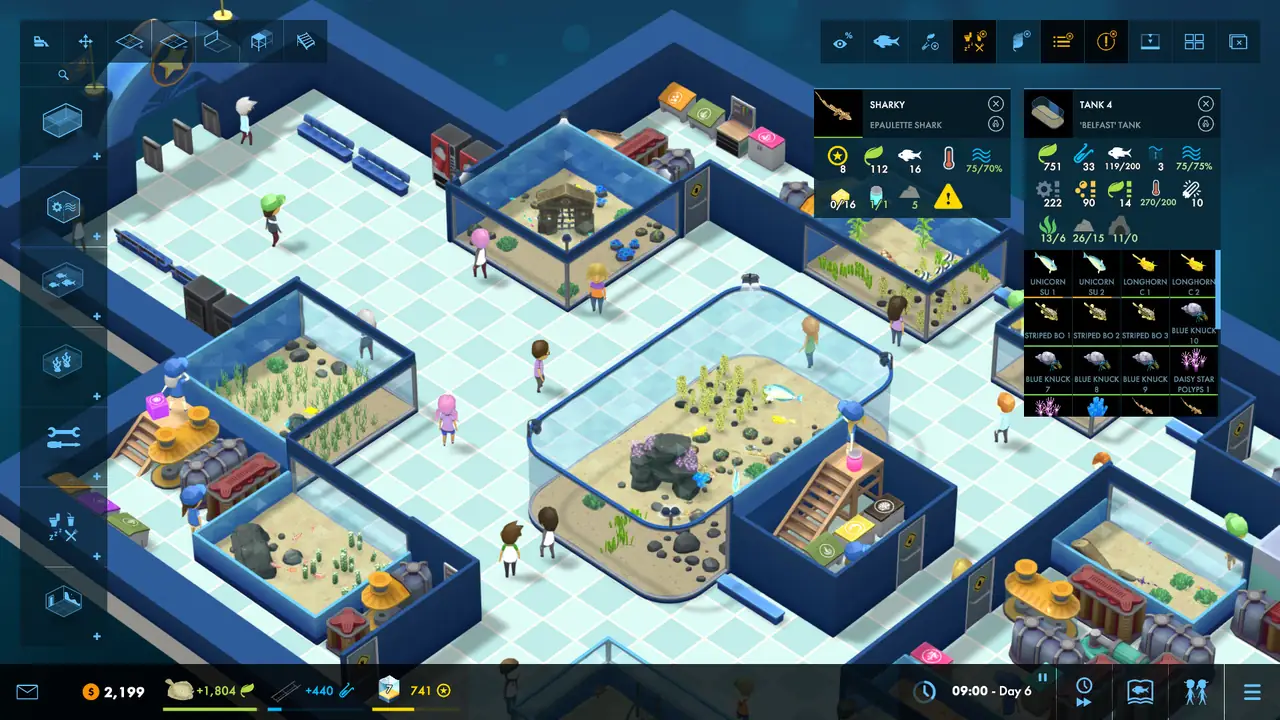
Megaquarium
Tanks have capacity and water-processing limits, and each species needs certain tank sizes and decor; exceeding them leaves fish unhappy.
The difference worth noticing
Planet Zoo's capacity includes elaborate terrain shaping; Megaquarium simplifies it to tanks and equipment.
Case notes are Yoroll editorial summaries; rules may change between versions.
04What could you combine?
Add thermal zoning: split a building into warm and cool zones; warm zones hold more but cost more energy.
Prototype this combo in Yoroll→Follow the next idea

Neighbor Crossbreeding
Plant different strains side by side and they influence each other's offspring.
- Prototype complexity
- Who plays
- Solo decisions
- 01Collect different strains
- 02Plan the neighbor layout
- 03Wait for crossbreeding
- 04Select the best offspring
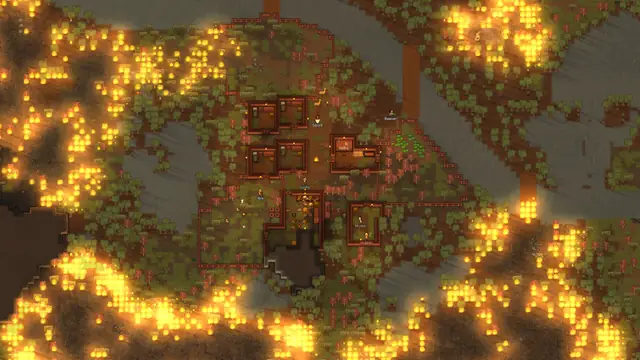
Managing Herd Size
Animals breed on their own, and left unchecked they'll eat you out of house and home.
- Prototype complexity
- Who plays
- Solo decisions
- 01Watch the population grow
- 02Gauge resource pressure
- 03Limit, sell or cull
- 04Hold a stable size
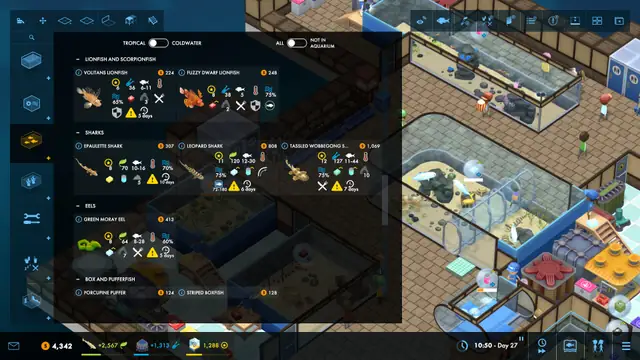
Who Can Live Together
Some species coexist peacefully; others fight or eat each other.
- Prototype complexity
- Who plays
- Solo decisions
- 01Check species traits
- 02Design a mix
- 03Introduce and observe
- 04Adjust or separate