
Long-Term Orchards
Fruit trees are pricey, slow and space-hungry, but once grown they pay every year.
- Prototype complexity
- Who plays
- Solo decisions
- Design focus
- Planning · Economy · Time
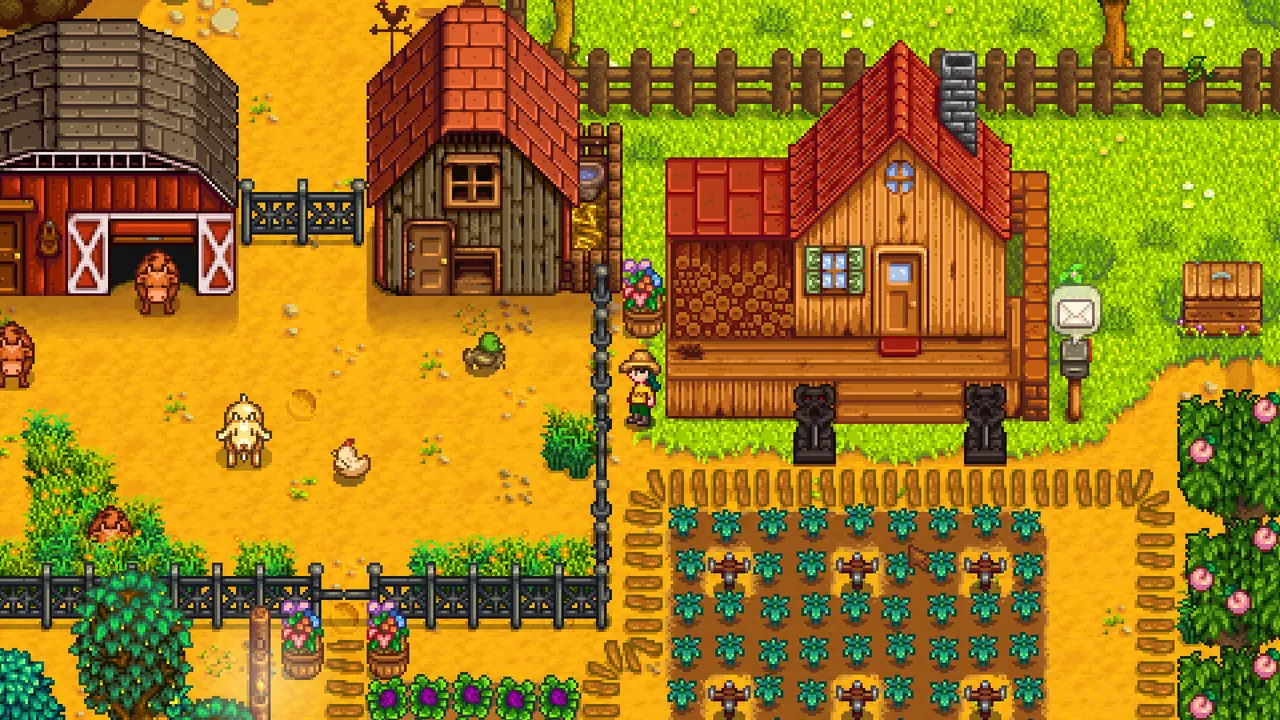 No.229Stardew Valley
01The core loop
Action → feedback → next choice- 01Buy an expensive sapling
- 02Clear space and plant
- 03Wait through slow growth
- 04Harvest every season
↻Feedback changes the situation — the next round starts from there.
Walk through one round
A simplified design example. Situations and numbers illustrate the mechanic, not exact rules from a reference game.
- T1
Turn 1 · The situation
A sapling costs 1,000, fruits after 28 days, and yields one 50-gold fruit per day in season.
- T2
Turn 2 · The player chooses
In the first spring the player spends their savings on two.
- T3
Turn 3 · The feedback
Cash runs tight that season and fewer crops get planted, but from summer they earn 100 daily, nearly breaking even in one season.
- T4
Turn 4 · The next decision
In year two the trees yield better fruit, and the player thinks about reserving more land for orchards.
How it plays
Saplings are costly, need open space and take weeks to bear fruit, but then produce year after year with no care, sometimes improving in quality. It tests whether players will trade near-term cash flow for lasting income. Growth stages and fruit appearing on branches are the feedback.
What the player weighs
- Put money into trees, or into crops that pay back faster.
- Trees are hard to move once planted, so layout must be right the first time.
02Start small
Scope is an editorial estimate for the minimum prototype, not the reference game or a production schedule.
03One mechanic, different implementations
Stardew Valley
Fruit trees need a clear 3×3 area, mature in 28 days, fruit daily in their season, and their fruit quality rises each year.
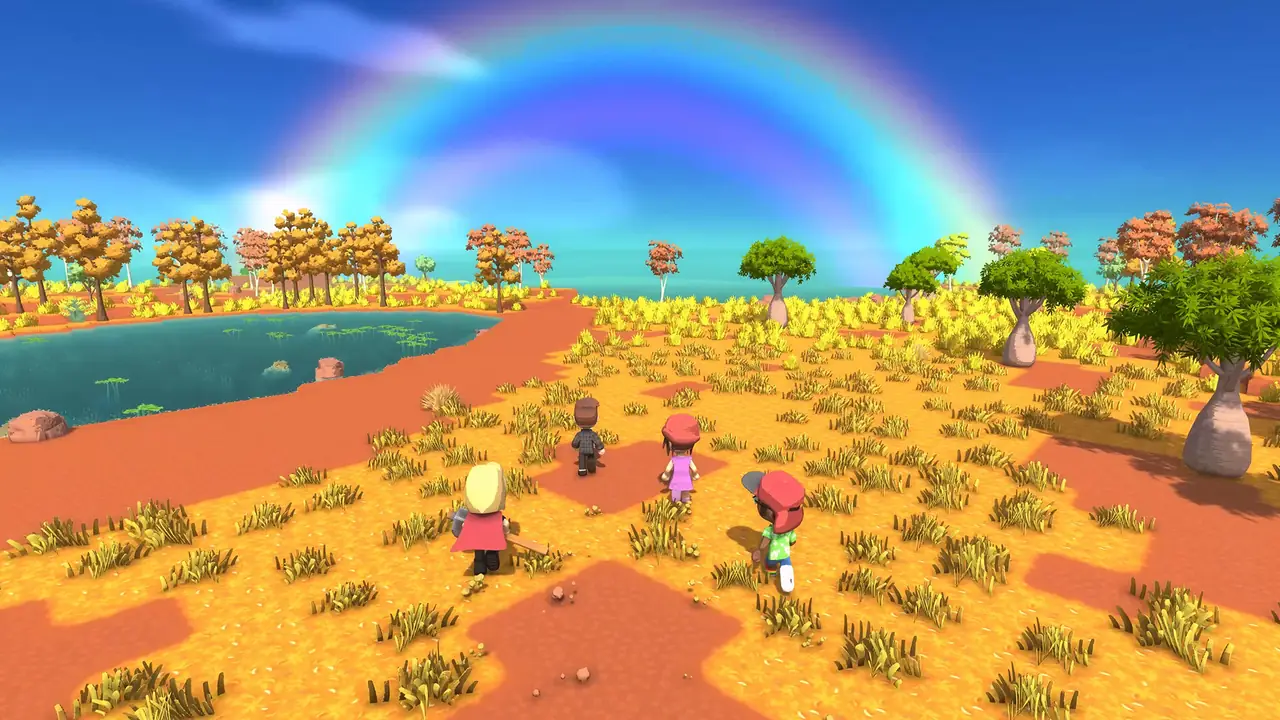
Dinkum
As I recall players can plant fruit trees and pick fruit periodically as low-maintenance income, though I'm unsure of exact growth times and yields.
The difference worth noticing
Stardew Valley stresses long-term planning through strict spacing and yearly quality gains; Dinkum's trees feel more like casual side income.
Case notes are Yoroll editorial summaries; rules may change between versions.
04What could you combine?
Let players borrow for saplings with weekly repayments, so they must survive the fruitless weeks on other income.
Prototype this combo in Yoroll→Follow the next idea
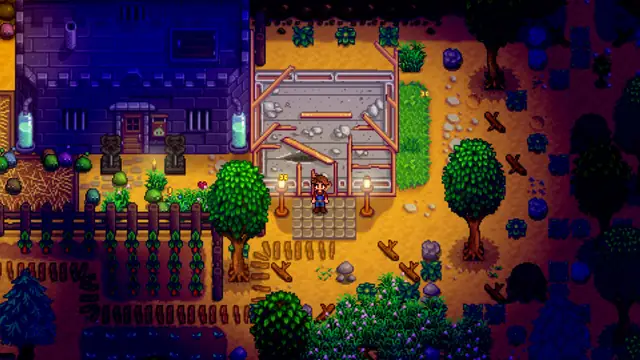
Regrowing Crops
Plant once, harvest many times: a slower start, then income every few days.
- Prototype complexity
- Who plays
- Solo decisions
- 01Plant a regrowing crop
- 02Wait for first harvest
- 03Harvest and it regrows
- 04Collect on each cycle
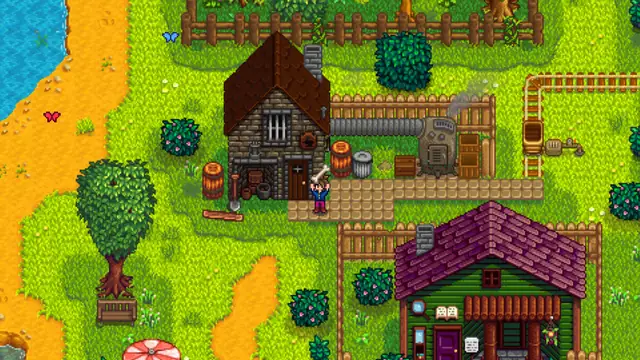
Seasonal Planting Windows
Each crop grows only in certain seasons; miss the window and wait a year.
- Prototype complexity
- Who plays
- Solo decisions
- 01Check what's in season
- 02Count remaining days
- 03Choose crops and plant
- 04Harvest before season ends
Deliver Before the Deadline
Taking a contract starts the clock: deliver on time for the reward, or lose it.
- Prototype complexity
- Who plays
- Solo decisions
- 01Browse the board
- 02Accept a contract
- 03Gather or craft
- 04Deliver and get paid