
Budgeted Ability Loadout
Plenty of abilities, limited slots: every outing starts with choosing what to bring.
- Prototype complexity
- Who plays
- Solo decisions
- Design focus
- Planning · Optimization · Progression
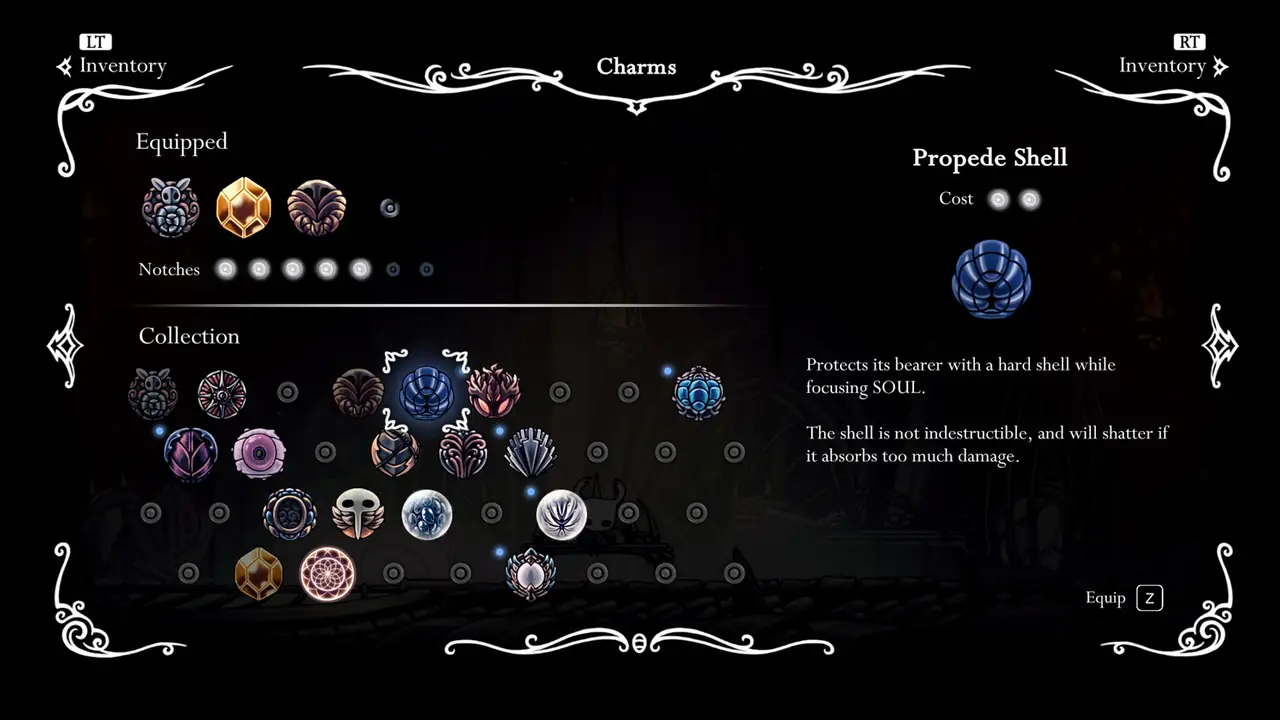 No.249Hollow Knight
01The core loop
Action → feedback → next choice- 01Collect new abilities
- 02Check budget costs
- 03Assemble a loadout
- 04Adjust after play
↻Feedback changes the situation — the next round starts from there.
Walk through one round
A simplified design example. Situations and numbers illustrate the mechanic, not exact rules from a reference game.
- T1
Turn 1 · The situation
6 slots: Quick Strike (3), Extra Health (2), Ranged Boost (2), Map Reveal (1).
- T2
Turn 2 · The player chooses
For a melee boss, the player takes Quick Strike, Extra Health and Map Reveal.
- T3
Turn 3 · The feedback
The boss goes down, but without Ranged Boost the next flying enemies are tough.
- T4
Turn 4 · The next decision
Back at a rest point, the player swaps Map Reveal for Ranged Boost.
How it plays
Each ability has a budget cost under a fixed total and can only be swapped at rest points. Players build loadouts for the current area or boss, sometimes exceeding the budget at a risk.
What the player weighs
- Specialized vs general: a boss-specific loadout may struggle while exploring.
- One expensive ability vs several cheap ones: a single strong effect or many small boosts.
02Start small
Scope is an editorial estimate for the minimum prototype, not the reference game or a production schedule.
03One mechanic, different implementations
Hollow Knight
Charms cost varying notches and can only be swapped at benches; exceeding the notch limit 'overcharms' you, doubling damage taken.

Transistor
Each Function can sit in an active, upgrade or passive slot, combinations change its effect, and the whole setup is capped by a MEM limit.
The difference worth noticing
Hollow Knight's budget is a simple notch count; in Transistor the same ability does different things depending on its slot.
Case notes are Yoroll editorial summaries; rules may change between versions.
04What could you combine?
Allow a resource-detection overlay in the loadout that costs budget but marks deposits, trading combat power for gathering efficiency.
Prototype this combo in Yoroll→Follow the next idea
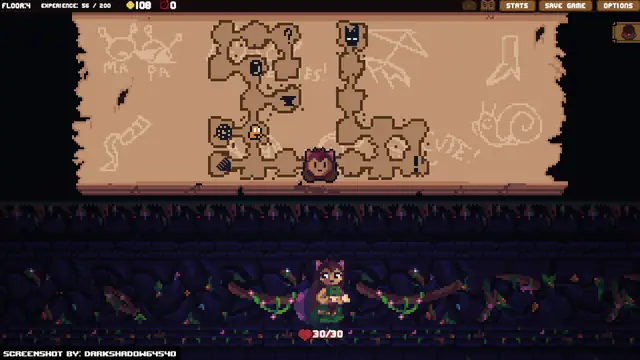
Adjacency Bonuses
Where an item sits matters; the same gear can be weak or great depending on its neighbors.
- Prototype complexity
- Who plays
- Solo decisions
- 01Get an item with a neighbor effect
- 02Try different placements
- 03Watch stats change
- 04Rebuild around a core

Deck Thinning
A leaner deck draws your best cards more often; removing can beat adding.
- Prototype complexity
- Who plays
- Solo decisions
- 01Spot weak cards
- 02Pay or use events to remove
- 03Deck density rises
- 04Key cards show up sooner
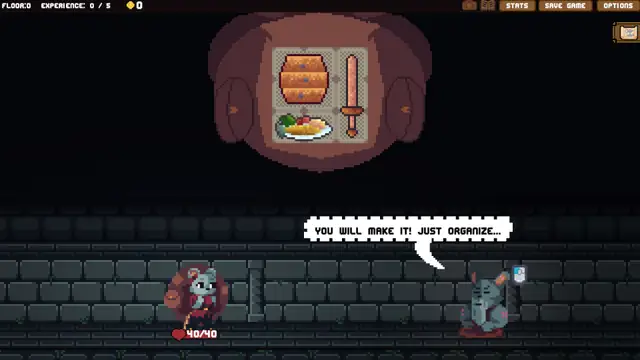
Shape-Based Packing
Items no longer take one slot; their shape is the cost and your bag becomes a puzzle.
- Prototype complexity
- Who plays
- Solo decisions
- 01Pick up a new item
- 02Rotate to find space
- 03Rearrange or discard
- 04Move on with the trade-off