
Deck Thinning
A leaner deck draws your best cards more often; removing can beat adding.
- Prototype complexity
- Who plays
- Solo decisions
- Design focus
- Optimization · Planning · Randomness
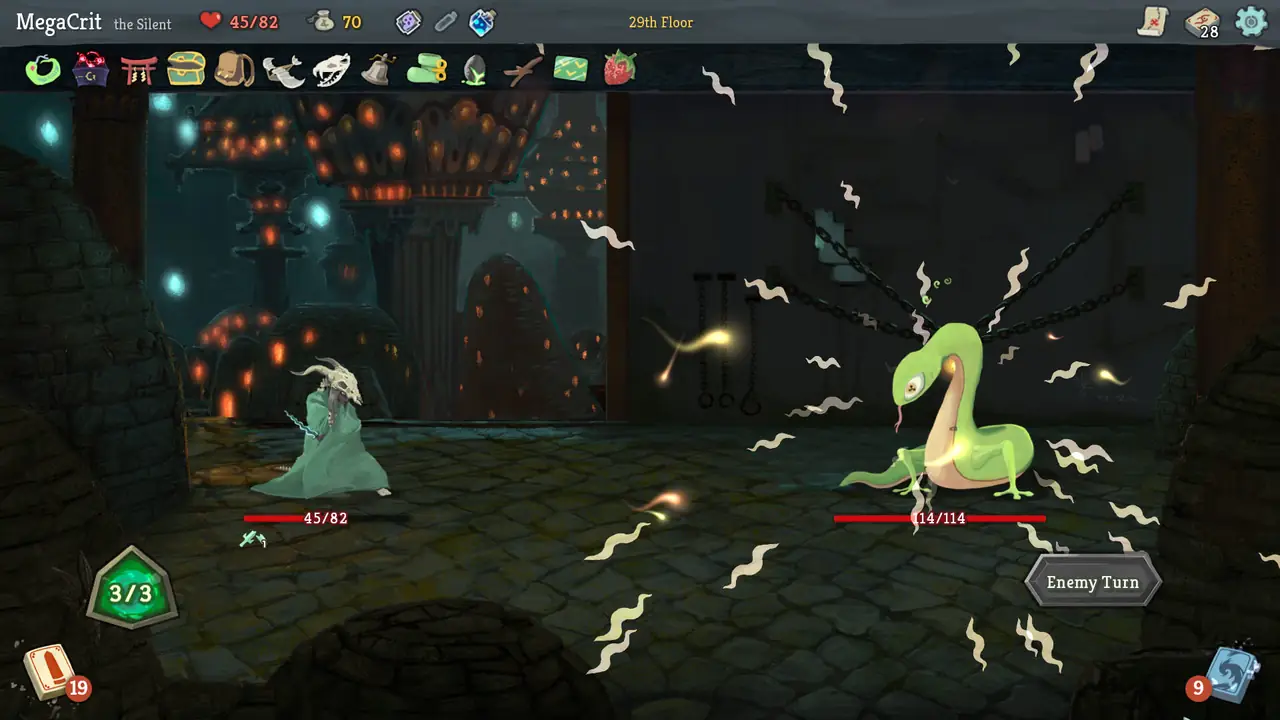 No.248Slay the Spire
01The core loop
Action → feedback → next choice- 01Spot weak cards
- 02Pay or use events to remove
- 03Deck density rises
- 04Key cards show up sooner
↻Feedback changes the situation — the next round starts from there.
Walk through one round
A simplified design example. Situations and numbers illustrate the mechanic, not exact rules from a reference game.
- T1
Turn 1 · The situation
A 15-card deck holds 5 basic Strikes. Removal costs 75 gold, a rare card 150; you have 160.
- T2
Turn 2 · The player chooses
The player removes a basic Strike.
- T3
Turn 3 · The feedback
The odds of drawing the core combo card each turn rise from about 33% to 36%.
- T4
Turn 4 · The next decision
With 85 gold left and the next removal pricier, the player reassesses the value.
How it plays
Every card dilutes the odds of drawing key ones, so players remove cards at shops, events or special nodes. Removal costs gold or an opportunity and often rises in price each time.
What the player weighs
- Remove vs buy: the same gold can cut a basic card or add a strong one.
- Lean consistency vs depth: too few cards can run dry once key ones are exhausted.
02Start small
Scope is an editorial estimate for the minimum prototype, not the reference game or a production schedule.
03One mechanic, different implementations
Slay the Spire
Shops offer card removal with a rising fee each time, and some events and relics also remove cards, typically basic Strikes and Defends.
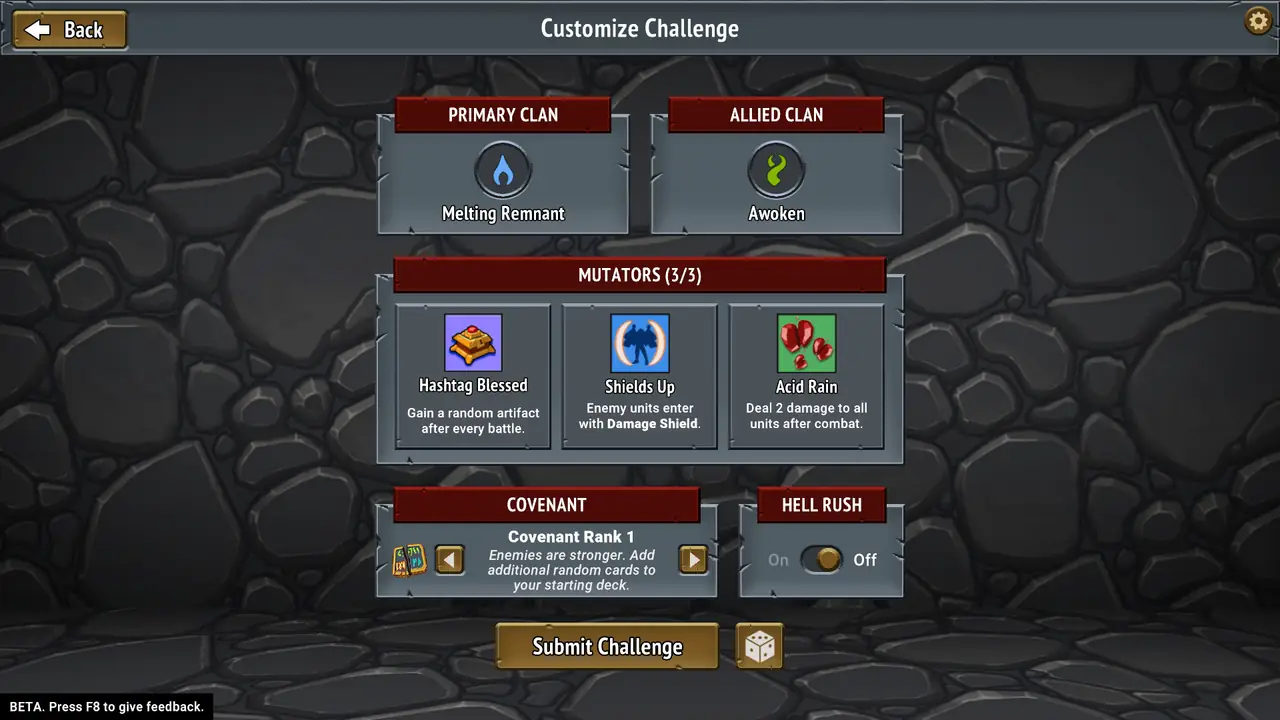
Monster Train
Merchants and certain stops along the route offer card purging, competing with duplication and upgrades for limited gold and picks.
The difference worth noticing
Slay the Spire prices removal on a rising scale; Monster Train makes it one of several route services competing for resources.
Case notes are Yoroll editorial summaries; rules may change between versions.
04What could you combine?
Each removed card leaves a testimony; in deduction stages players reconstruct the case from what remains, and cutting the wrong card loses key evidence.
Prototype this combo in Yoroll→Follow the next idea
Draw–Discard Combat Cycle
Draw a hand, play it, discard it; the deck's cycle is the fight's heartbeat.
- Prototype complexity
- Who plays
- Solo decisions
- 01Draw a hand
- 02Spend energy to play
- 03Discard at turn end
- 04Reshuffle and repeat
Adjacency Bonuses
Where an item sits matters; the same gear can be weak or great depending on its neighbors.
- Prototype complexity
- Who plays
- Solo decisions
- 01Get an item with a neighbor effect
- 02Try different placements
- 03Watch stats change
- 04Rebuild around a core
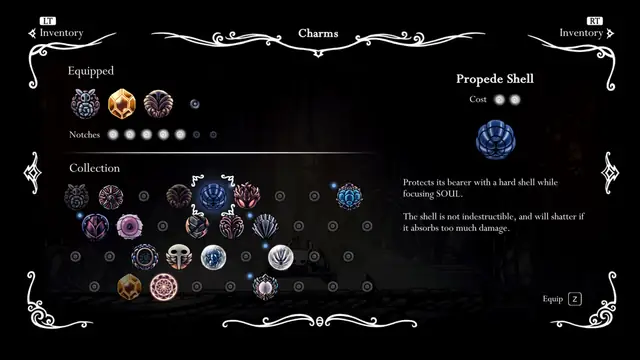
Budgeted Ability Loadout
Plenty of abilities, limited slots: every outing starts with choosing what to bring.
- Prototype complexity
- Who plays
- Solo decisions
- 01Collect new abilities
- 02Check budget costs
- 03Assemble a loadout
- 04Adjust after play