
Fill a Line to Clear It
Space is the only resource: fill a line to reclaim it, or get crowded out.
- Prototype complexity
- Who plays
- Solo decisions
- Design focus
- Planning · Spatial · Optimization
 No.169Tetris Effect: Connected
01The core loop
Action → feedback → next choice- 01Read current and next piece
- 02Choose where to place it
- 03Full lines clear space
- 04Shape the gaps for later
↻Feedback changes the situation — the next round starts from there.
Walk through one round
A simplified design example. Situations and numbers illustrate the mechanic, not exact rules from a reference game.
- T1
Turn 1 · The situation
23 empty cells on a 9x9 board; you hold an L, a 2x2 square and a 1x3 bar.
- T2
Turn 2 · The player chooses
Place the bar to finish a column, then the L to complete a 3x3 box.
- T3
Turn 3 · The feedback
A column and a box clear together, open cells rise to 38 and a combo bonus lands.
- T4
Turn 4 · The next decision
The 2x2 still needs a home that won't fragment the open space.
How it plays
Players drop varied shapes into a limited grid; any full row or column clears and frees space. Clearing several at once scores more, but requires risky stacking first.
What the player weighs
- Safe single clears vs big multi-line clears: waiting for the right piece is risky.
- Flat surface vs reserved slots: flat is flexible, reserved is precise but brittle.
02Start small
Scope is an editorial estimate for the minimum prototype, not the reference game or a production schedule.
03One mechanic, different implementations
Tetris Effect: Connected
Beyond classic falling-block line clears, the Zone ability freezes time and stacks cleared lines at the bottom to cash out together.
Blockudoku
Each round offers three shapes to place freely on a 9x9 board, with rows, columns or 3x3 boxes clearing and no gravity or timer.
The difference worth noticing
Tetris Effect relies on falling rhythm and reflexes; Blockudoku is untimed spatial planning.
Case notes are Yoroll editorial summaries; rules may change between versions.
04What could you combine?
In a grid backpack, filling a full row compresses those items into a bundle that frees space but can only be unpacked at camp.
Prototype this combo in Yoroll→Follow the next idea
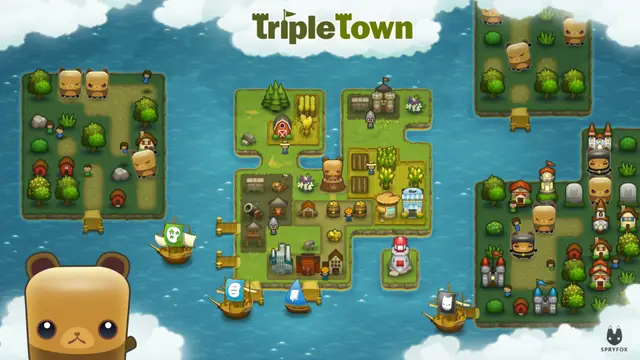
Merge Three, Climb a Tier
Put three identical things together and they become the next tier up.
- Prototype complexity
- Who plays
- Solo decisions
- 01Get a low-tier item
- 02Place it beside matches
- 03Three merge into next tier
- 04Plan higher-tier merges
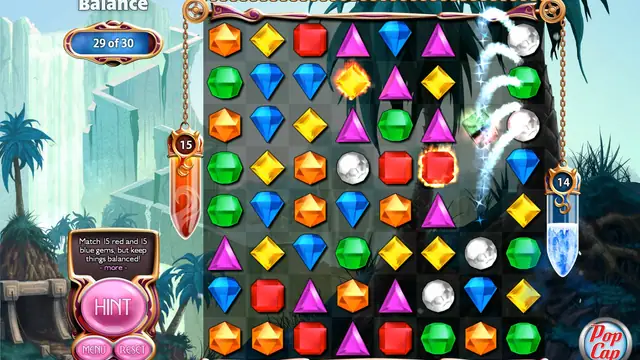
Shape Matches Make Power Pieces
Beyond simple threes, L-shapes, fours and fives forge powerful special pieces.
- Prototype complexity
- Who plays
- Solo decisions
- 01Spot a special pattern
- 02Swap to form it
- 03A power piece appears
- 04Detonate it at the right time
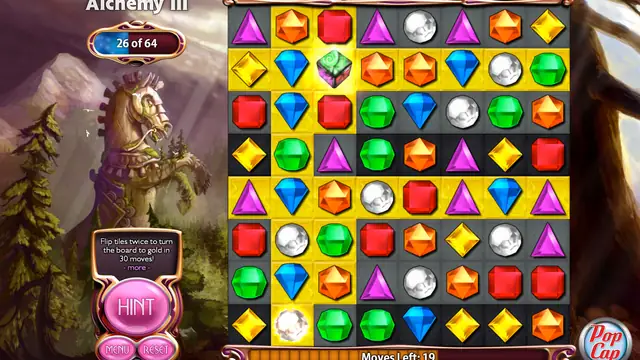
Swap-to-Match
Swap two neighbors to line up three of a kind and clear them.
- Prototype complexity
- Who plays
- Solo decisions
- 01Scan the board
- 02Swap two neighbors
- 03Match clears, pieces fall
- 04Read the new board