
Swap-to-Match
Swap two neighbors to line up three of a kind and clear them.
- Prototype complexity
- Who plays
- Solo decisions
- Design focus
- Planning · Spatial · Optimization
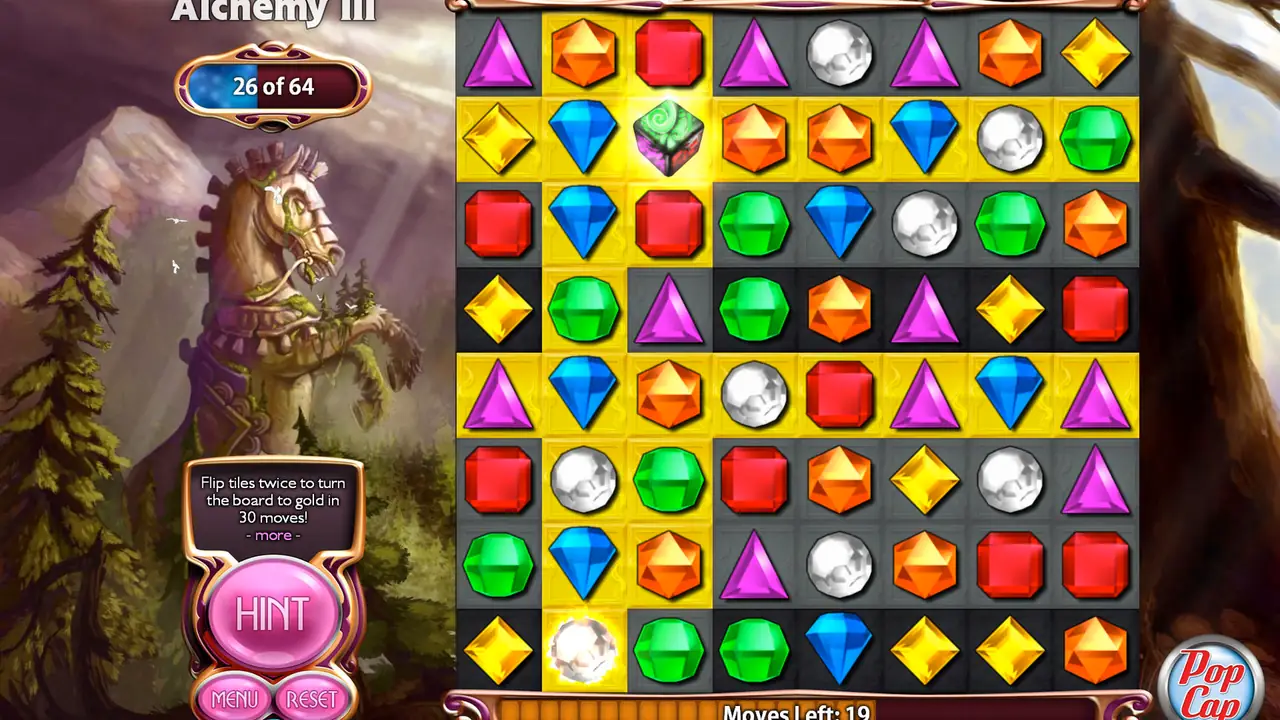 No.166Bejeweled 3
01The core loop
Action → feedback → next choice- 01Scan the board
- 02Swap two neighbors
- 03Match clears, pieces fall
- 04Read the new board
↻Feedback changes the situation — the next round starts from there.
Walk through one round
A simplified design example. Situations and numbers illustrate the mechanic, not exact rules from a reference game.
- T1
Turn 1 · The situation
5 moves left, 8 jelly tiles to clear, and a horizontal match is available at the bottom.
- T2
Turn 2 · The player chooses
The player swaps at the bottom, hoping for a cascade.
- T3
Turn 3 · The feedback
Two cascades follow, clearing 4 jelly tiles.
- T4
Turn 4 · The next decision
With 4 moves and 4 tiles left, the player looks for matches covering two tiles at once.
How it plays
Only swaps that form three or more in a row are allowed; others snap back. Cleared pieces let those above fall, possibly chaining. Levels usually cap moves and set goals like collecting or clearing blockers.
What the player weighs
- Bottom vs top matches: bottom clears trigger cascades, top clears stay predictable.
- Advance the goal vs build a special piece: progress now or set up power.
02Start small
Scope is an editorial estimate for the minimum prototype, not the reference game or a production schedule.
03One mechanic, different implementations
Candy Crush Saga
Players swap candies within a move limit to meet goals like clearing jelly, collecting candies or bringing down ingredients, with board shapes and blockers varying by level.
Bejeweled 3
Classic mode has no move limit and ends when no swaps remain, alongside timed, puzzle and other modes.
The difference worth noticing
Candy Crush frames swaps as move-limited level goals; Bejeweled 3 leans on score chasing and varied modes.
Case notes are Yoroll editorial summaries; rules may change between versions.
04What could you combine?
Make swaps cost combat action points, with matched colors becoming attacks, shields or heals, so puzzling and fighting share one budget.
Prototype this combo in Yoroll→Follow the next idea

Fill a Line to Clear It
Space is the only resource: fill a line to reclaim it, or get crowded out.
- Prototype complexity
- Who plays
- Solo decisions
- 01Read current and next piece
- 02Choose where to place it
- 03Full lines clear space
- 04Shape the gaps for later
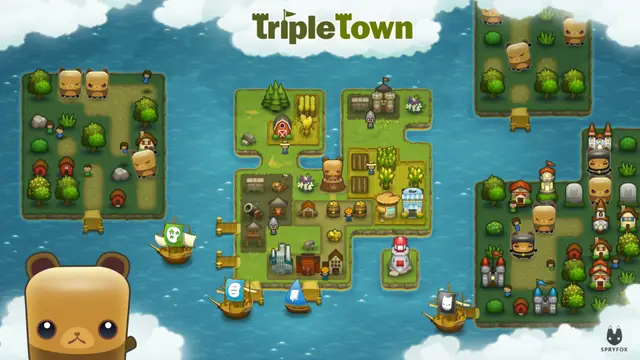
Merge Three, Climb a Tier
Put three identical things together and they become the next tier up.
- Prototype complexity
- Who plays
- Solo decisions
- 01Get a low-tier item
- 02Place it beside matches
- 03Three merge into next tier
- 04Plan higher-tier merges
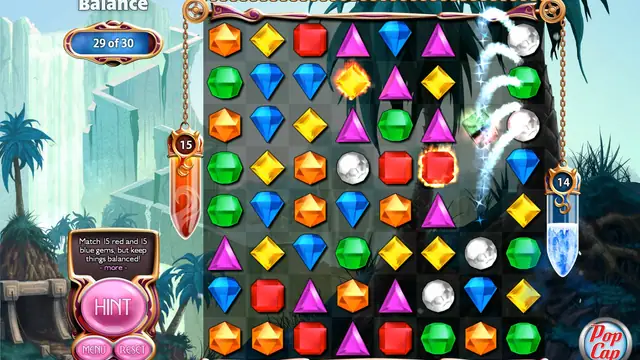
Shape Matches Make Power Pieces
Beyond simple threes, L-shapes, fours and fives forge powerful special pieces.
- Prototype complexity
- Who plays
- Solo decisions
- 01Spot a special pattern
- 02Swap to form it
- 03A power piece appears
- 04Detonate it at the right time