
Card-Bound Date Scene
What you pull is more than a power card; it is a story that belongs to that card alone.
- Prototype complexity
- Who plays
- Solo decisions
- Design focus
- Progression · Narrative · Randomness
 No.282Light and Night
01The core loop
Action → feedback → next choice- 01Obtain a character card
- 02Raise it to a story node
- 03Watch its exclusive date
- 04Start wanting the next card
↻Feedback changes the situation — the next round starts from there.
Walk through one round
A simplified design example. Situations and numbers illustrate the mechanic, not exact rules from a reference game.
- T1
Turn 1 · The situation
A new card, The Old Seaside Camera, has three date chapters; the second needs stage two.
- T2
Turn 2 · The player chooses
The player spends all upgrade materials on it.
- T3
Turn 3 · The feedback
Chapter two unlocks, but the card needed for the main story falls behind.
- T4
Turn 4 · The next decision
The player now plans whether to farm materials first or push the main story.
How it plays
Each rare card carries its own date, voice or animated art, with parts opening at set upgrade stages. The card decides which moments you can see, so pulling is driven by content rather than stats. Story locks and replay entries on the card page are the main feedback.
What the player weighs
- Lock the best scenes behind heavy upgrades to drive investment, or open them early for lighter players.
- Keep scenes standalone for accessibility, or link them to the main story for collection value.
02Start small
Scope is an editorial estimate for the minimum prototype, not the reference game or a production schedule.
03One mechanic, different implementations

Light and Night
Some high-rarity cards carry their own film-reel story or a voiced listening date, unlocked by owning the card and spending items.

Tears of Themis
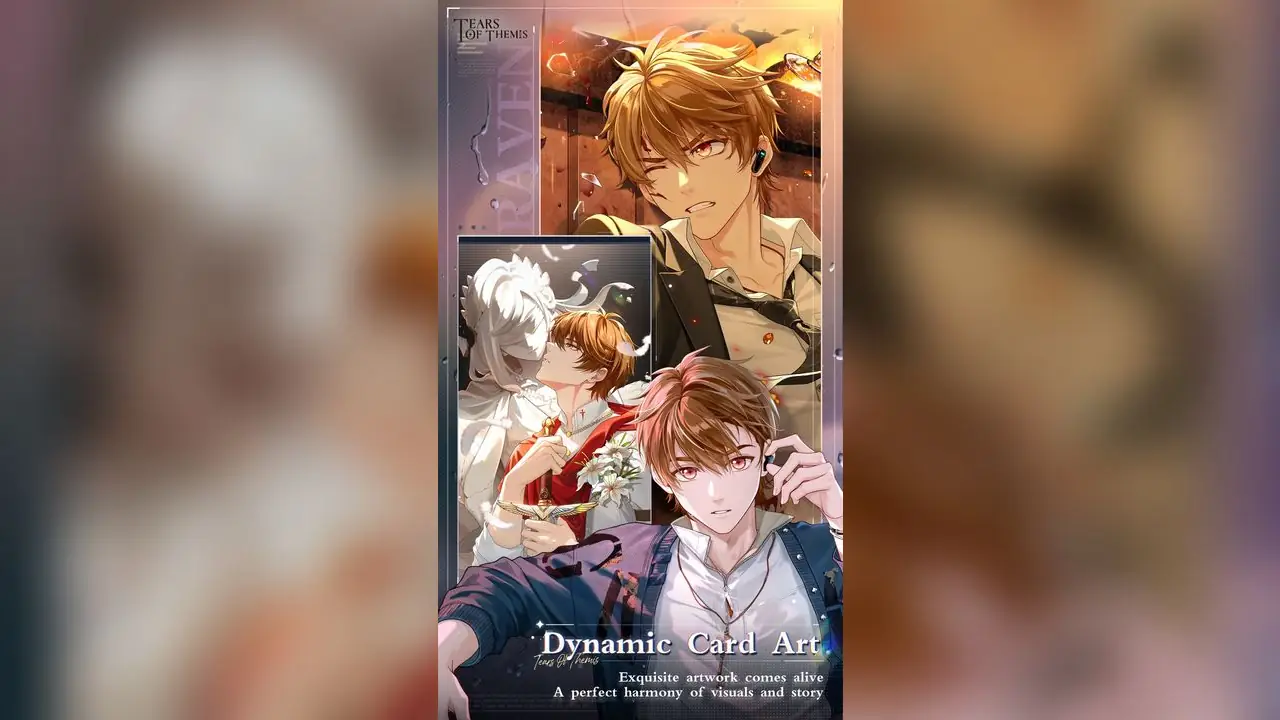
Every SR and SSR card has its own story that unlocks in parts as the card levels and evolves, and finishing it grants affection.
The difference worth noticing
Light and Night varies card content between stories and voiced dates; Tears of Themis releases each card story in parts as you raise the card.
Case notes are Yoroll editorial summaries; rules may change between versions.
04What could you combine?
Each collectible card unlocks a filmed scene cut from the main story, so collecting earns new footage rather than stats.
Prototype this combo in Yoroll→Follow the next idea

Limited Banners and Pity Planning
Your favorite is on banner for only two weeks, so you need to do the math on your saved pulls in advance.
- Prototype complexity
- Who plays
- Solo decisions
- 01See the new-card teaser
- 02Count pulls and pity
- 03Pull or skip
- 04Archive and save more

First-Person Touch Date
He is right behind the glass, and where your finger lands and how long it stays both get a reaction.
- Prototype complexity
- Who plays
- Solo decisions
- 01Enter a first-person date
- 02Read his expression and distance
- 03Touch an active area
- 04He reacts and the scene moves on
Bond-Gated Scenes
Each step closer reveals another chapter of someone's story.
- Prototype complexity
- Who plays
- Solo decisions
- 01Build bond points
- 02Hit a stage threshold
- 03Trigger a personal scene
- 04Gain rewards and new content