
Hands-On Beats Inside the Story
When the story reaches the locked door, it hands you the phone and lets you pick the lock yourself.
- Prototype complexity
- Who plays
- Solo decisions
- Design focus
- Narrative · Dexterity · Timing
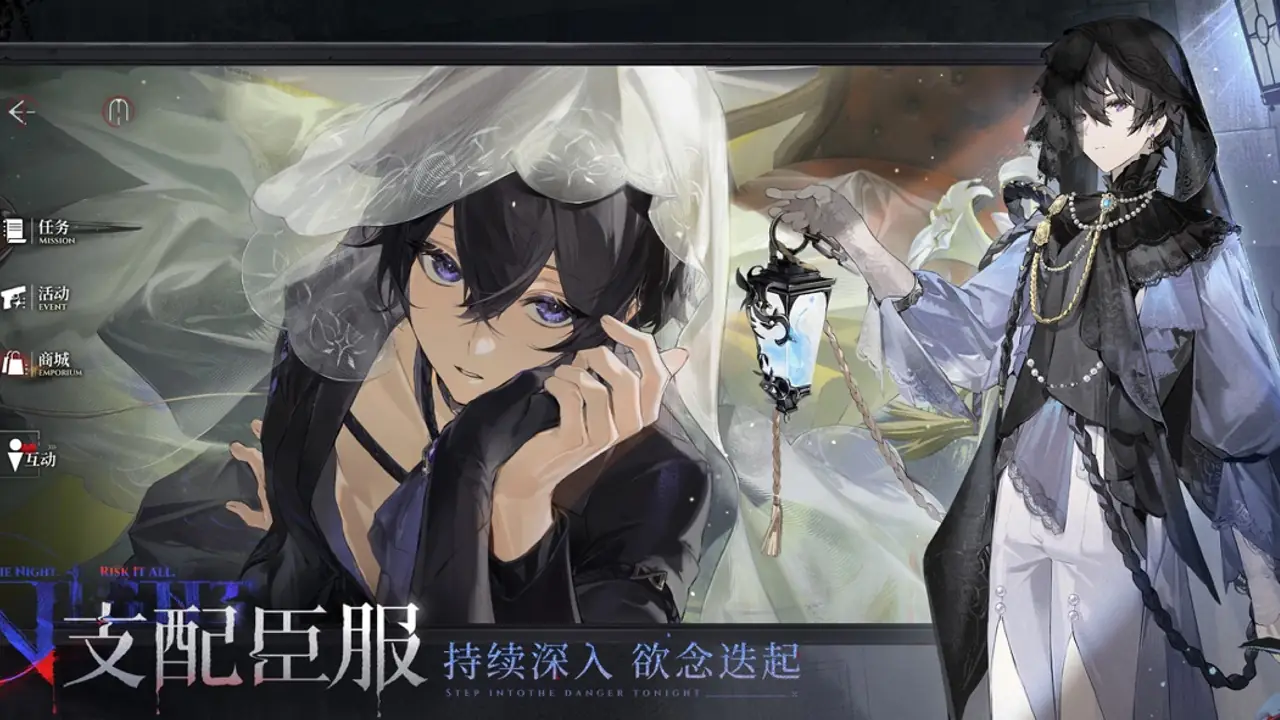 No.302Reign of Nightfall
01The core loop
Action → feedback → next choice- 01Read up to a key beat
- 02The story cuts to one action
- 03Later lines follow the result
- 04Return to the story
↻Feedback changes the situation — the next round starts from there.
Walk through one round
A simplified design example. Situations and numbers illustrate the mechanic, not exact rules from a reference game.
- T1
Turn 1 · The situation
He pushes you into a wardrobe as footsteps approach, and a hold-your-breath meter appears.
- T2
Turn 2 · The player chooses
The player holds the screen and only just lasts.
- T3
Turn 3 · The feedback
The stranger pauses before leaving; he opens the door and says first: I could hear you just now.
- T4
Turn 4 · The next decision
The player starts watching for whether the story mentions it again.
How it plays
Inside story dialogue, key actions such as holding your breath, picking a lock, firing or deducing become one-off interactions that last only seconds. They are not built for replay; the player lives the moment and the result feeds into the next line. Failing rarely blocks progress and usually just changes the wording or reaction.
What the player weighs
- Build each beat separately for freshness, or reuse a few templates to control cost.
- Let failure change the plot for weight, or only the lines so story-first players never get stuck.
02Start small
Scope is an editorial estimate for the minimum prototype, not the reference game or a production schedule.
03One mechanic, different implementations

Reign of Nightfall
Event stories cut to one-off plays such as searching forged documents or a Russian-roulette duel.
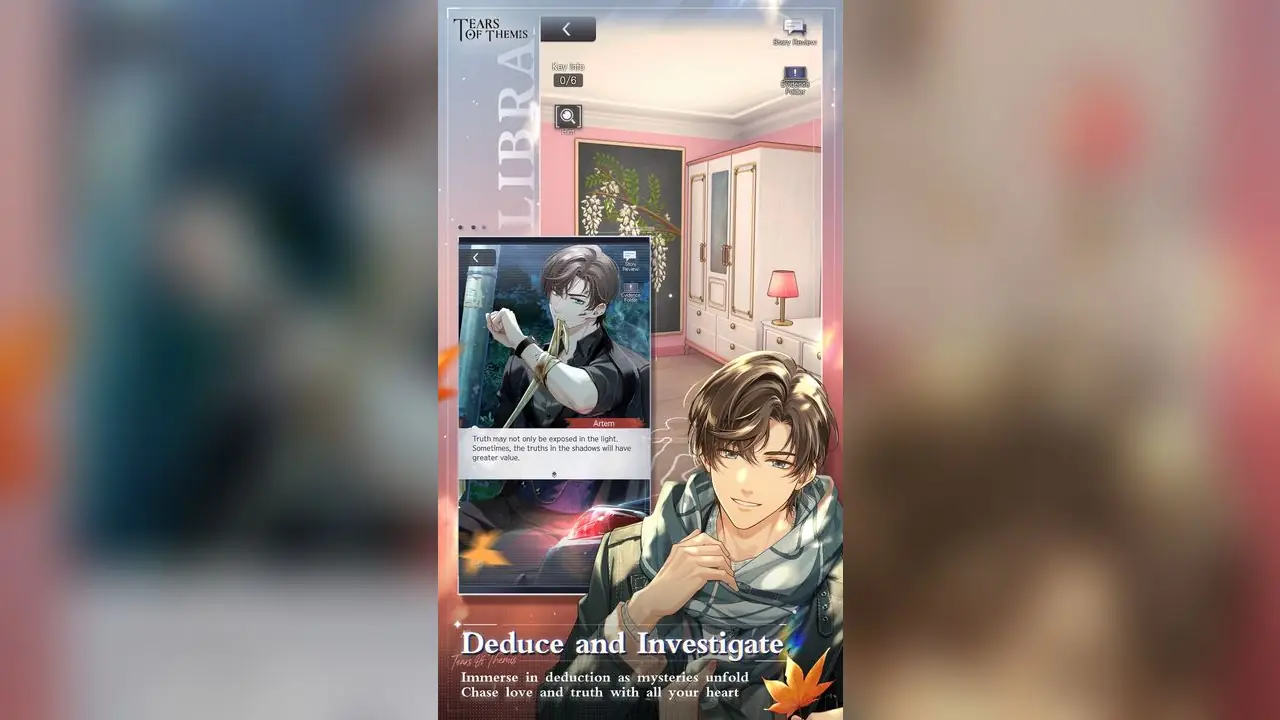

Tears of Themis
Investigations drop you into a 3D crime scene to tap suspicious spots; evidence rotates 360 degrees, and you advance only after finding the key items.
The difference worth noticing
Reign of Nightfall puts one-off actions in event stories and varies them more; Tears of Themis focuses on evidence search, tied tightly to its cases.
Case notes are Yoroll editorial summaries; rules may change between versions.
04What could you combine?
Before a key filmed shot, cut to a ten-second vertical action such as pressing on his wound, with the quality deciding which filmed reaction plays next.
Prototype this combo in Yoroll→Follow the next idea
Romance Inside the Crisis
The case or instance is the stage, and only a crisis shows whether he can be trusted.
- Prototype complexity
- Who plays
- Solo decisions
- 01Enter a case or instance
- 02Investigate and decide
- 03Face consequences together
- 04Grow closer to him and the truth

First-Person Touch Date
He is right behind the glass, and where your finger lands and how long it stays both get a reaction.
- Prototype complexity
- Who plays
- Solo decisions
- 01Enter a first-person date
- 02Read his expression and distance
- 03Touch an active area
- 04He reacts and the scene moves on

A Date Game with Stakes
The game itself is easy; the hard part is deciding what he has to do when you win.
- Prototype complexity
- Who plays
- Competitive play
- 01Propose a game
- 02Watch him while playing
- 03A winner emerges
- 04Settle the agreed stakes