
Cue and Response
The cue sets the pattern; you press on the beat it leaves unsaid.
- Prototype complexity
- Who plays
- Solo decisions
- Design focus
- Timing · Information · Precision
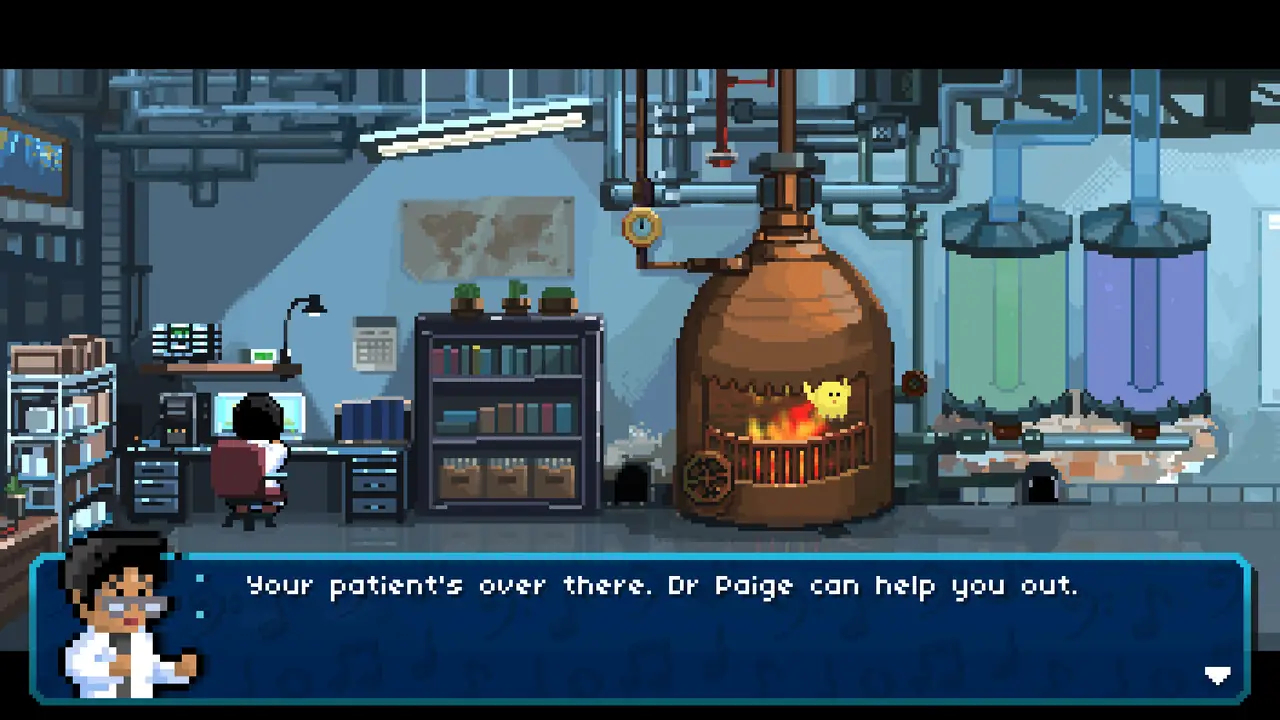 No.208Rhythm Doctor
01The core loop
Action → feedback → next choice- 01Hear the cue pattern
- 02Count to the target beat
- 03Input on the target
- 04Get feedback and adjust
↻Feedback changes the situation — the next round starts from there.
Walk through one round
A simplified design example. Situations and numbers illustrate the mechanic, not exact rules from a reference game.
- T1
Turn 1 · The situation
A heartbeat cues 1-2-3-4-5-6, and you press on seven.
- T2
Turn 2 · The player chooses
Count along to the drum and hit space on seven.
- T3
Turn 3 · The feedback
Slightly early, marked 'early', but the patient is still treated.
- T4
Turn 4 · The next decision
The next section swings, so you must re-adapt.
How it plays
The game plays a cue such as a few clicks or a character's motion, and players respond on a specific beat after it. The gap forces reliance on an internal sense of rhythm rather than aiming at on-screen markers.
What the player weighs
- Trust your ears or your eyes
- Feel the groove or count in your head
02Start small
Scope is an editorial estimate for the minimum prototype, not the reference game or a production schedule.
03One mechanic, different implementations
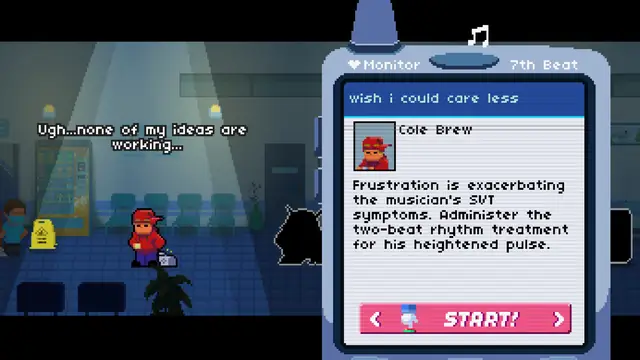
Rhythm Doctor
With one key, players press on the seventh beat after each cue to treat patients, while tempo shifts, swing and distractions complicate it.
Rhythm Heaven Megamix
Many minigames follow a 'they act, you answer' structure, where you complete an action on the right beat after a lead-in pattern.
The difference worth noticing
Rhythm Doctor escalates one rule; Rhythm Heaven varies the cue form across many minigames.
Case notes are Yoroll editorial summaries; rules may change between versions.
04What could you combine?
Don't explain cue symbols; let players infer which beat each one means from early successes and failures.
Prototype this combo in Yoroll→Follow the next idea
Keeping Time in the Dark
The screen goes dark and the cues vanish; only your inner beat remains.
- Prototype complexity
- Who plays
- Solo decisions
- 01Show visible cues first
- 02Cues fade away
- 03Input from memory and music
- 04Cues return to check

Holding the Long Note
Pressing is easy; holding until the very last beat is the challenge.
- Prototype complexity
- Who plays
- Solo decisions
- 01A long note appears
- 02Press on time
- 03Keep holding
- 04Release at the end
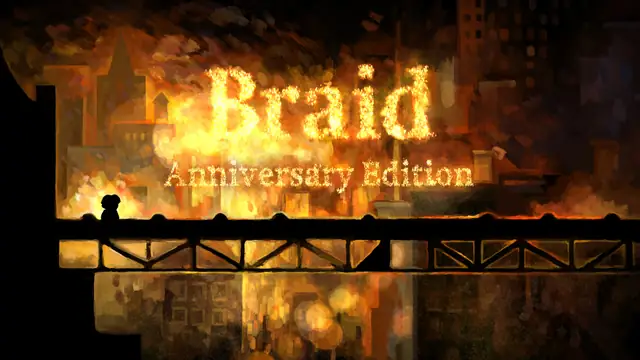
Rewind to Solve
Mistakes rewind away, but the trick is what the rewind doesn't touch.
- Prototype complexity
- Who plays
- Solo decisions
- 01Act and observe
- 02Rewind time
- 03Exploit what's unaffected
- 04Create a new outcome