
Holding the Long Note
Pressing is easy; holding until the very last beat is the challenge.
- Prototype complexity
- Who plays
- Solo decisions
- Design focus
- Timing · Precision · Dexterity
 No.207Spin Rhythm XD
01The core loop
Action → feedback → next choice- 01A long note appears
- 02Press on time
- 03Keep holding
- 04Release at the end
↻Feedback changes the situation — the next round starts from there.
Walk through one round
A simplified design example. Situations and numbers illustrate the mechanic, not exact rules from a reference game.
- T1
Turn 1 · The situation
A four-beat hold, with a tap note on another lane at beat three.
- T2
Turn 2 · The player chooses
Left hand holds; right hand taps beat three.
- T3
Turn 3 · The feedback
Both rate Perfect; combo +5 with a score bonus.
- T4
Turn 4 · The next decision
The next hold slides along a melody curve.
How it plays
Long notes ask players to press at the start, hold through the body and release at the end. Other notes or movement often overlap the hold, testing coordination. Releasing early breaks the combo, and longer holds score more.
What the player weighs
- Keep holding or let go to hit other notes
- Release safely or wait until the last moment
02Start small
Scope is an editorial estimate for the minimum prototype, not the reference game or a production schedule.
03One mechanic, different implementations
Spin Rhythm XD
Players spin a wheel to match lanes and colors, and hold notes require keeping a key pressed or following spin direction for their duration.

Muse Dash
In this two-lane side-scrolling rhythm game, holds keep the character attacking while the other lane may send enemies for your other hand.
The difference worth noticing
Spin Rhythm XD's holds mix in spatial wheel control; Muse Dash is pure two-lane button coordination.
Case notes are Yoroll editorial summaries; rules may change between versions.
04What could you combine?
Use holds as cooking heat: food cooks while you hold, and releasing on the perfect beat yields a flawless dish.
Prototype this combo in Yoroll→Follow the next idea

Cue and Response
The cue sets the pattern; you press on the beat it leaves unsaid.
- Prototype complexity
- Who plays
- Solo decisions
- 01Hear the cue pattern
- 02Count to the target beat
- 03Input on the target
- 04Get feedback and adjust
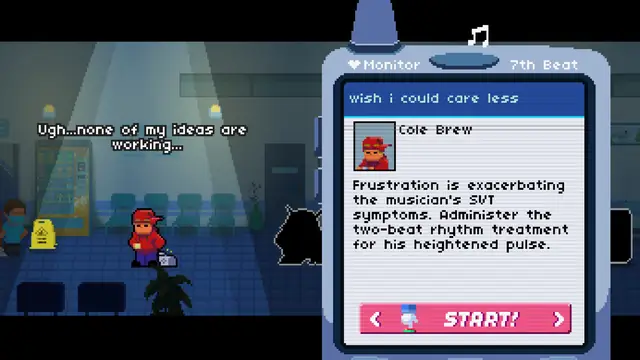
Keeping Time in the Dark
The screen goes dark and the cues vanish; only your inner beat remains.
- Prototype complexity
- Who plays
- Solo decisions
- 01Show visible cues first
- 02Cues fade away
- 03Input from memory and music
- 04Cues return to check
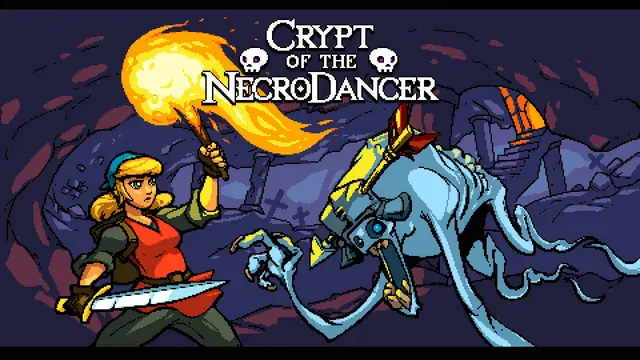
Moving on the Beat
Every step and strike lands on the beat; the music is your turn timer.
- Prototype complexity
- Who plays
- Solo decisions
- 01Hear the beat
- 02Input on the beat
- 03Gain a bonus or penalty
- 04Plan the next beat