
Choices That Come Back
A casual choice resurfaces hours later where you least expect it.
- Prototype complexity
- Who plays
- Solo decisions
- Design focus
- Narrative · Planning · Time
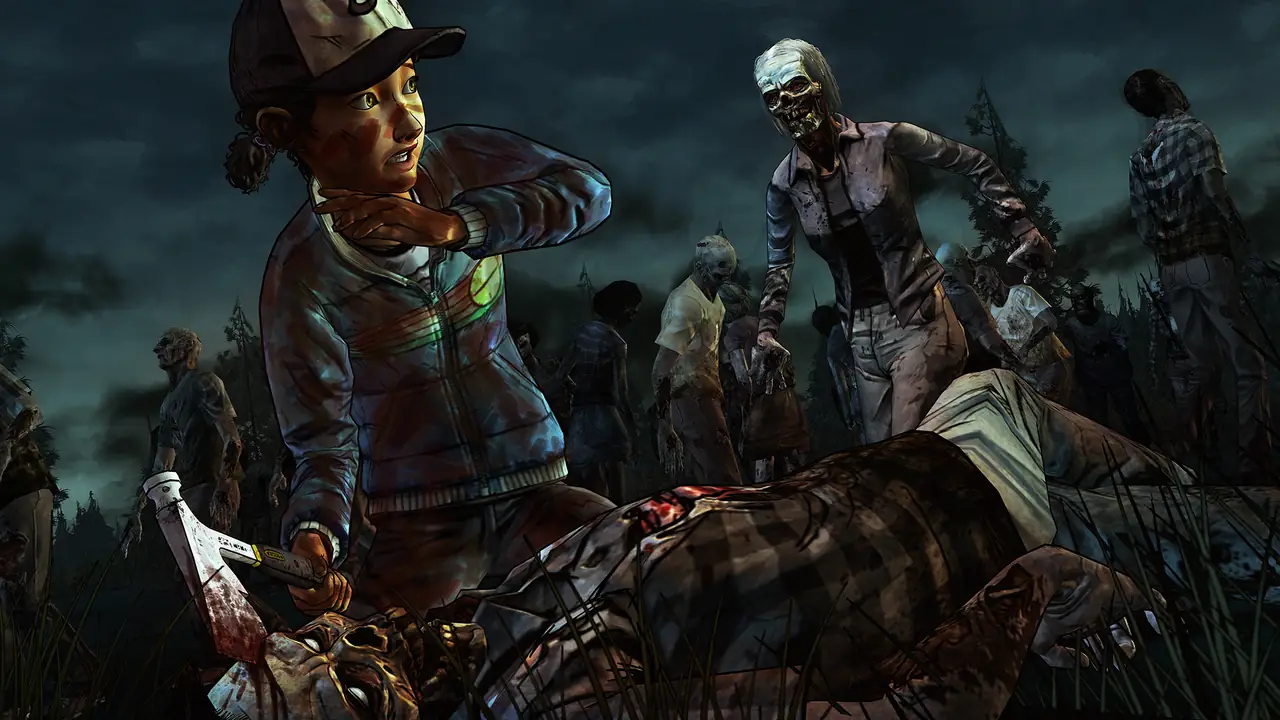 No.189The Walking Dead: Season Two
01The core loop
Action → feedback → next choice- 01Make a small-looking choice
- 02The story moves on
- 03A later event is altered
- 04Recall the original choice
↻Feedback changes the situation — the next round starts from there.
Walk through one round
A simplified design example. Situations and numbers illustrate the mechanic, not exact rules from a reference game.
- T1
Turn 1 · The situation
Chapter one: a vendor begs you to hide that he stole grain.
- T2
Turn 2 · The player chooses
Keep his secret.
- T3
Turn 3 · The feedback
Nothing happens beyond a thank-you.
- T4
Turn 4 · The next decision
In chapter three's famine, he shares his hidden grain with your family.
How it plays
The game stores flags at a choice and reads them later to alter attitudes, cast or outcomes. Players get little immediate feedback; the payoff arrives later, making choices weigh more.
What the player weighs
- Pick what helps now or think long-term
- Side with someone or stay neutral
02Start small
Scope is an editorial estimate for the minimum prototype, not the reference game or a production schedule.
03One mechanic, different implementations
The Walking Dead: Season Two
The game notes when someone 'will remember that', and some choices shift attitudes and dialogue in later episodes, though the main arc stays fairly fixed.
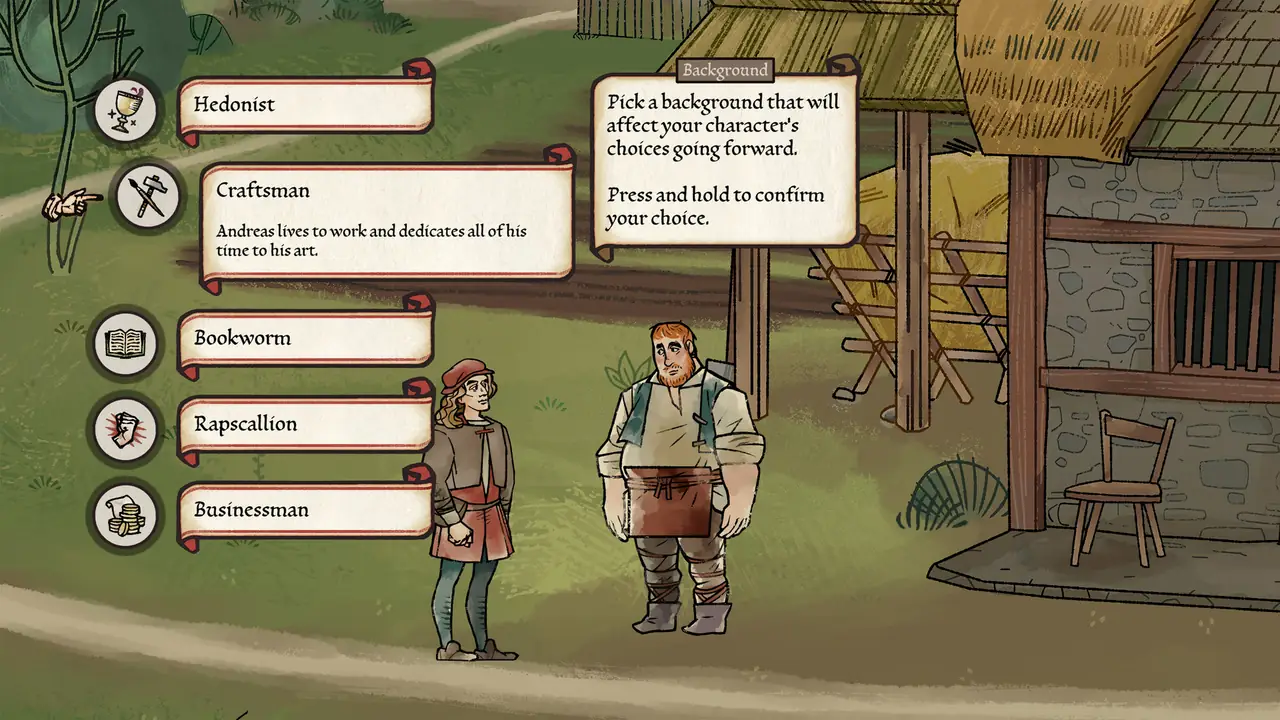
Pentiment
Investigations and accusations in the first act are recalled by villagers years later in subsequent acts, shaping how events and the protagonist are remembered.
The difference worth noticing
The Walking Dead's echoes come within hours; Pentiment's span years and reflect community memory.
Case notes are Yoroll editorial summaries; rules may change between versions.
04What could you combine?
Plant saplings for a villager in year one; five years later the orchard's harvest decides who stands with you during famine.
Prototype this combo in Yoroll→Follow the next idea
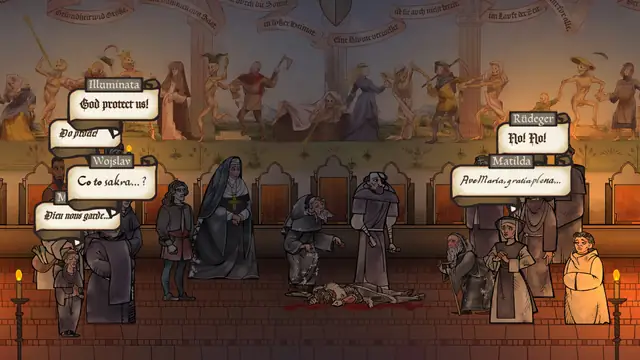
Your Past Opens Doors
Who you were and what you learned decide what people will tell you.
- Prototype complexity
- Who plays
- Solo decisions
- 01Choose a background
- 02Special options appear
- 03Use experience to persuade or see through
- 04Gain what others can't
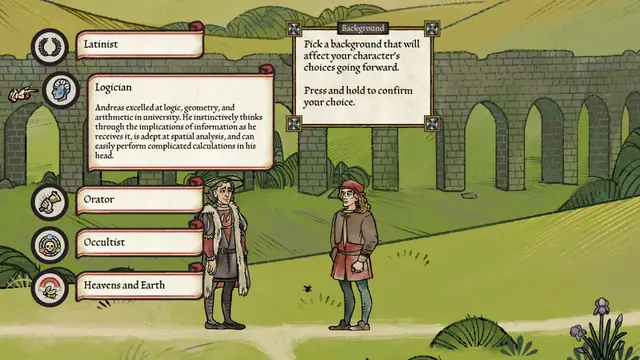
Too Many Leads, Too Little Time
Leads outnumber hours; you decide whose door to knock on today.
- Prototype complexity
- Who plays
- Solo decisions
- 01List open leads
- 02Spend a time slot
- 03Gain info or come up empty
- 04Conclude before the deadline
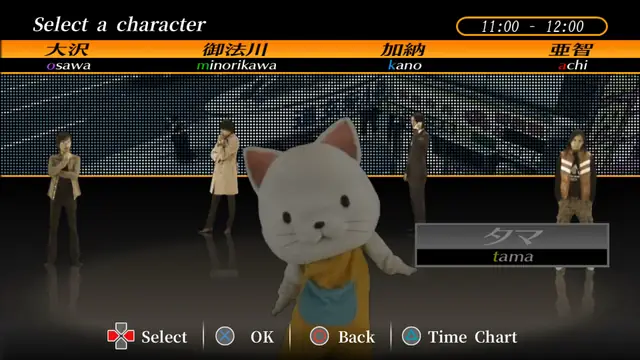
Passing the Story Baton
Choices made as one character land on another when you switch perspectives.
- Prototype complexity
- Who plays
- Solo decisions
- 01Act as character A
- 02Switch to character B
- 03Meet A's consequences
- 04Revisit A's choices