
Too Many Leads, Too Little Time
Leads outnumber hours; you decide whose door to knock on today.
- Prototype complexity
- Who plays
- Solo decisions
- Design focus
- Planning · Time · Information
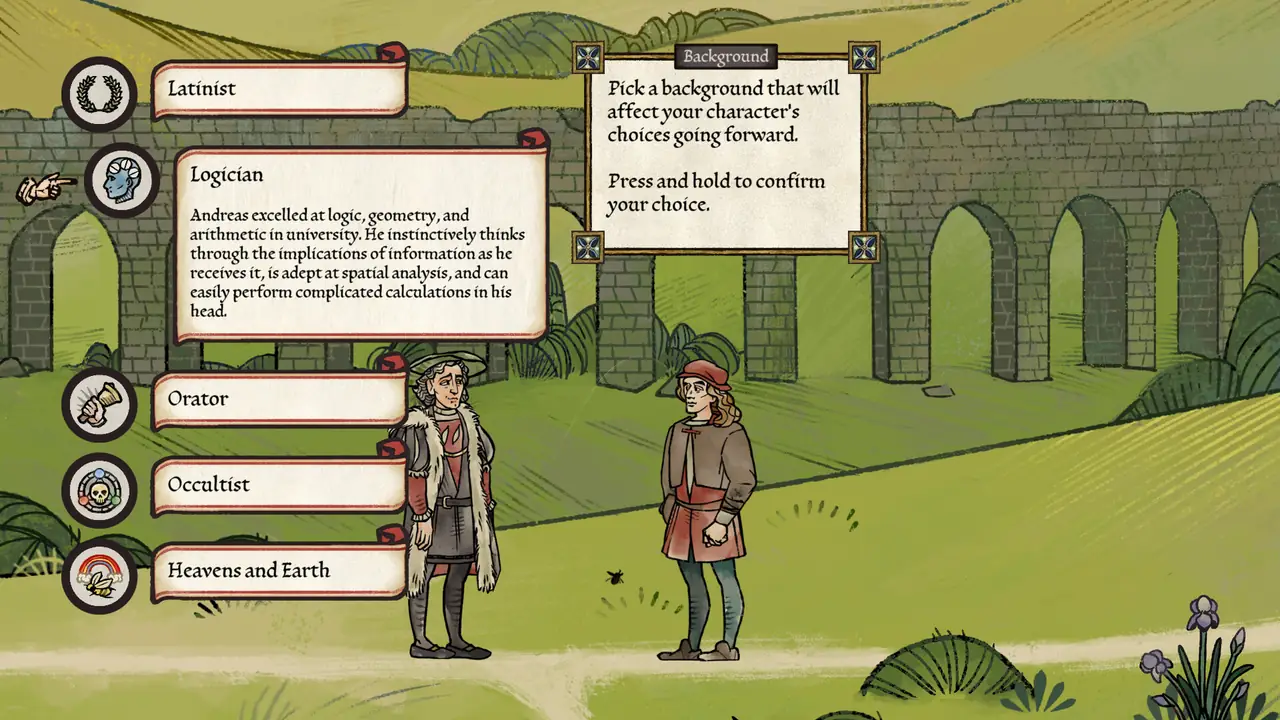 No.190Pentiment
01The core loop
Action → feedback → next choice- 01List open leads
- 02Spend a time slot
- 03Gain info or come up empty
- 04Conclude before the deadline
↻Feedback changes the situation — the next round starts from there.
Walk through one round
A simplified design example. Situations and numbers illustrate the mechanic, not exact rules from a reference game.
- T1
Turn 1 · The situation
Two days to the trial, four slots, five leads.
- T2
Turn 2 · The player chooses
Spend two slots on suspect A, one at the abbey, one at dinner with the smith.
- T3
Turn 3 · The feedback
A's motive is confirmed, but the miller's testimony is lost for good.
- T4
Turn 4 · The next decision
Make the accusation with incomplete evidence.
How it plays
Days split into slots, and talking or searching advances time. Some people appear only at certain hours, and at the deadline you must decide with what you have; you can't chase everything.
What the player weighs
- Dig deep on one lead or skim many
- Trust instinct and close early or use every hour
02Start small
Scope is an editorial estimate for the minimum prototype, not the reference game or a production schedule.
03One mechanic, different implementations
Pentiment
Time advances as you investigate, with day segments and meals consumed, so you can't question everyone before the trial and must pick.
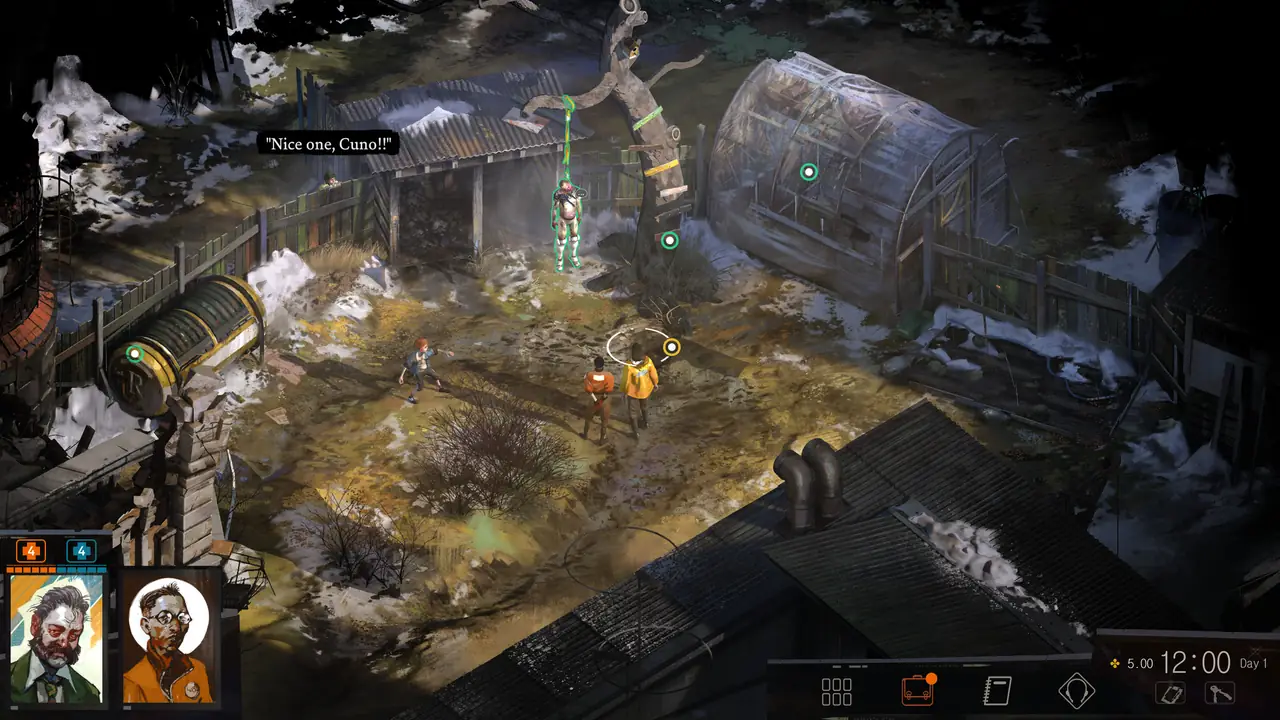
Disco Elysium
The clock advances with dialogue and some people and events are time-specific, but there is no strict case deadline overall, so pressure is gentler.
The difference worth noticing
Pentiment forces trade-offs with a hard deadline; Disco Elysium uses schedules for pacing rather than forced loss.
Case notes are Yoroll editorial summaries; rules may change between versions.
04What could you combine?
Fast-travel nodes save time slots, but each needs a slot spent befriending locals first, trading early time for later speed.
Prototype this combo in Yoroll→Follow the next idea
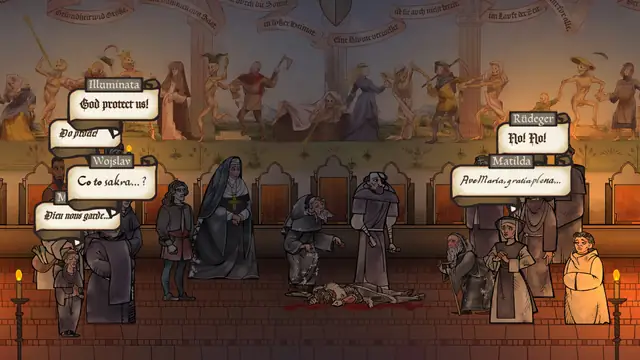
Your Past Opens Doors
Who you were and what you learned decide what people will tell you.
- Prototype complexity
- Who plays
- Solo decisions
- 01Choose a background
- 02Special options appear
- 03Use experience to persuade or see through
- 04Gain what others can't

Choices That Come Back
A casual choice resurfaces hours later where you least expect it.
- Prototype complexity
- Who plays
- Solo decisions
- 01Make a small-looking choice
- 02The story moves on
- 03A later event is altered
- 04Recall the original choice
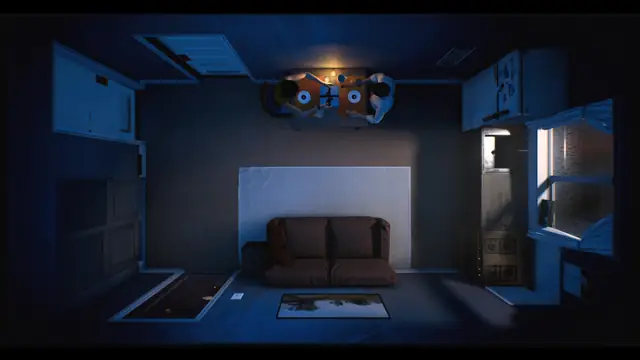
Rewriting the Loop
The same stretch of time repeats; only knowledge carries over to rewrite the next pass.
- Prototype complexity
- Who plays
- Solo decisions
- 01Live through one loop
- 02Note when key events happen
- 03Act differently next time
- 04Unlock a new outcome