
Saying Nothing on Purpose
Saying nothing is a choice, and sometimes it makes them say more.
- Prototype complexity
- Who plays
- Solo decisions
- Design focus
- Information · Narrative · Risk
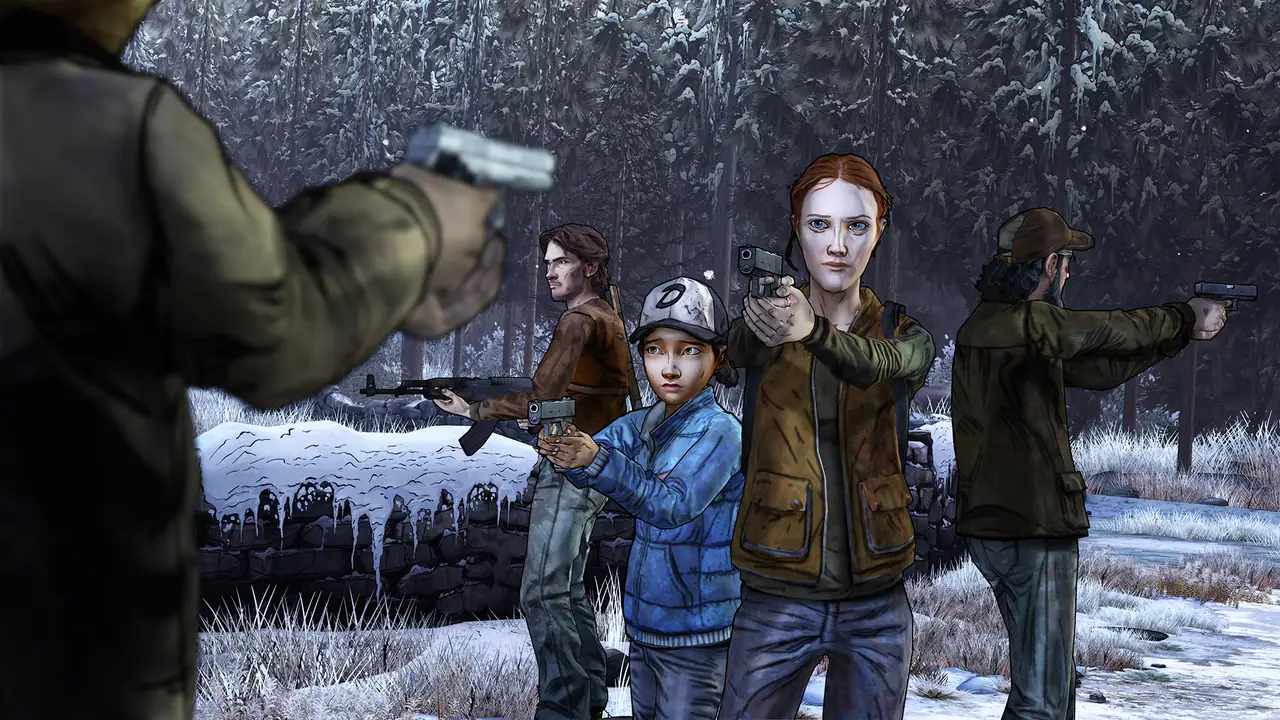 No.187The Walking Dead: Season Two
01The core loop
Action → feedback → next choice- 01They pause for a reply
- 02Choose to stay silent
- 03They fill the silence
- 04Learn more or be misread
↻Feedback changes the situation — the next round starts from there.
Walk through one round
A simplified design example. Situations and numbers illustrate the mechanic, not exact rules from a reference game.
- T1
Turn 1 · The situation
A stranger asks where you came from while you're hiding your identity.
- T2
Turn 2 · The player chooses
Say nothing and hold his gaze.
- T3
Turn 3 · The feedback
He fills the gap and reveals he's searching for the same person.
- T4
Turn 4 · The next decision
You know his goal now, but his trust drops by one.
How it plays
Silence is a real option rather than just a timeout. Characters interpret it by personality and context: they may keep talking, feel snubbed, or take it as agreement.
What the player weighs
- Stay quiet to learn or speak to build trust
- Dodge a sensitive question or risk misinterpretation
02Start small
Scope is an editorial estimate for the minimum prototype, not the reference game or a production schedule.
03One mechanic, different implementations
The Walking Dead: Season Two
The ellipsis often works as a deliberate response, and others read Clementine's silence as evasion, consent or stubbornness.
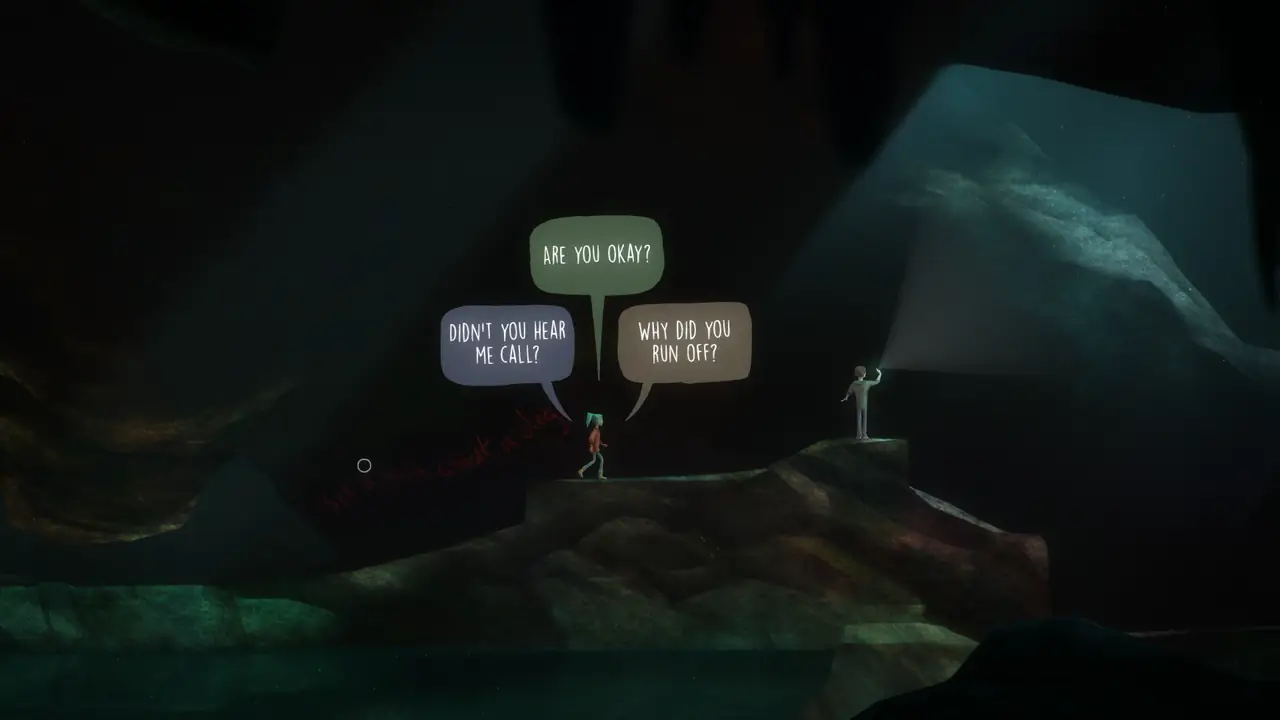
Oxenfree
Players can let every bubble fade and the conversation carries on; sometimes characters notice the protagonist's quiet.
The difference worth noticing
Silence in The Walking Dead carries an emotional stance; in Oxenfree it reads more like stepping back from group chatter.
Case notes are Yoroll editorial summaries; rules may change between versions.
04What could you combine?
While disguised, every spoken line risks exposure; silence keeps cover intact but makes guards suspicious enough to press you.
Prototype this combo in Yoroll→Follow the next idea
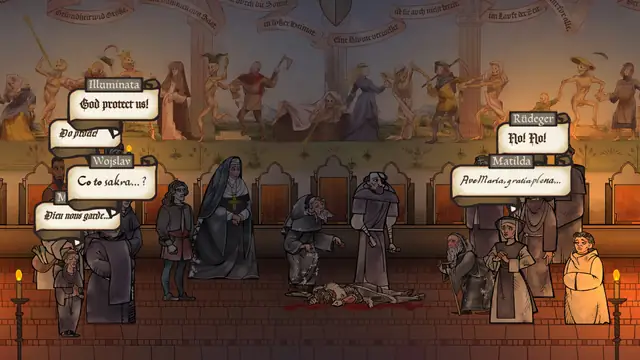
Your Past Opens Doors
Who you were and what you learned decide what people will tell you.
- Prototype complexity
- Who plays
- Solo decisions
- 01Choose a background
- 02Special options appear
- 03Use experience to persuade or see through
- 04Gain what others can't

Cutting In
Don't wait for them to finish; cut in at the right moment and the scene can turn.
- Prototype complexity
- Who plays
- Solo decisions
- 01They're mid-sentence
- 02An interrupt prompt flashes
- 03Decide to cut in
- 04The scene shifts
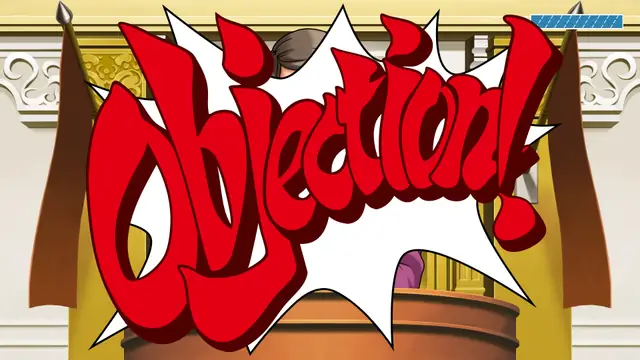
Objection with Evidence
Find the one line that doesn't hold, then put the right proof against it.
- Prototype complexity
- Who plays
- Solo decisions
- 01Hear testimony line by line
- 02Press suspicious lines
- 03Present proof on a contradiction
- 04Testimony breaks or you're penalized