
Answering Through Your Craft
You don't speak; the drink you serve is your answer.
- Prototype complexity
- Who plays
- Solo decisions
- Design focus
- Narrative · Information · Creativity
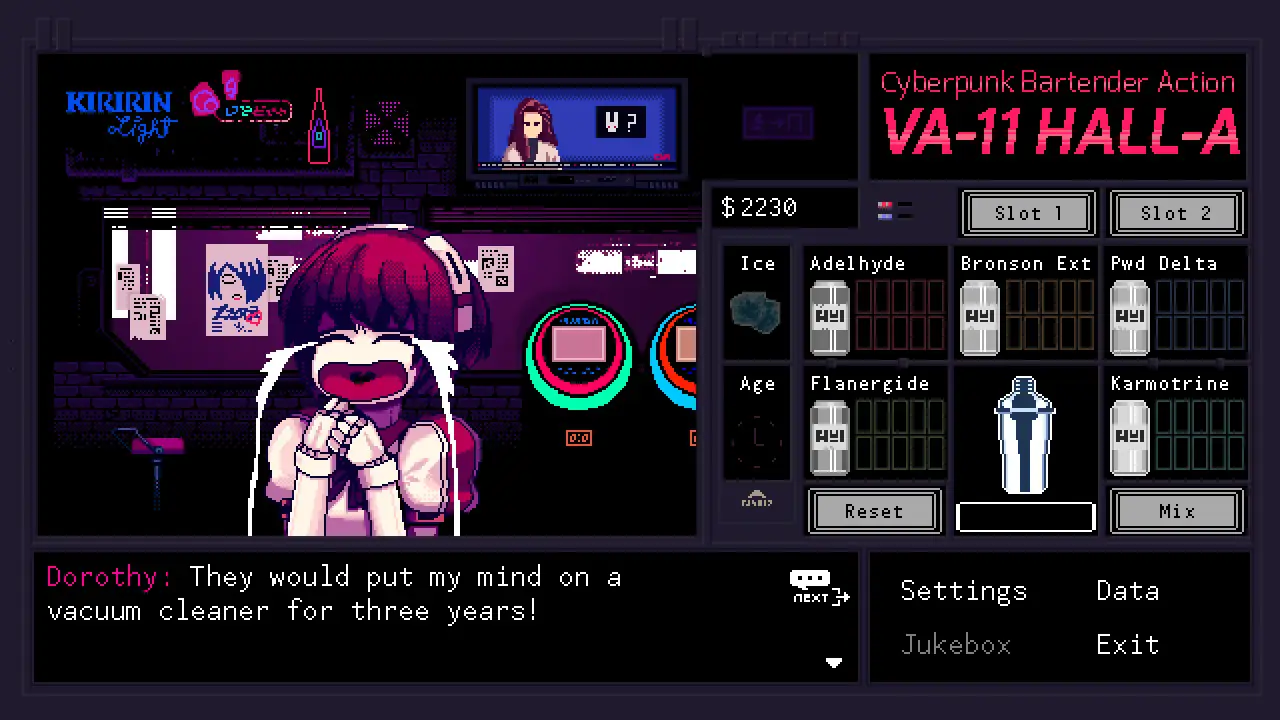 No.192VA-11 Hall-A: Cyberpunk Bartender Action
01The core loop
Action → feedback → next choice- 01A guest talks or orders
- 02Read what they need
- 03Make and serve
- 04The story turns with it
↻Feedback changes the situation — the next round starts from there.
Walk through one round
A simplified design example. Situations and numbers illustrate the mechanic, not exact rules from a reference game.
- T1
Turn 1 · The situation
A guest says, 'Give me something to forget today.'
- T2
Turn 2 · The player chooses
Serve a strong drink with double alcohol.
- T3
Turn 3 · The feedback
Drunk, he spills a company secret.
- T4
Turn 4 · The next decision
He returns the next day more trusting and a little embarrassed.
How it plays
Players respond by choosing ingredients, ratios and methods rather than dialogue options. Guests may order exactly or only describe a mood, and the drink decides their reaction and what follows.
What the player weighs
- Make exactly what's ordered or what they truly need
- Loosen them up with alcohol or keep them sober
02Start small
Scope is an editorial estimate for the minimum prototype, not the reference game or a production schedule.
03One mechanic, different implementations
VA-11 Hall-A: Cyberpunk Bartender Action
As a bartender you mix drinks by ingredient and alcohol level; what you serve changes conversations and can affect some characters' outcomes.
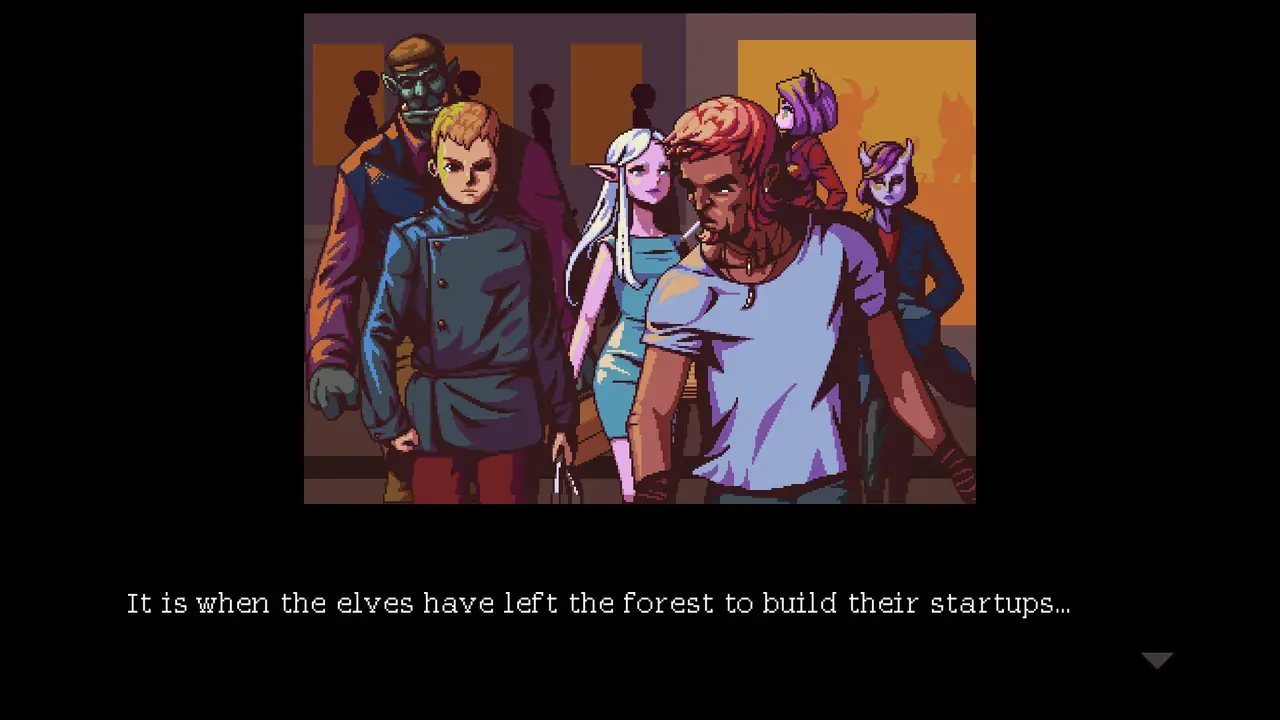
Coffee Talk
You combine three base ingredients into drinks for guests, and the wrong drink can steer their story toward a different ending.
The difference worth noticing
VA-11 Hall-A stresses how alcohol changes behavior; Coffee Talk focuses on reading guests' moods and requests.
Case notes are Yoroll editorial summaries; rules may change between versions.
04What could you combine?
Allow substitutions when stock runs out; a substitute subtly changes the drink's meaning, and a guest may accept it or sense you're cutting corners.
Prototype this combo in Yoroll→Follow the next idea
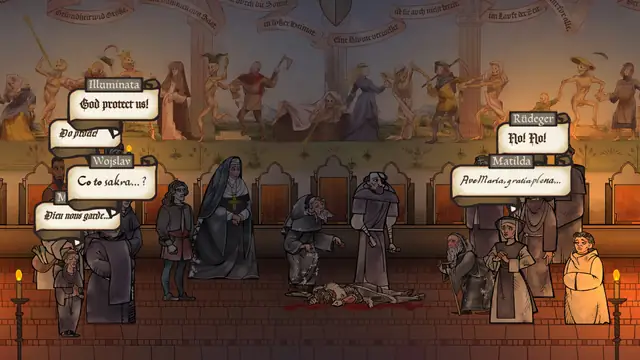
Your Past Opens Doors
Who you were and what you learned decide what people will tell you.
- Prototype complexity
- Who plays
- Solo decisions
- 01Choose a background
- 02Special options appear
- 03Use experience to persuade or see through
- 04Gain what others can't

Cutting In
Don't wait for them to finish; cut in at the right moment and the scene can turn.
- Prototype complexity
- Who plays
- Solo decisions
- 01They're mid-sentence
- 02An interrupt prompt flashes
- 03Decide to cut in
- 04The scene shifts

Saying Nothing on Purpose
Saying nothing is a choice, and sometimes it makes them say more.
- Prototype complexity
- Who plays
- Solo decisions
- 01They pause for a reply
- 02Choose to stay silent
- 03They fill the silence
- 04Learn more or be misread